Artist spotlight : Leka
ARTIST STATEMENT:
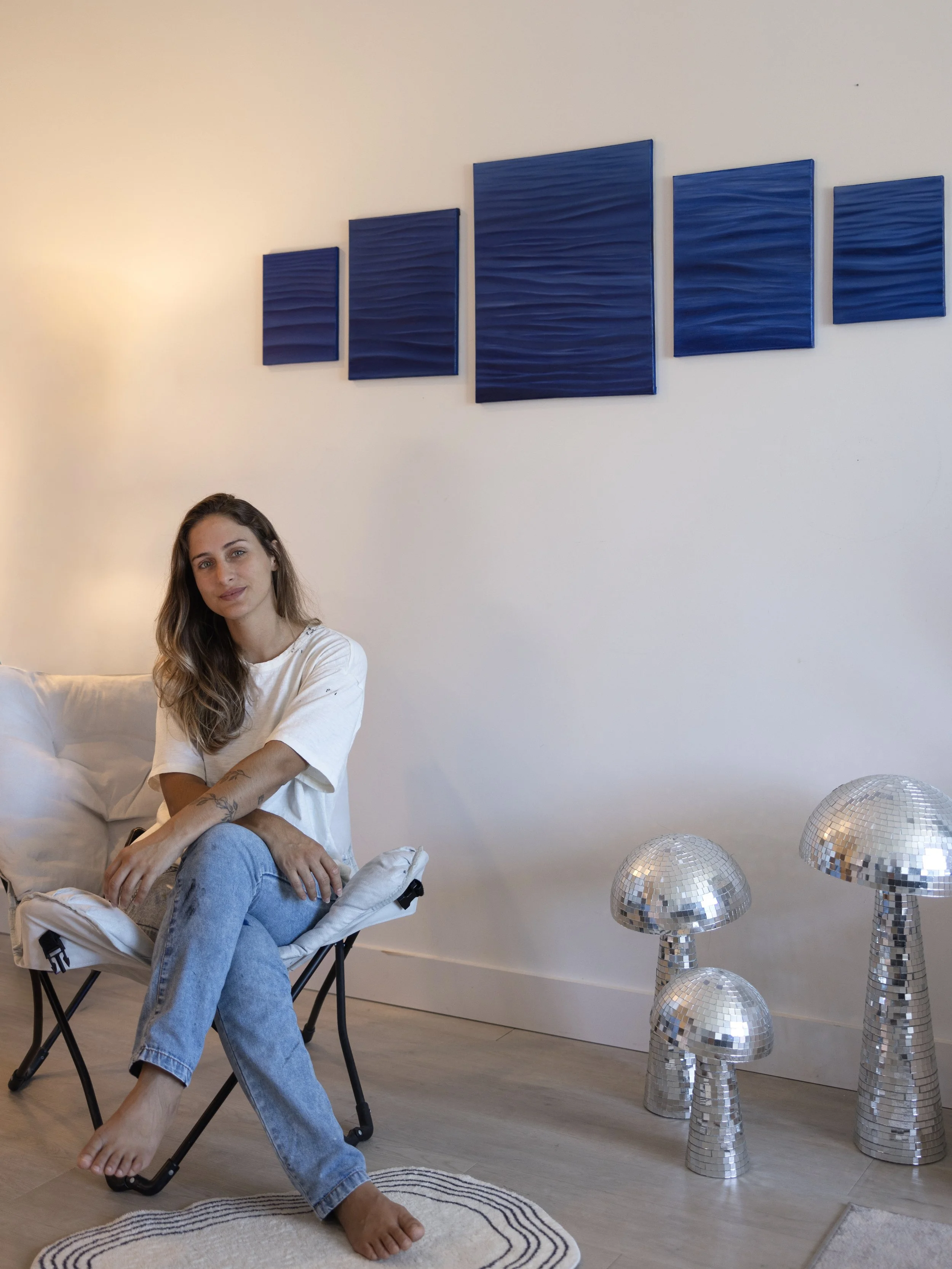
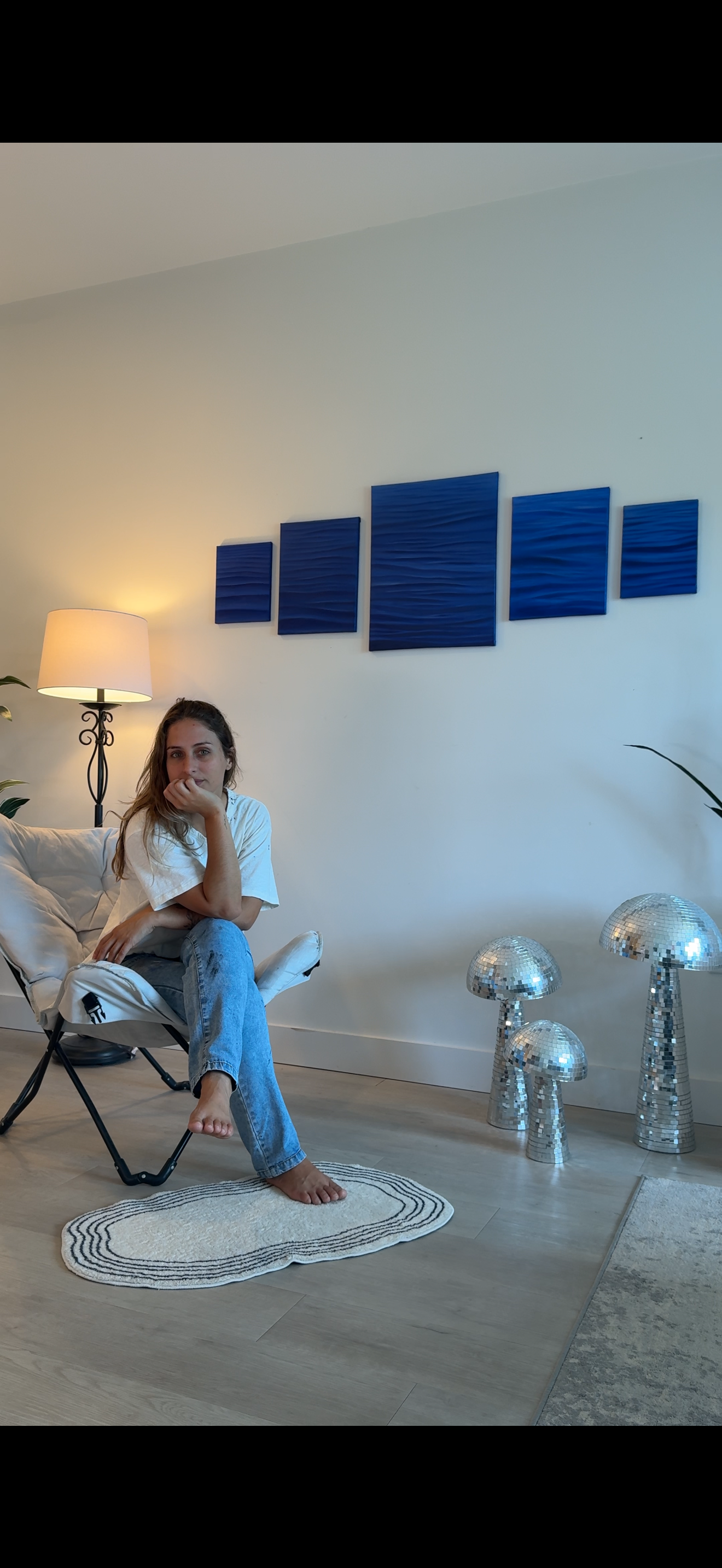
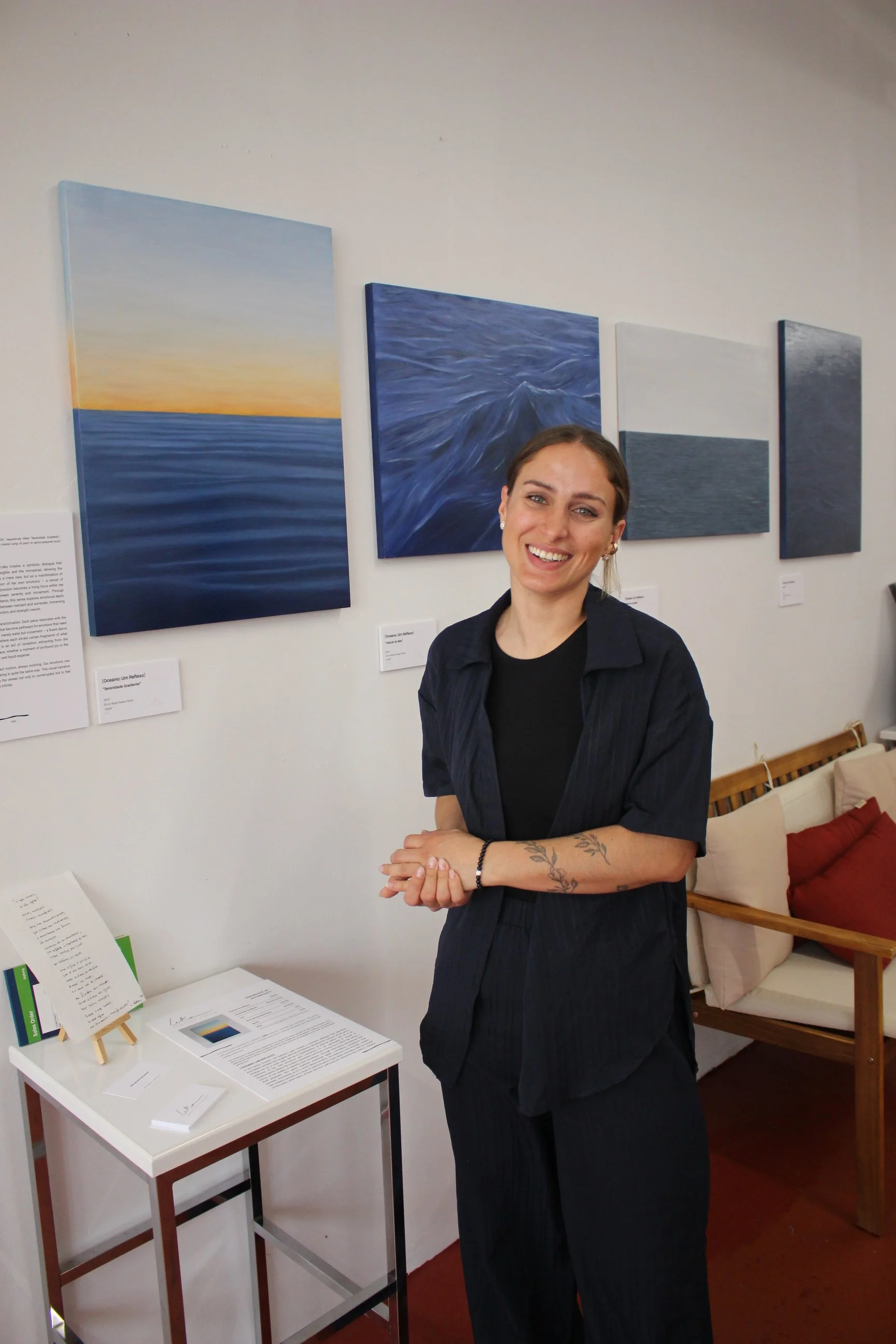
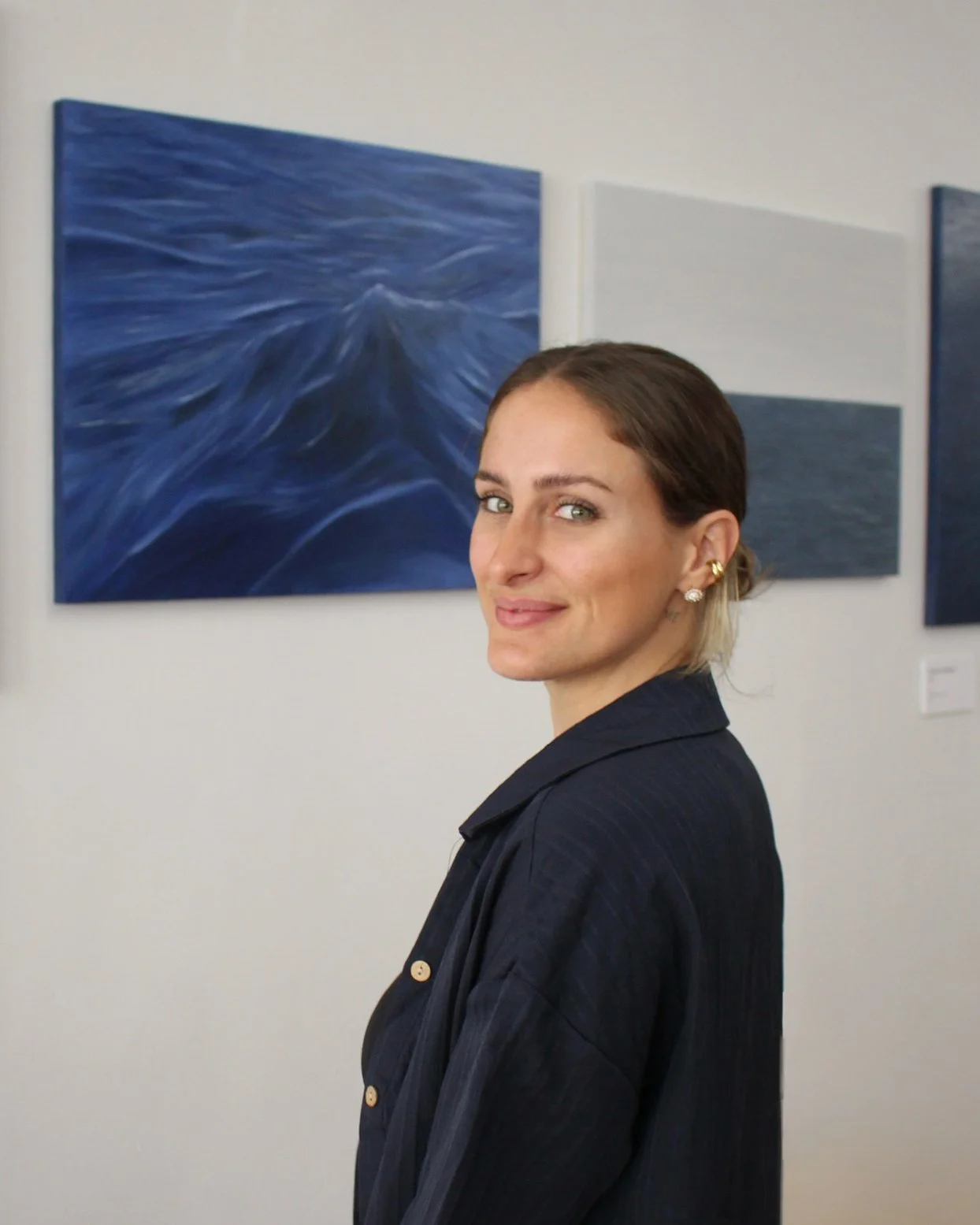
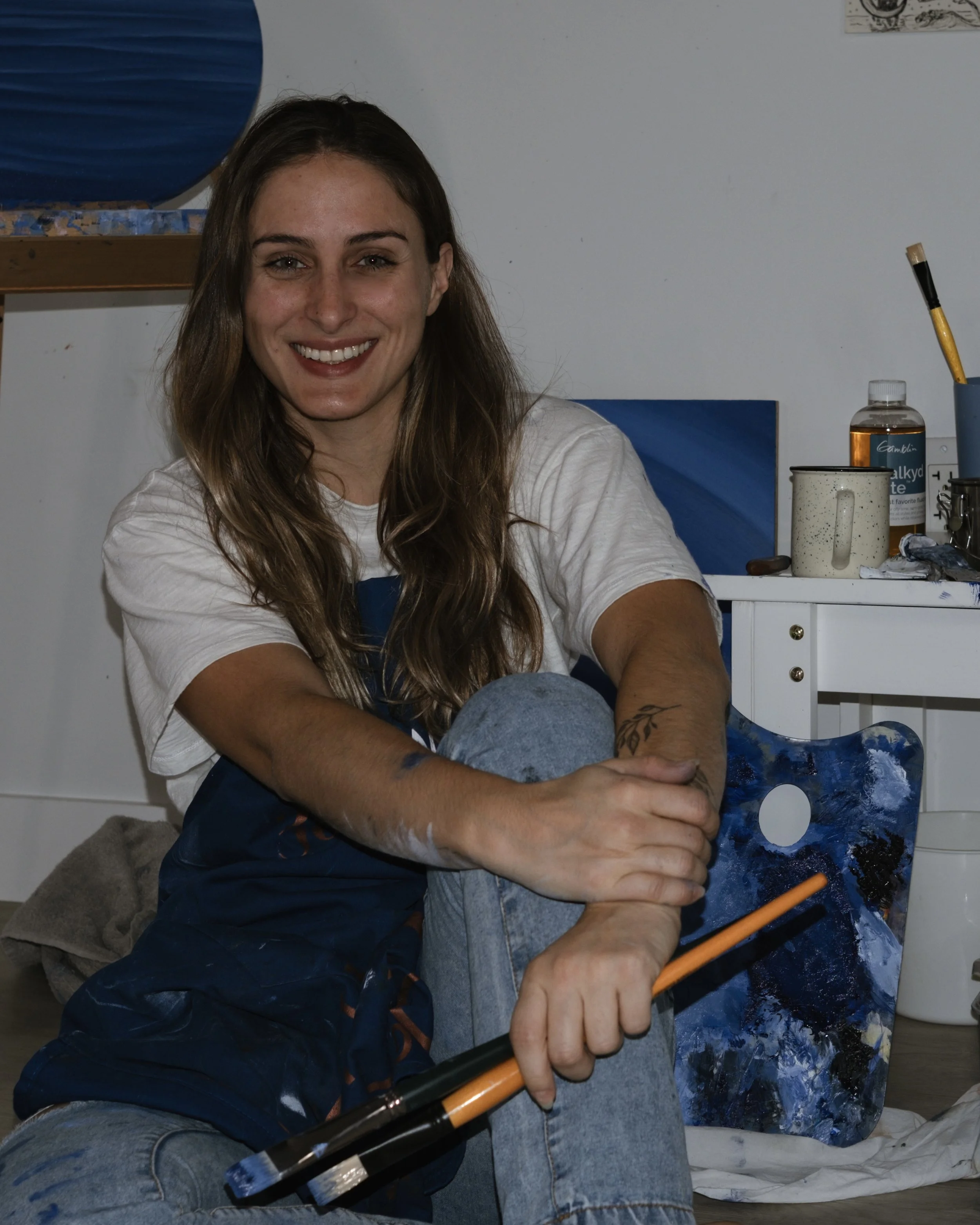
Leka is a Brazilian multidisciplinary artist born in 1996 whose practice goes across architecture, photography, painting and writing. Graduated in architecture and urbanism, she believes that creating, observing, feeling, and expressing are ways of making life more conscious, human, and meaningful.
Her research reflects a commitment to art as a form of awareness. Moving between her disciplines, she explores emotional depth, movement, memory, and states of consciousness through experimental processes. In her work, technique and sensitivity come together to bring out memory, sensation, and recognition. Through her art, Leka seeks to spark emotional responses, recover memories, and transform lived experiences into genuine connection. Her creativity is driven by the desire to inspire and to be inspired..
Social Networks :
- Instagram: @leka.wv
- Website: www.lekawv.com
- Portfolio: click here
Leka
1. Inspiration & Style
Question: What initially inspired you to become an artist, and how did you develop your unique artistic style?
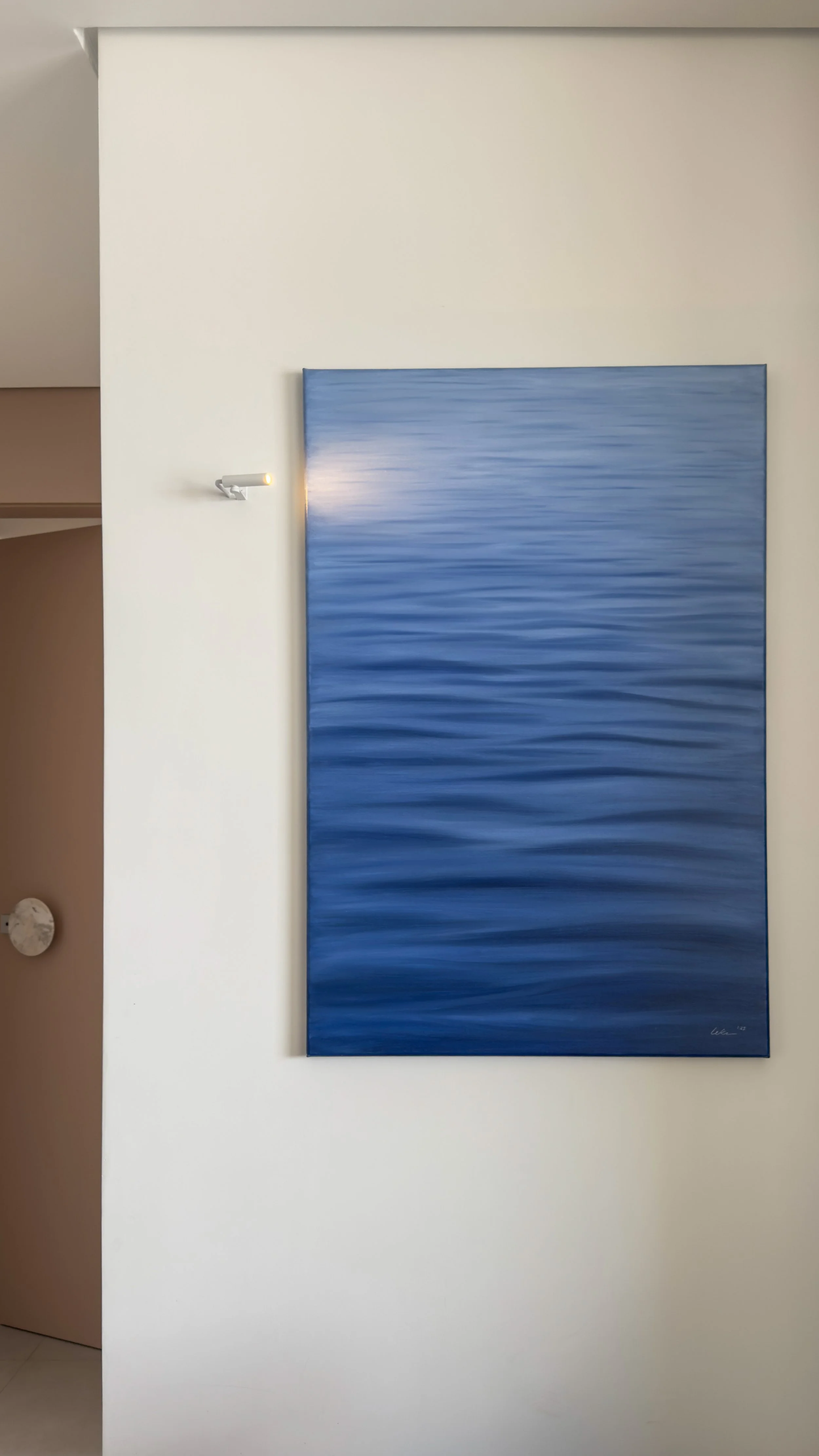
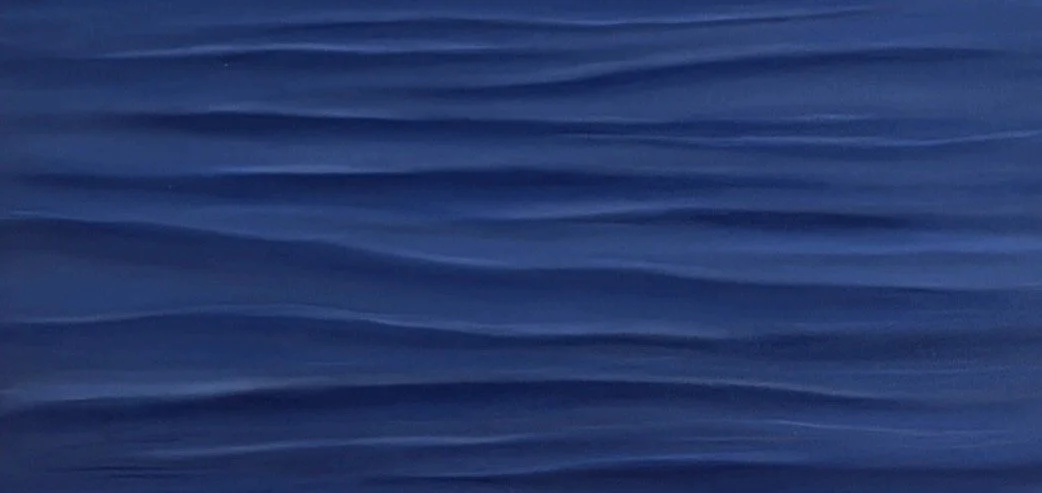
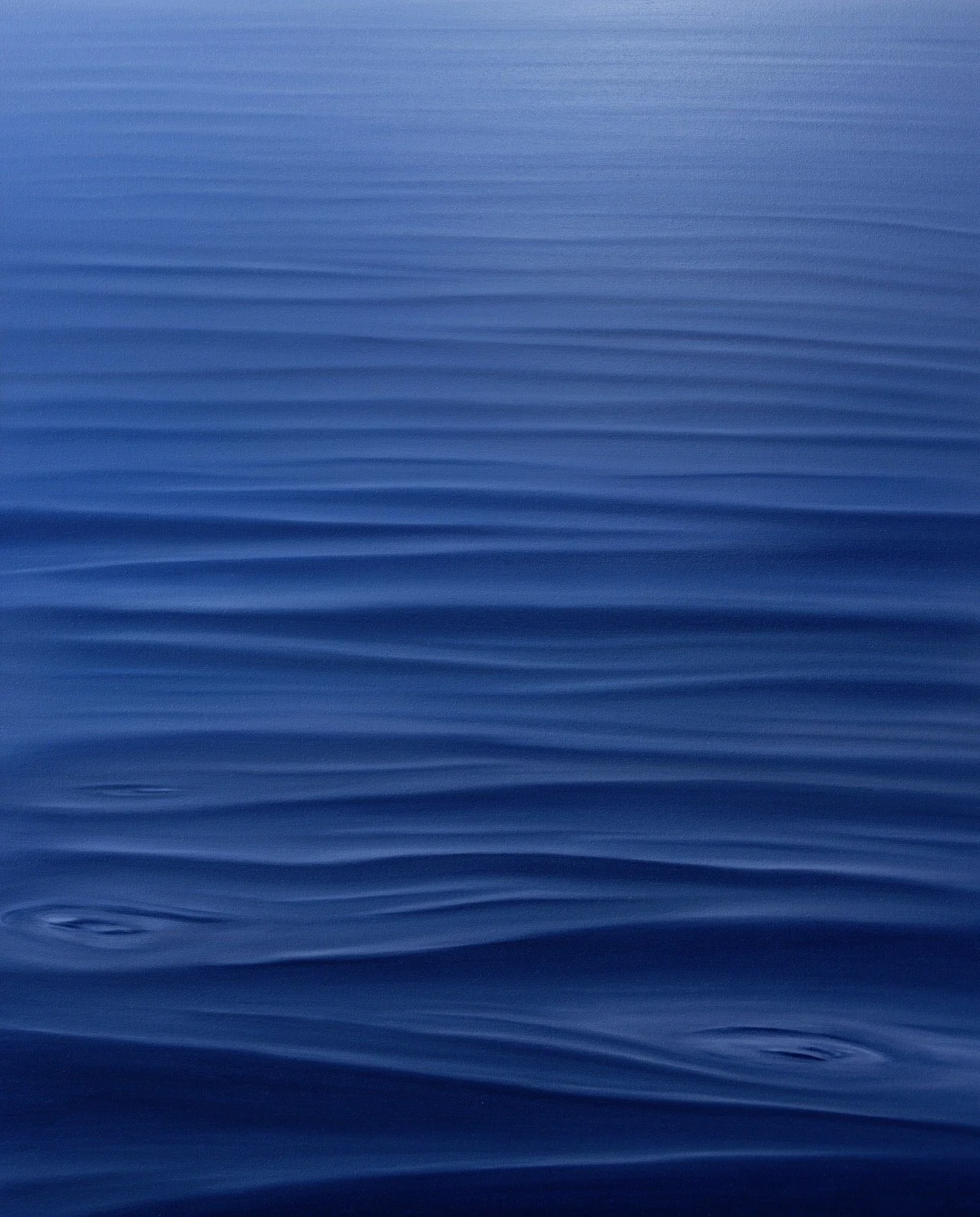
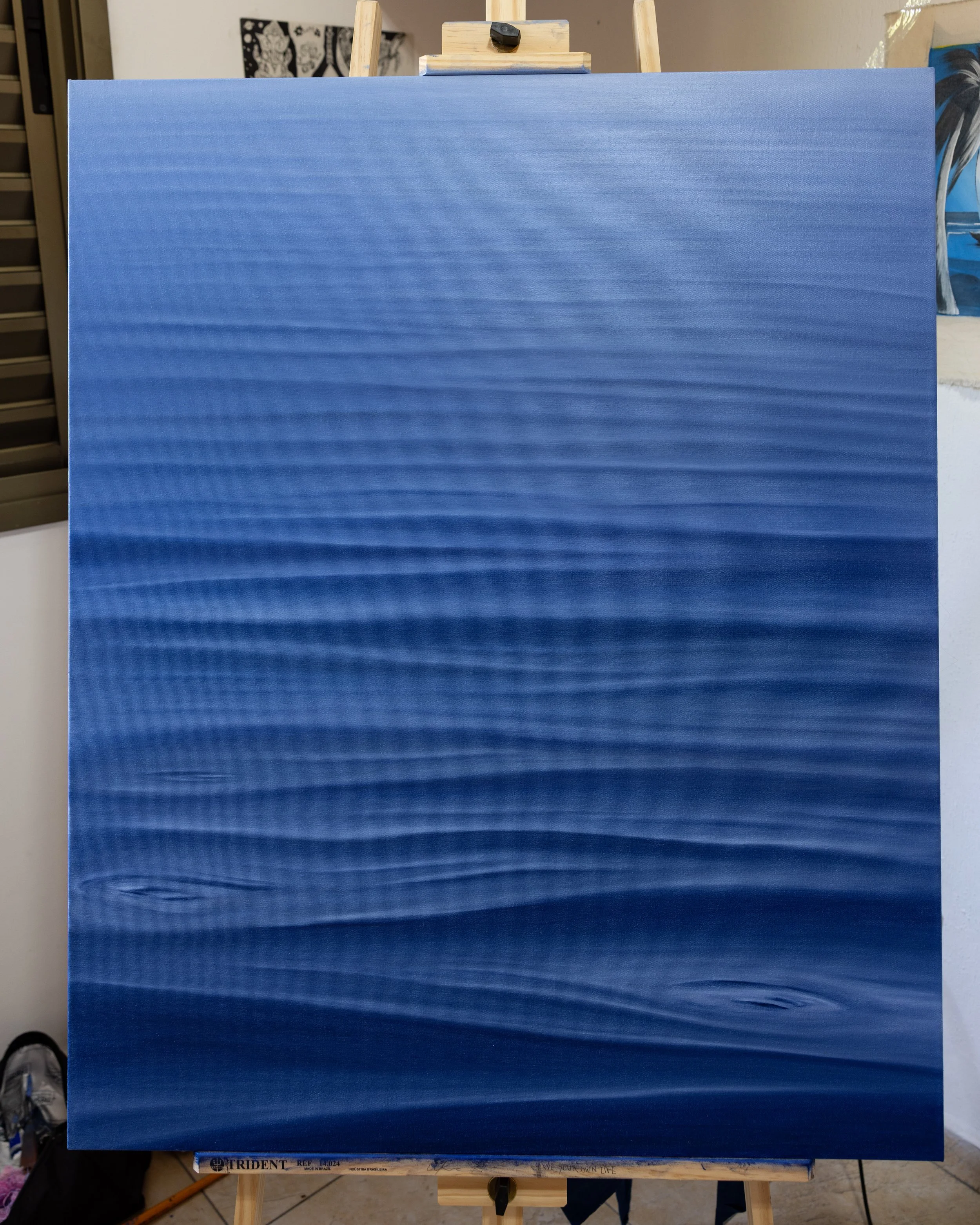
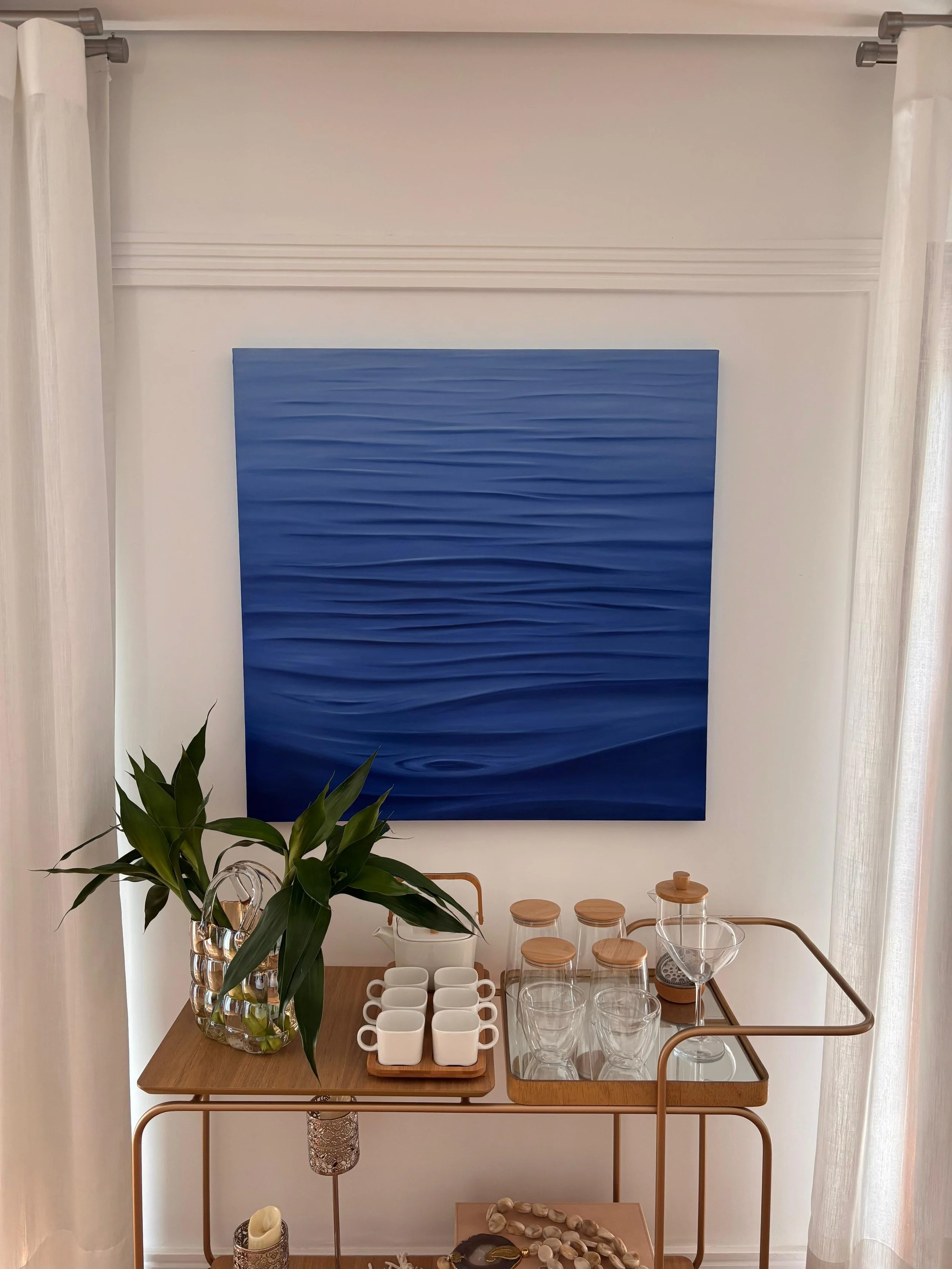
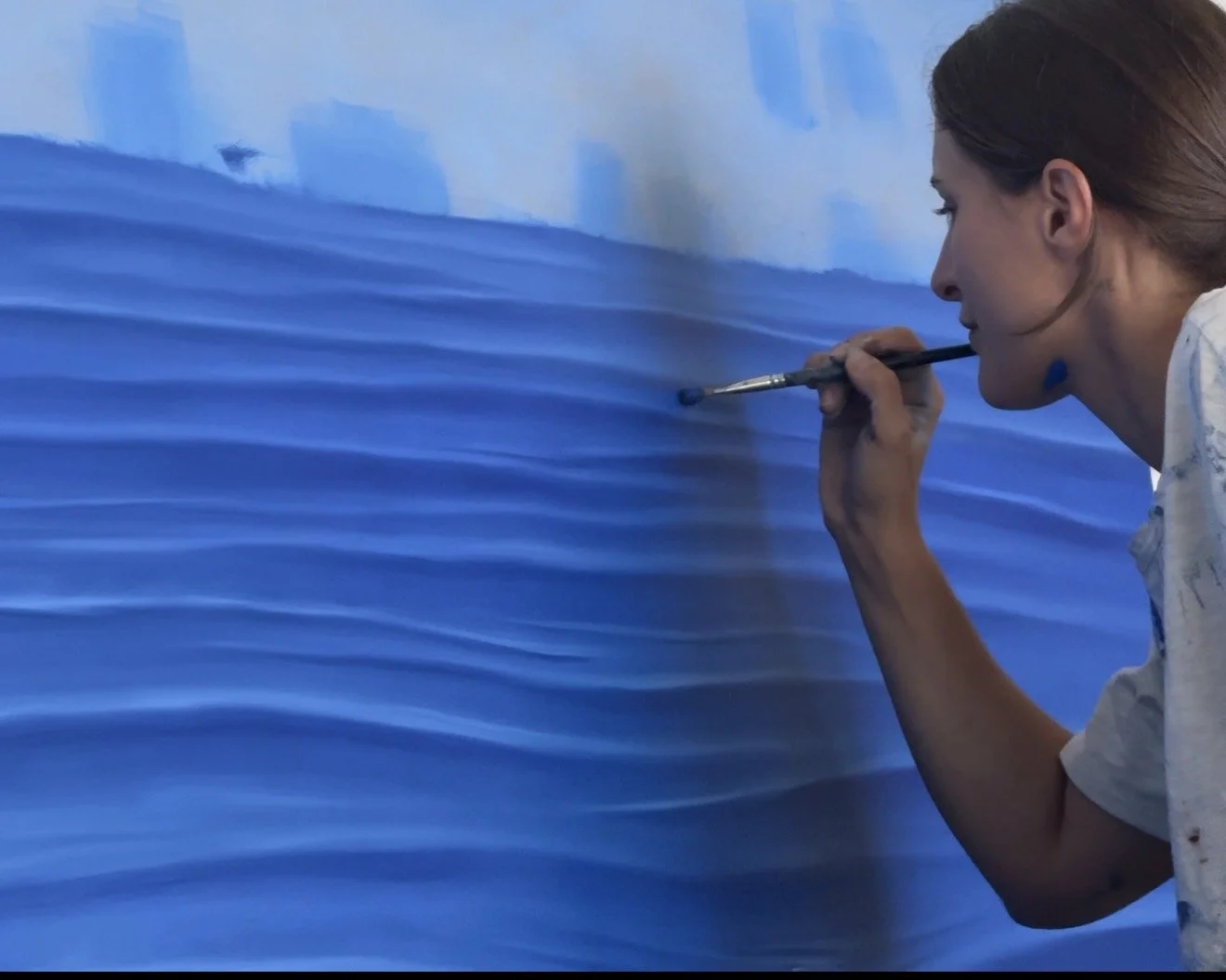
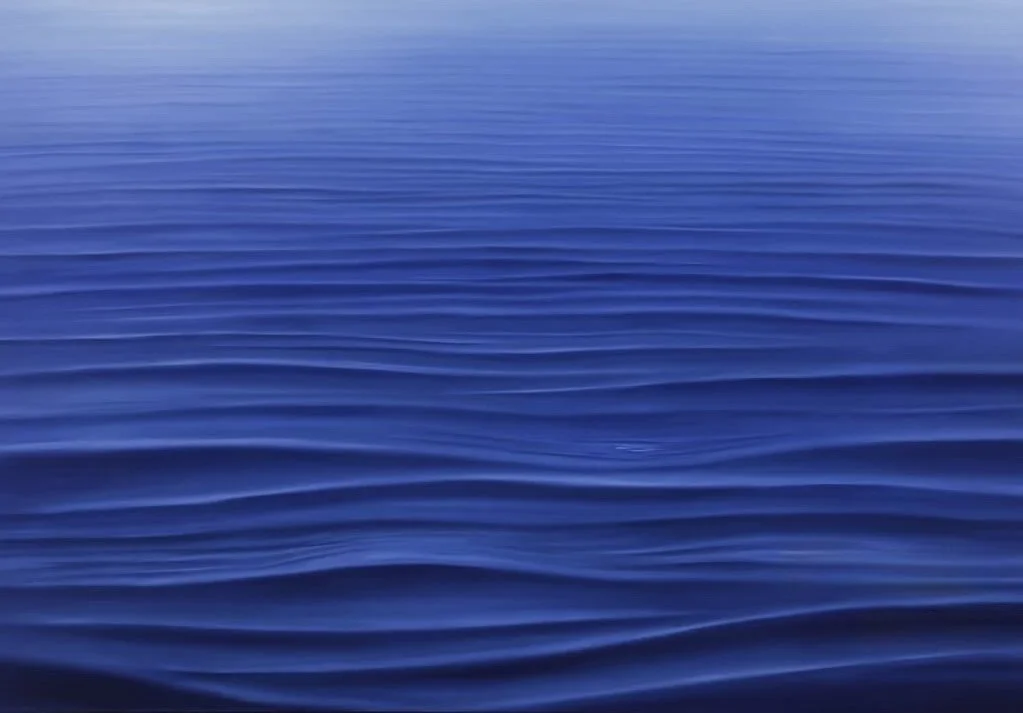
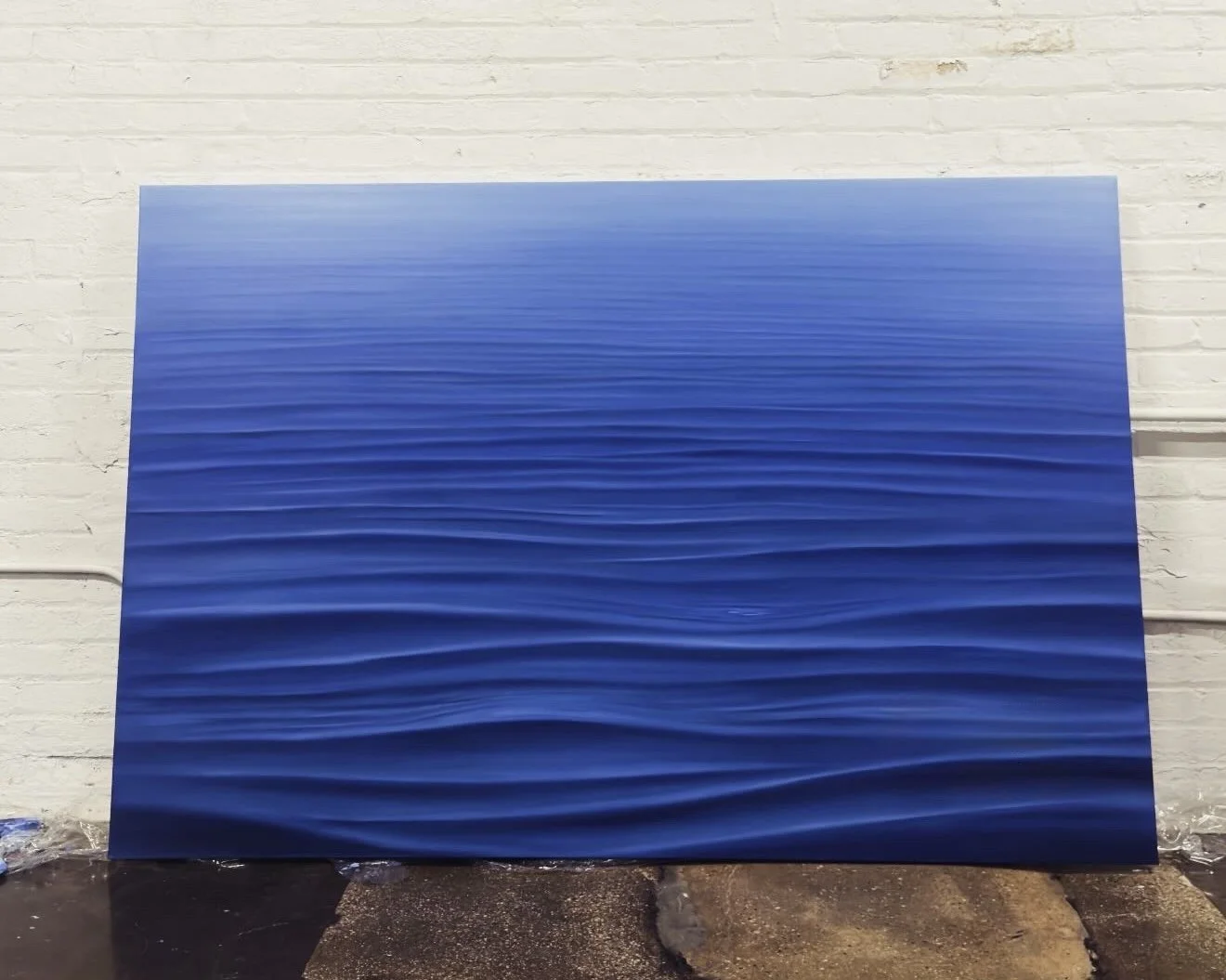
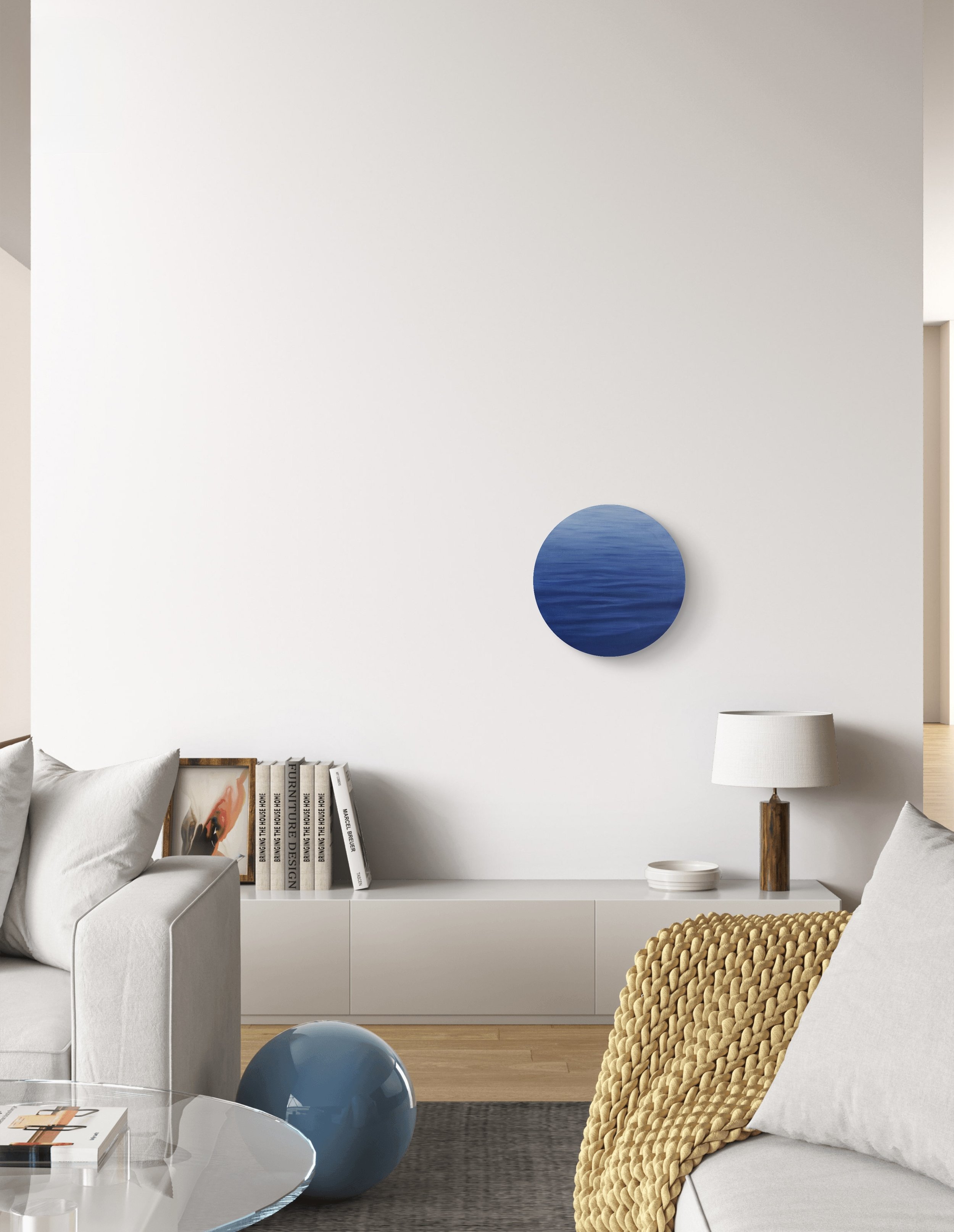
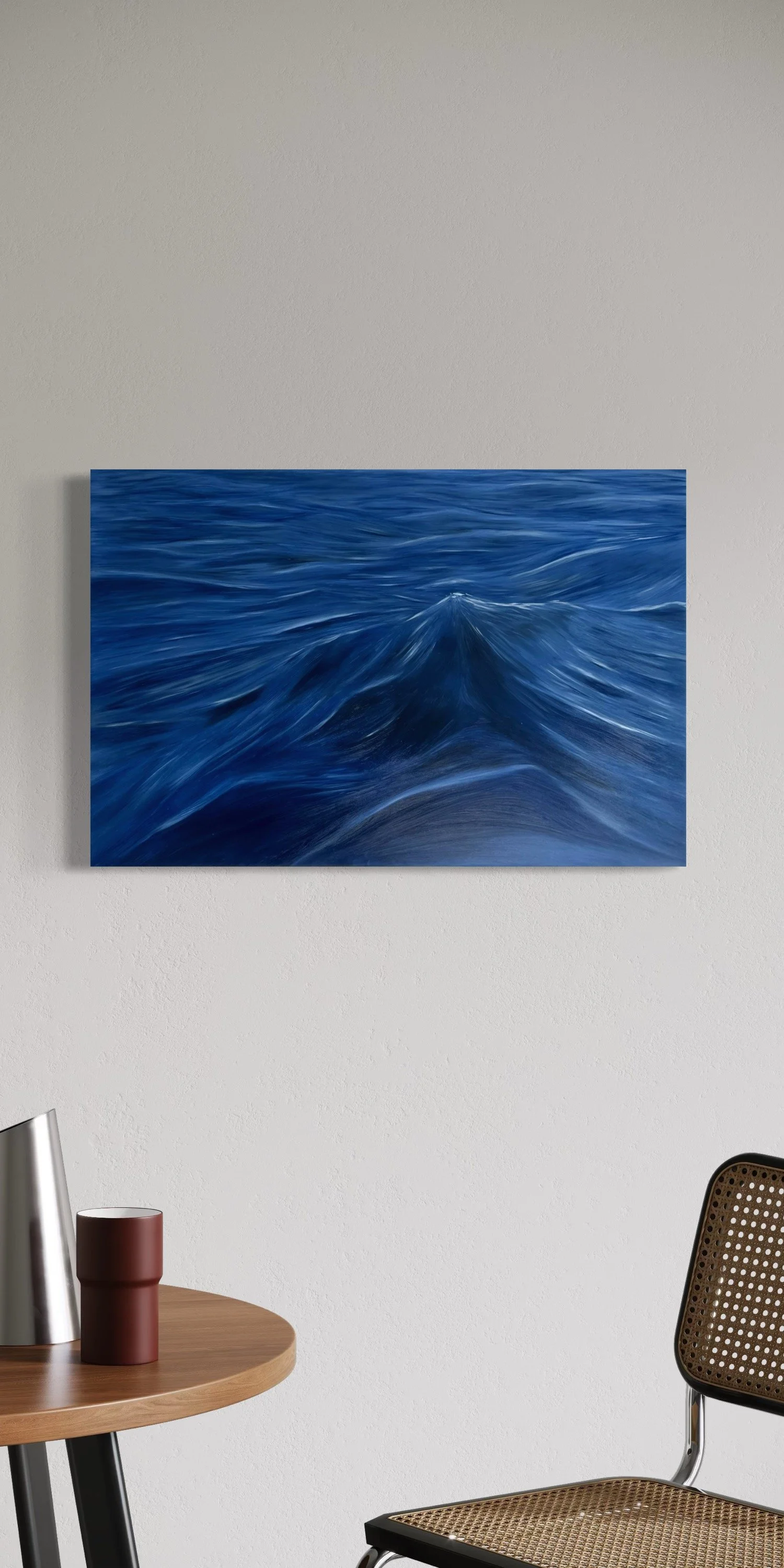
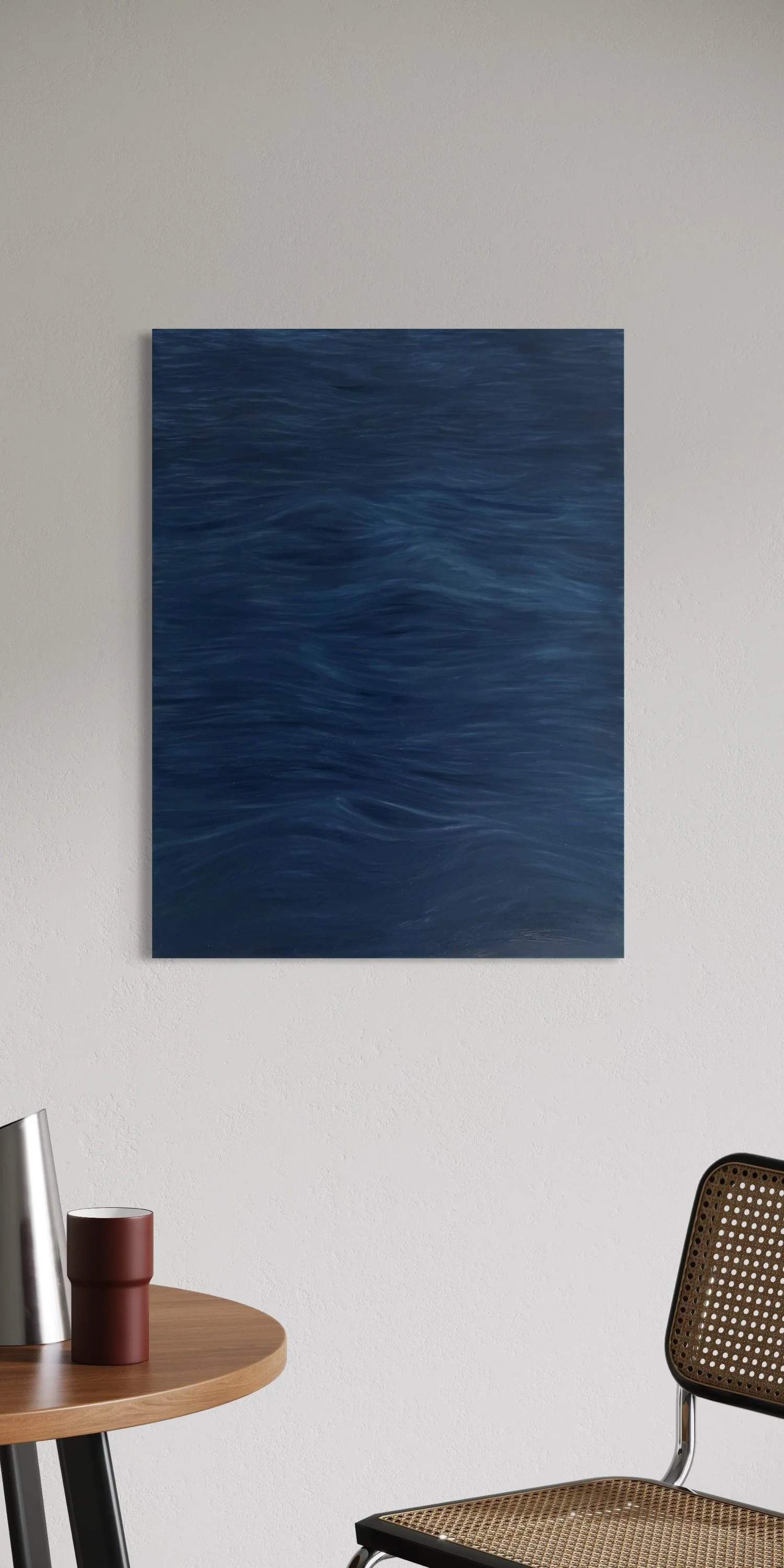
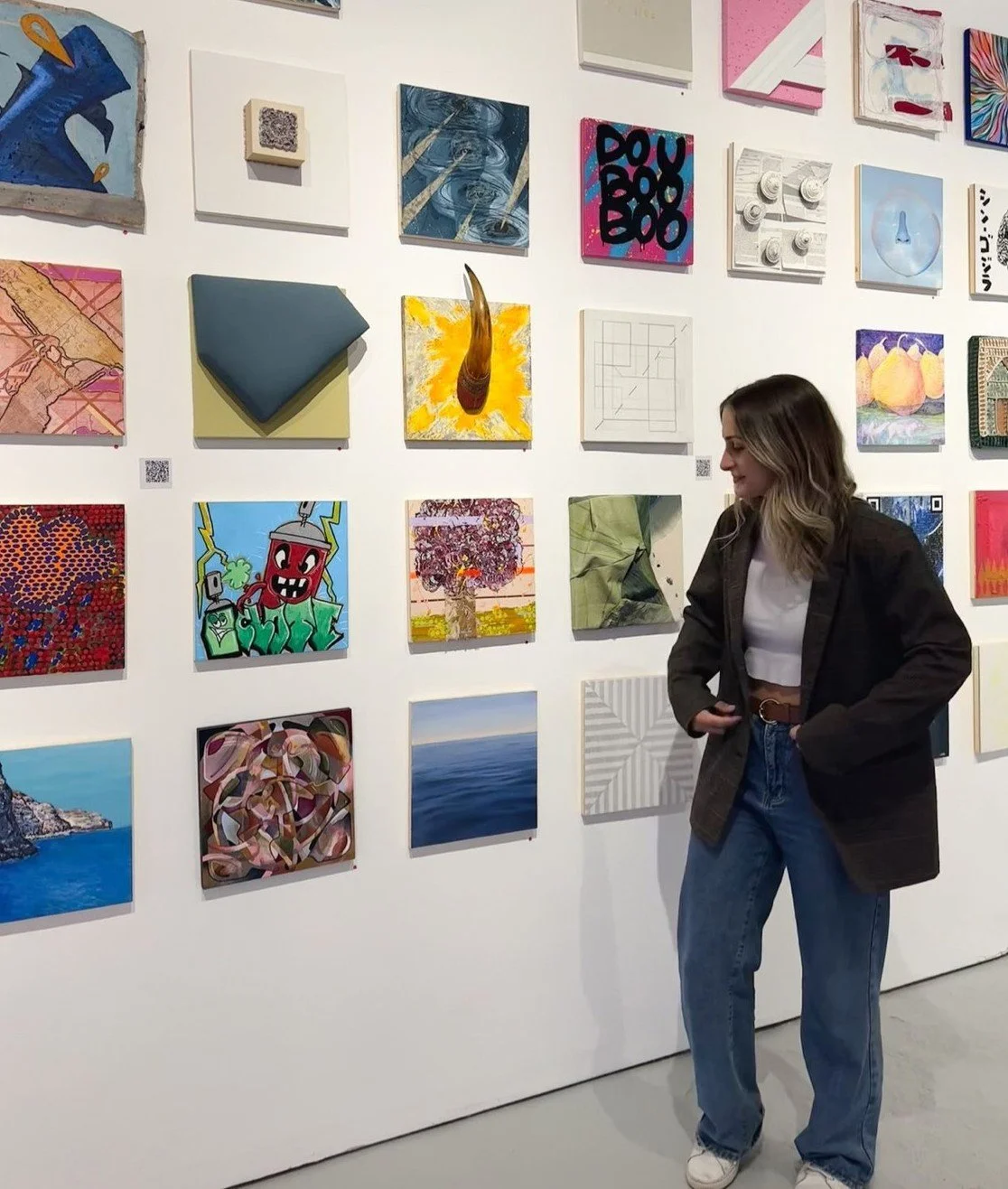
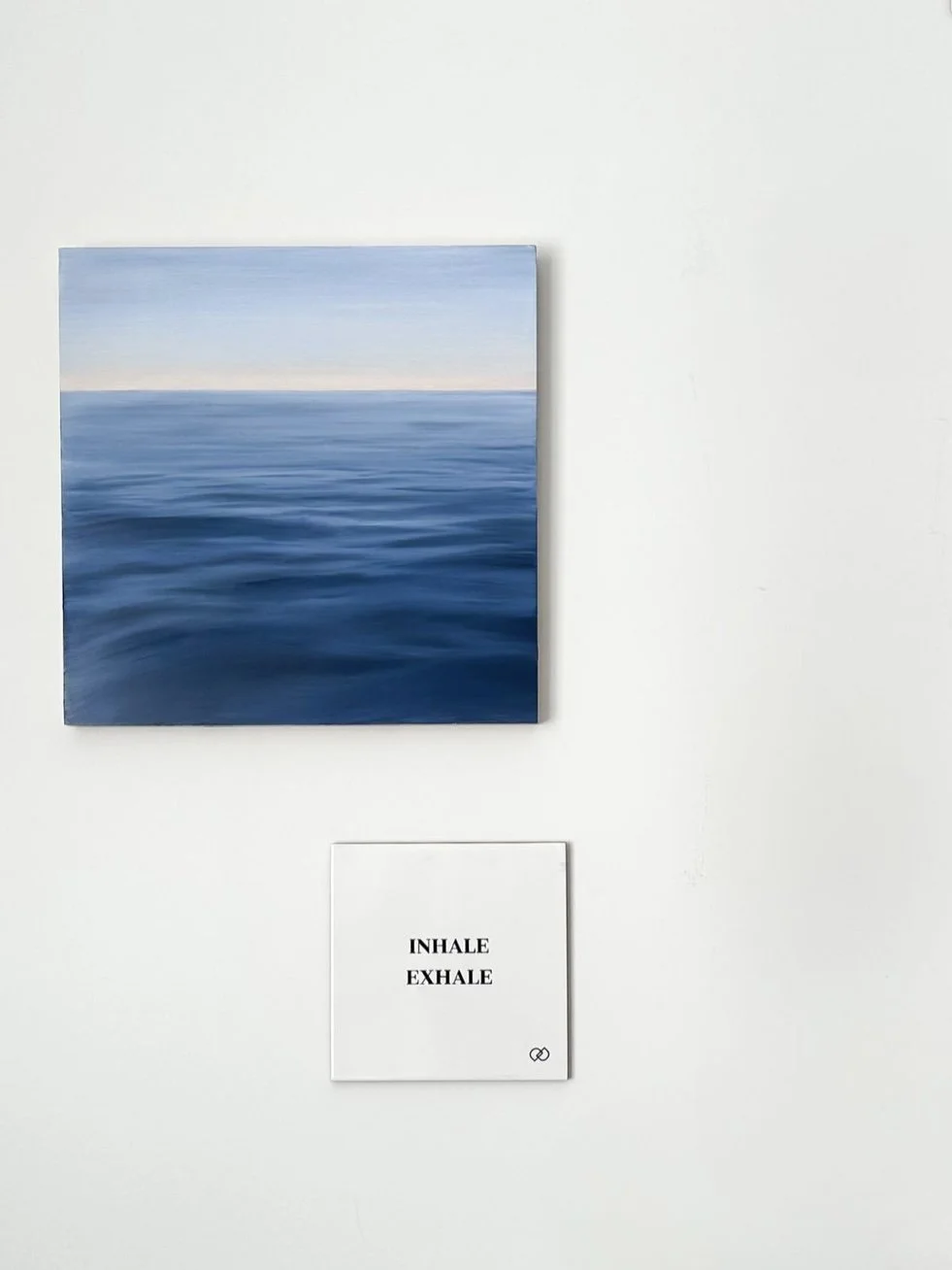
Answer: My relationship with art has always been intuitive. When I was a child, I used to paint a lot, mostly red roses, and my grandmother would say I was going to be an artist. Then, for reasons I don’t even remember anymore, art simply disappeared from my life. It came back during my Architecture degree, when I started developing a very attentive eye for composition, light, and balance. Later, already living in New York, photography became a way of observing the world in a more human and sensitive way. Moving to the United States during the pandemic was a turning point. It was a period that made me look inside, and I feel like my art just emerged from it. First through writing, then photography, and then through drawings I made after meditating. Over time, my practice became more and more connected to my spirituality. About two years ago, I felt a very strong connection with the ocean. When I was invited to participate in an exhibition, I followed this intuition that had been pulsing in blue inside me, and I painted my first ocean in oil. From there, series like “Sereno” and “Oceano: Um Reflexo” were born, where the sea is not a landscape, but a mirror of internal states. And from that point on, I began developing my own technique and understanding the origin of my work as a reflection of my emotions and of these encounters between my multidisciplinary practices.
2. Creative Process
Question: Do you have any rituals or routines that help you get into a creative mindset when starting a new project?
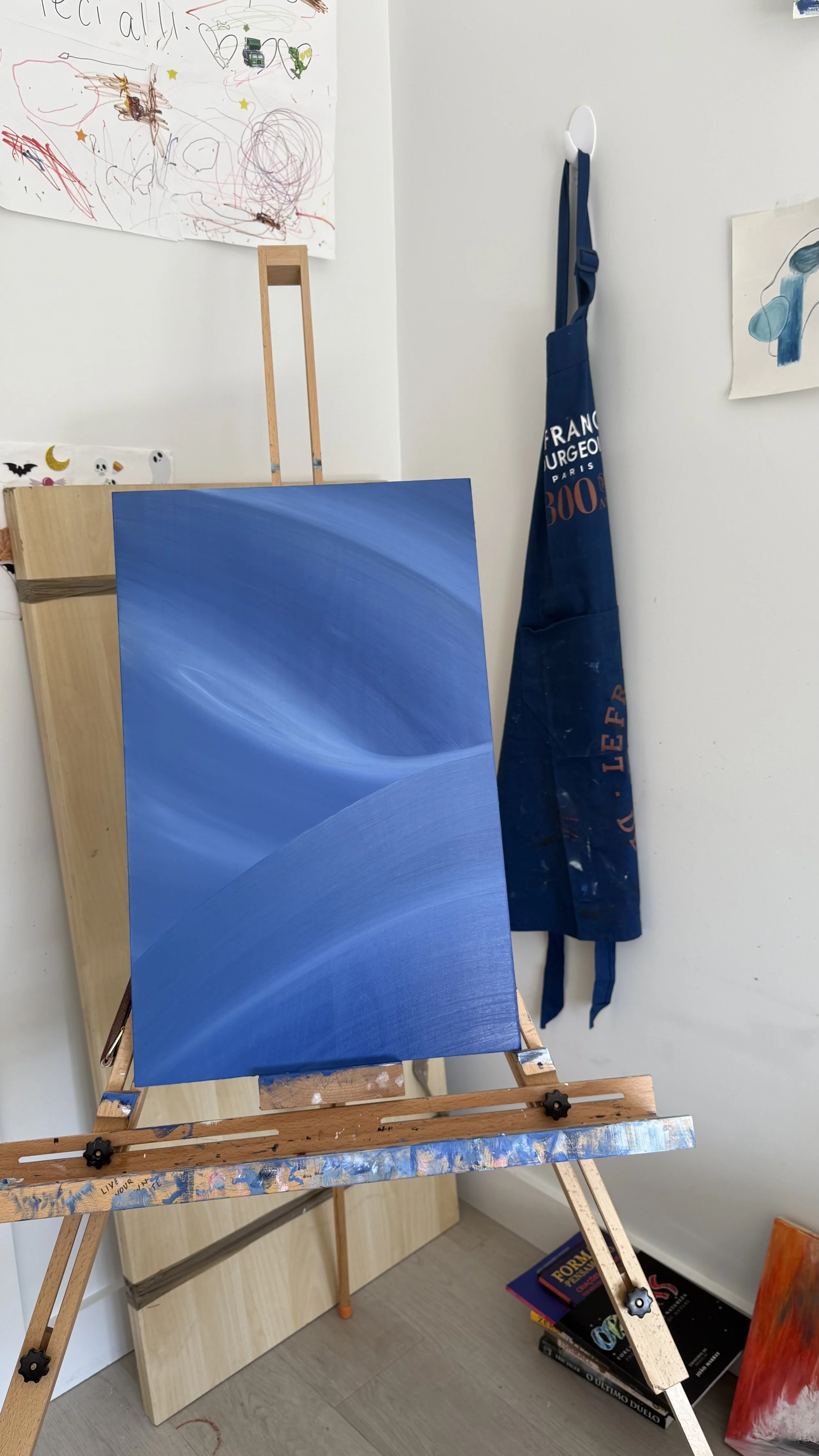
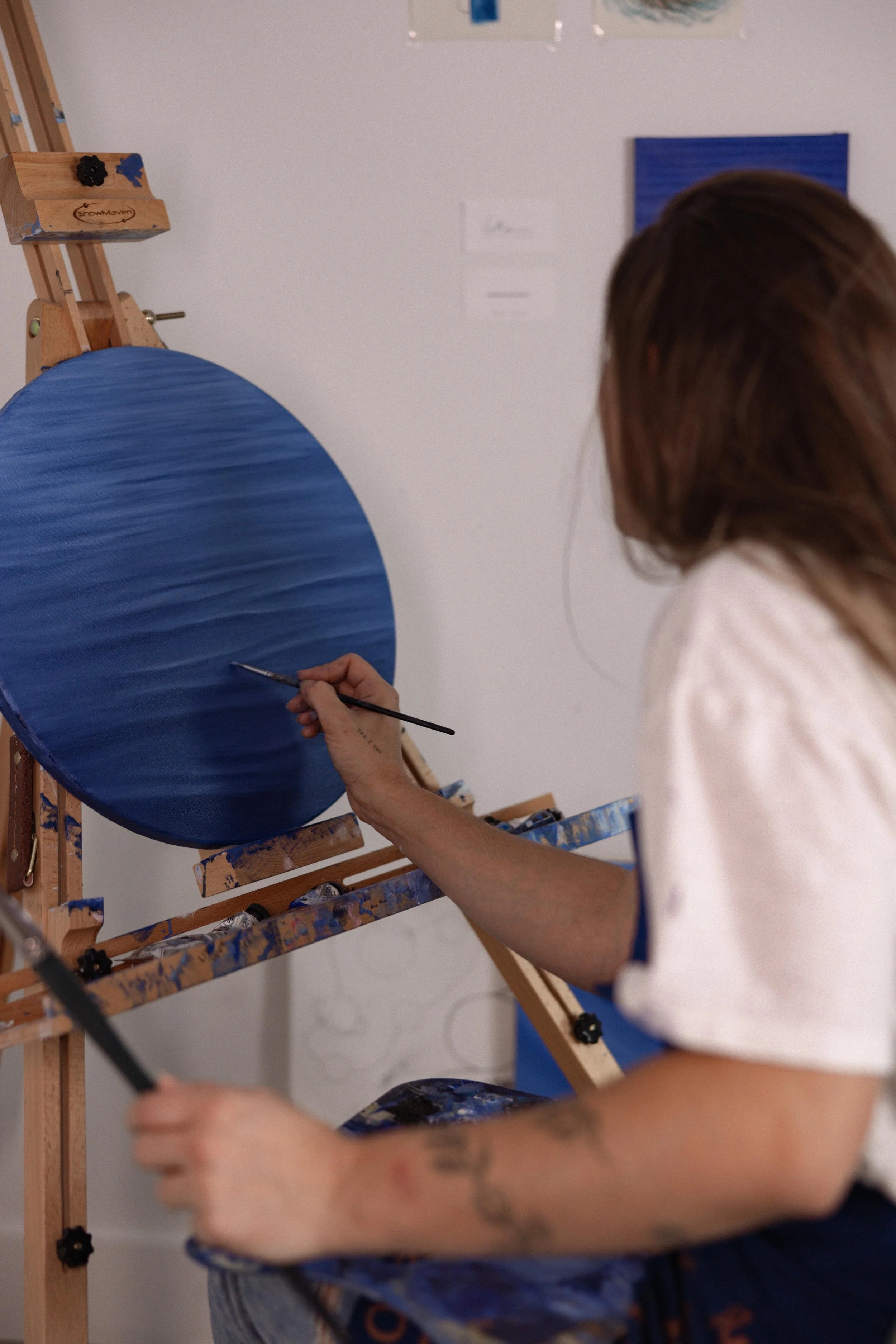
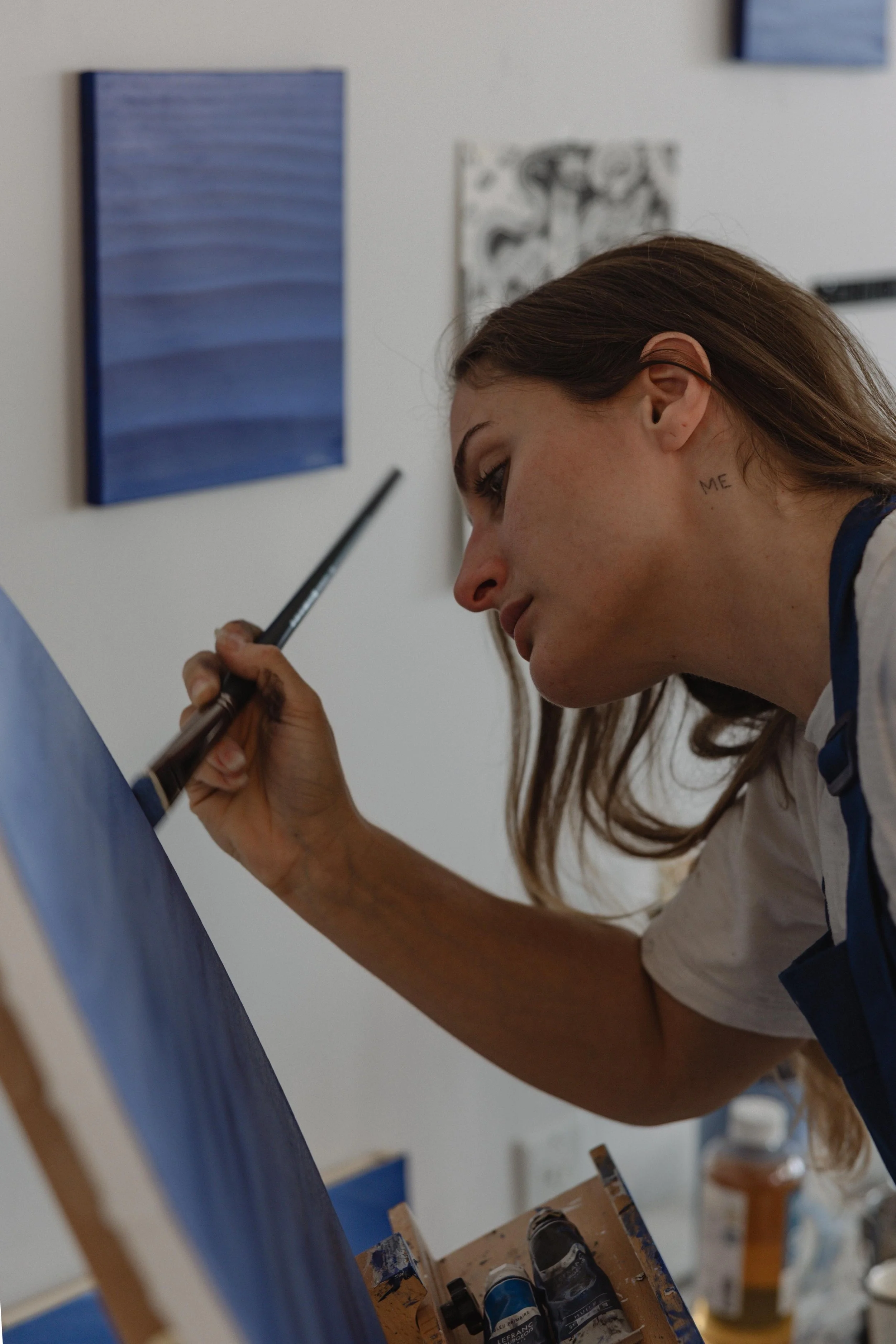
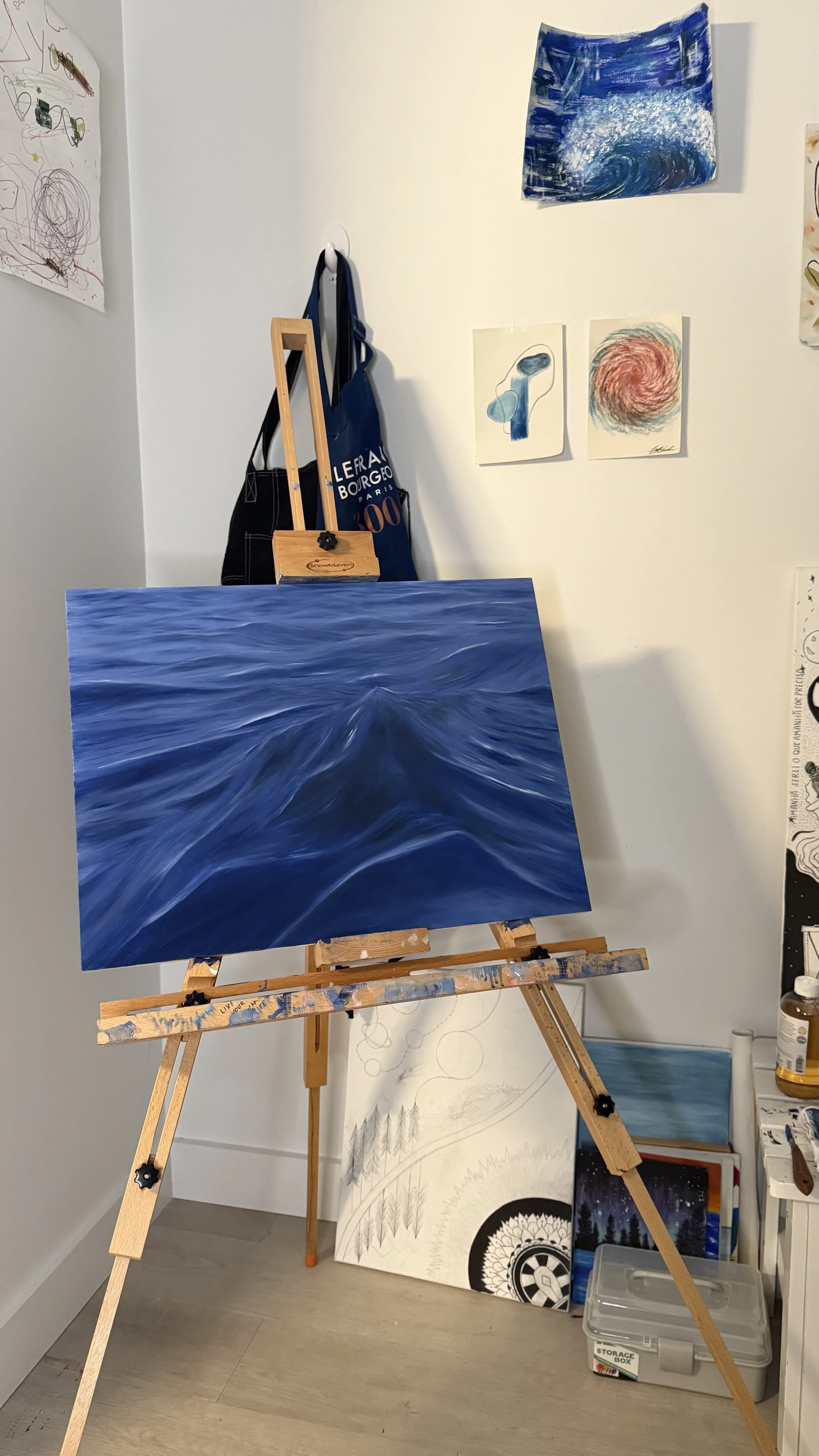
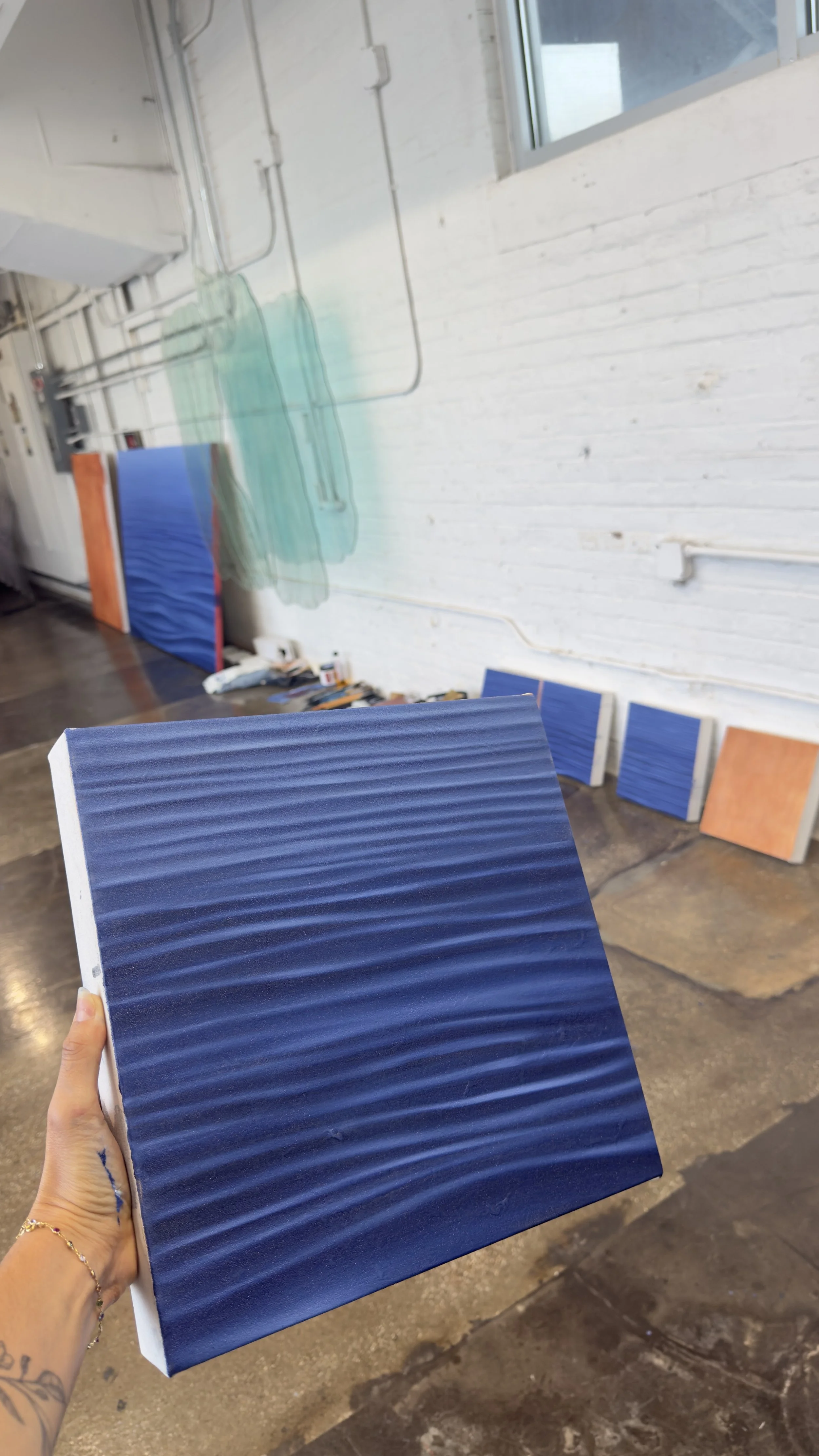
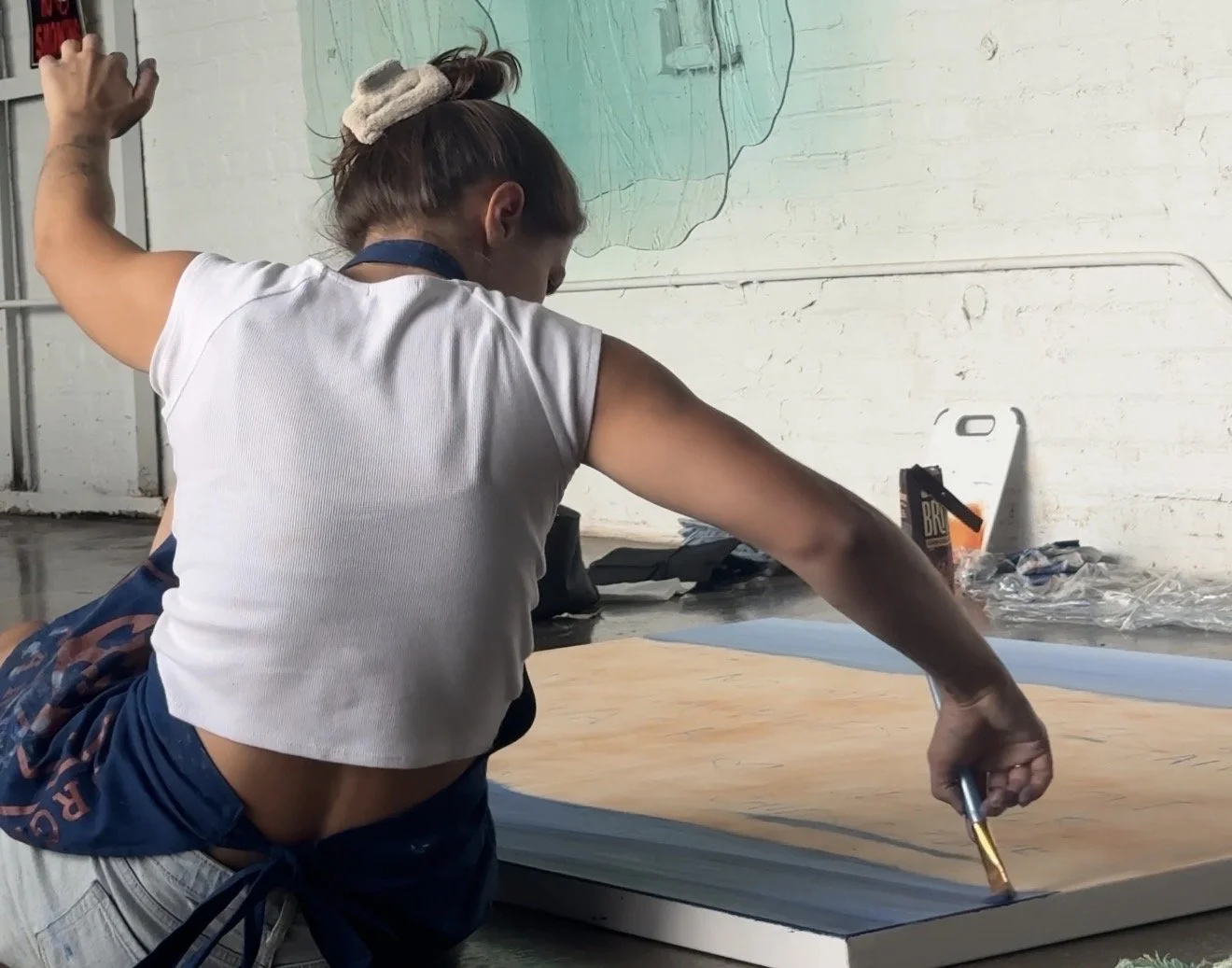
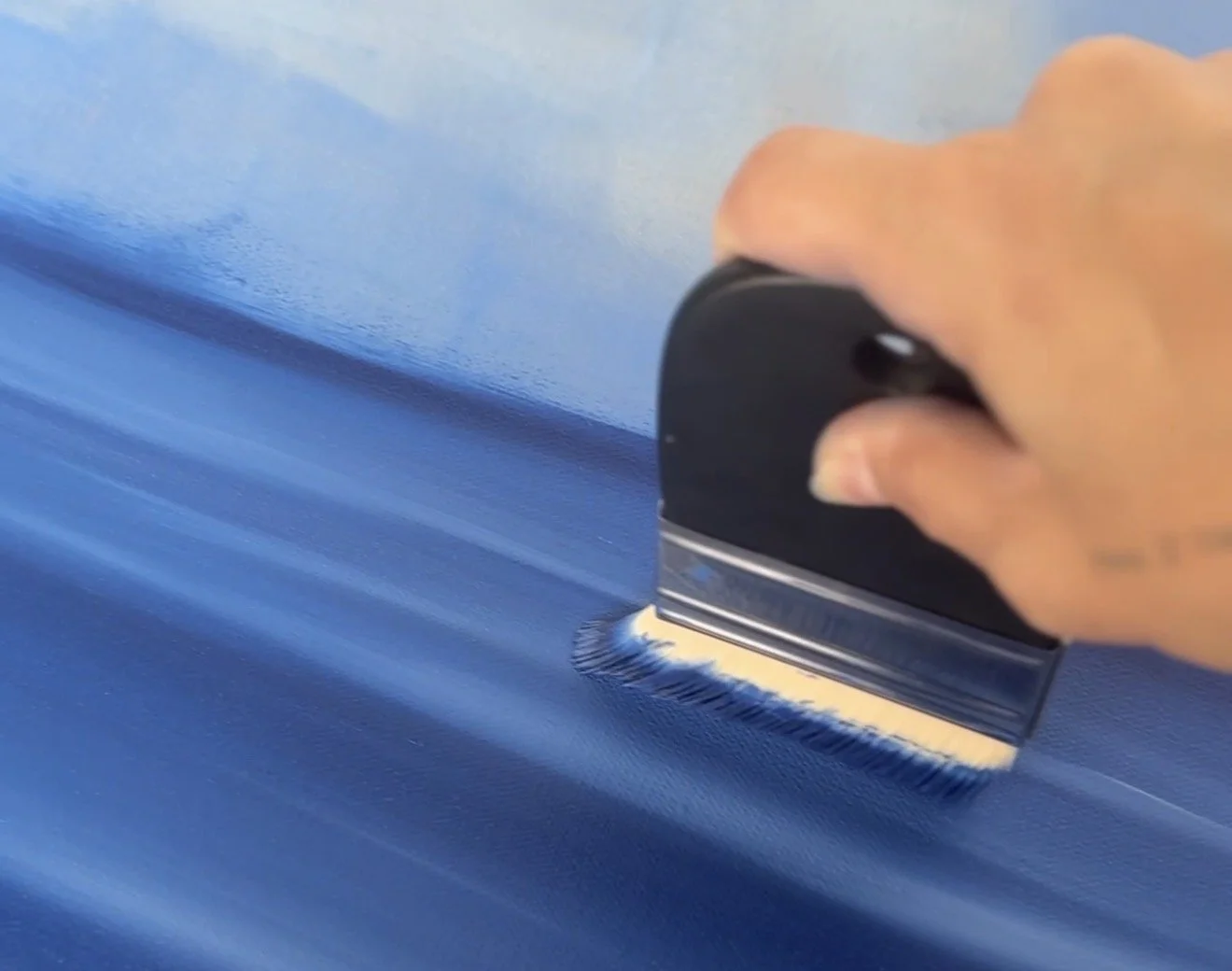
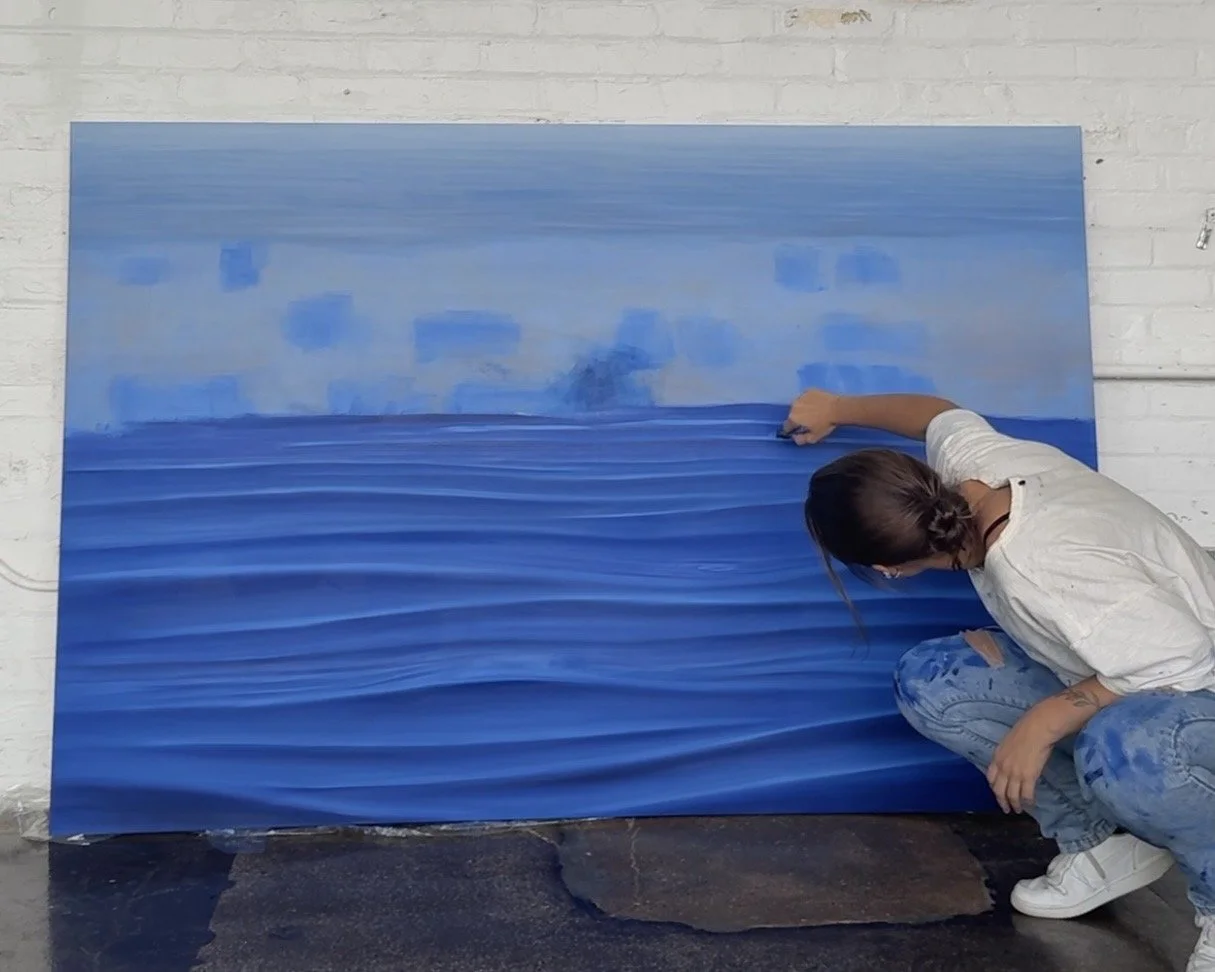
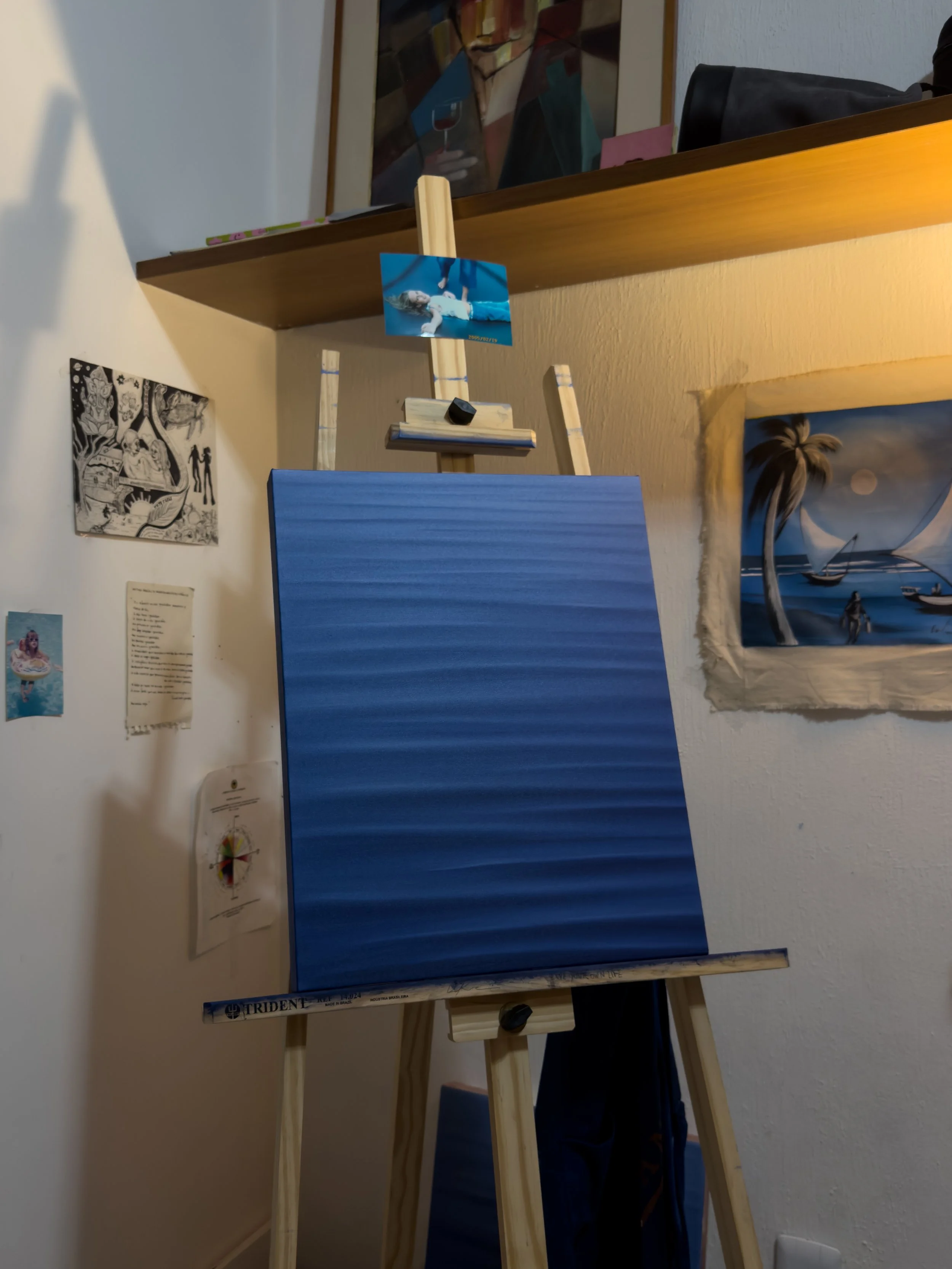
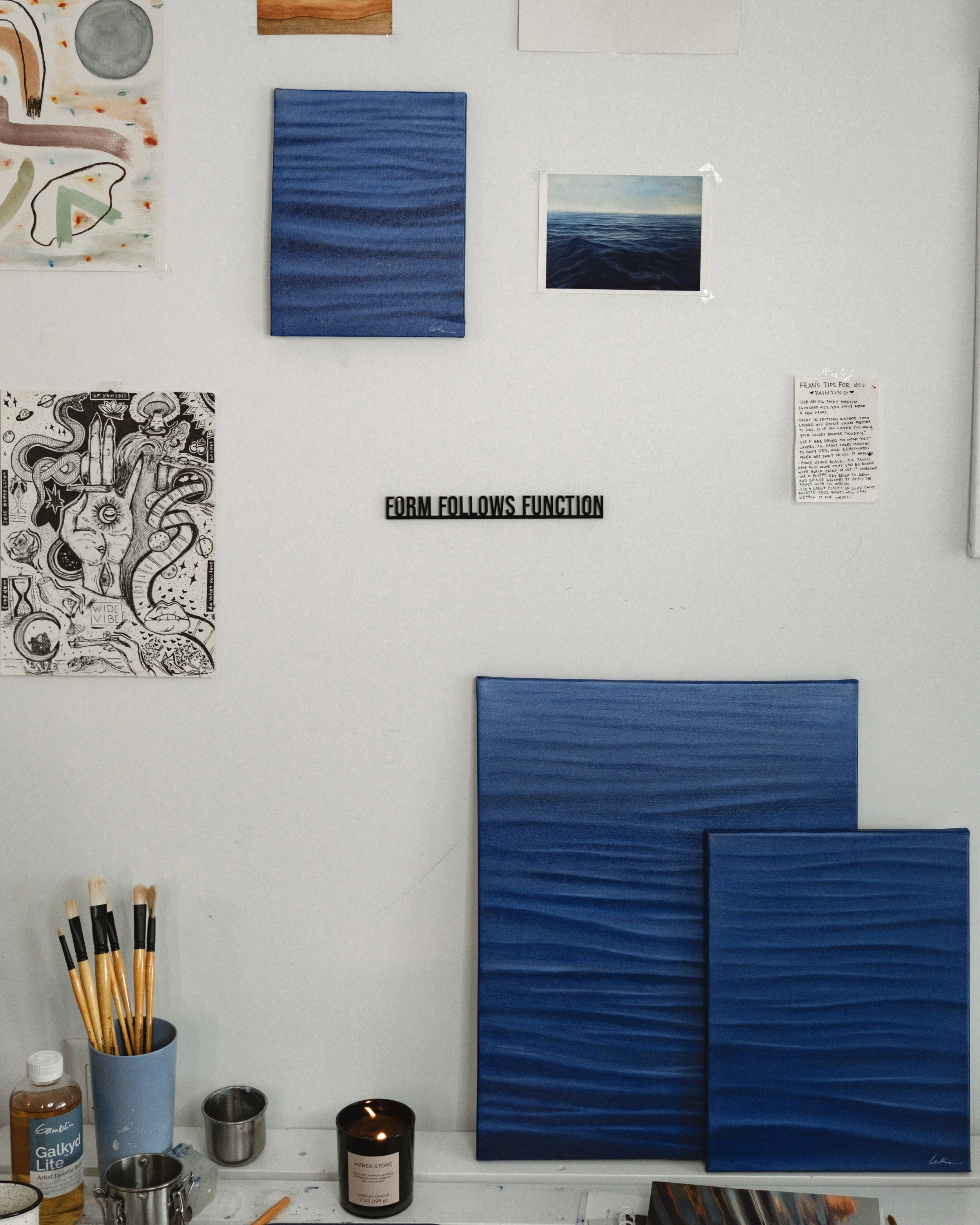
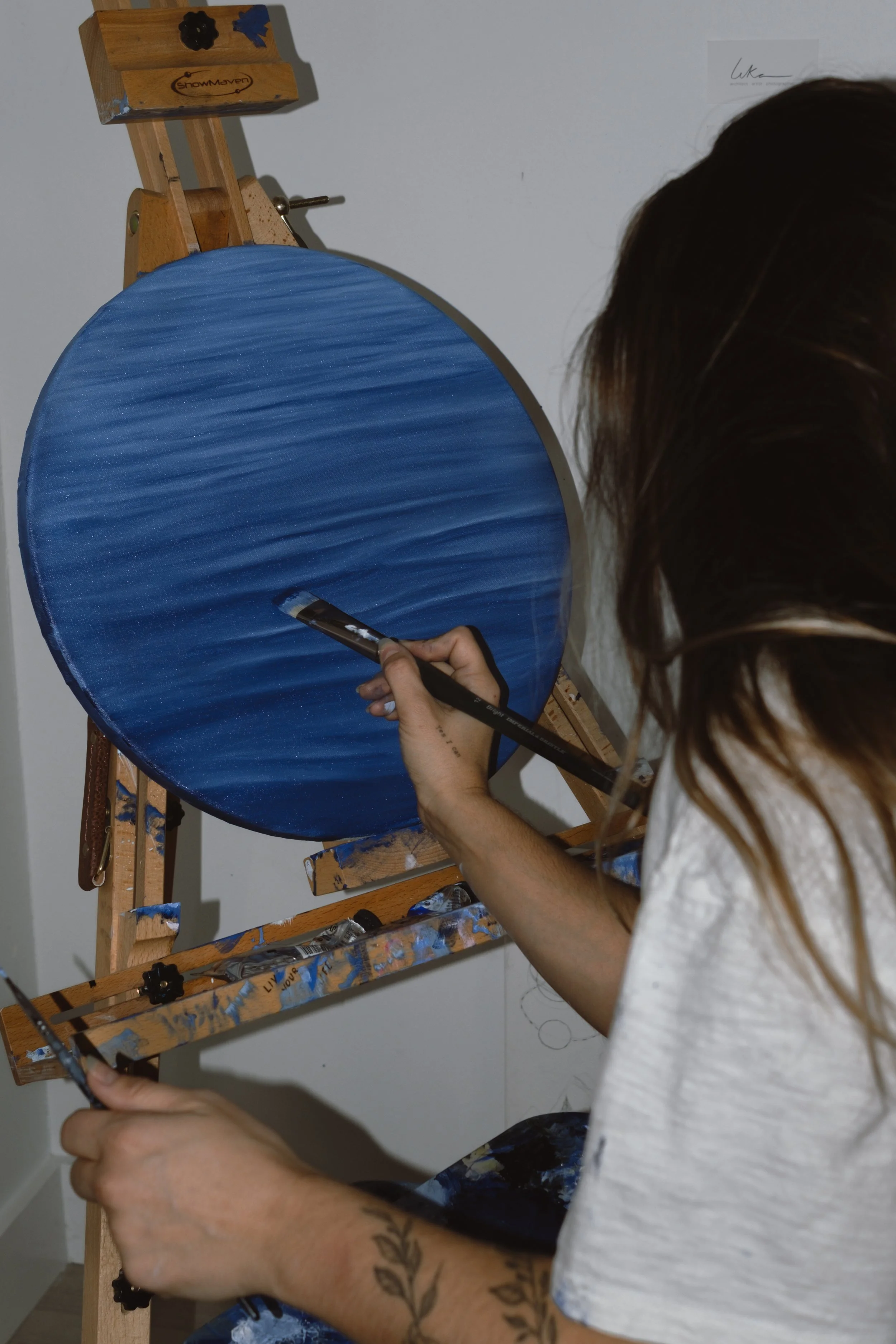
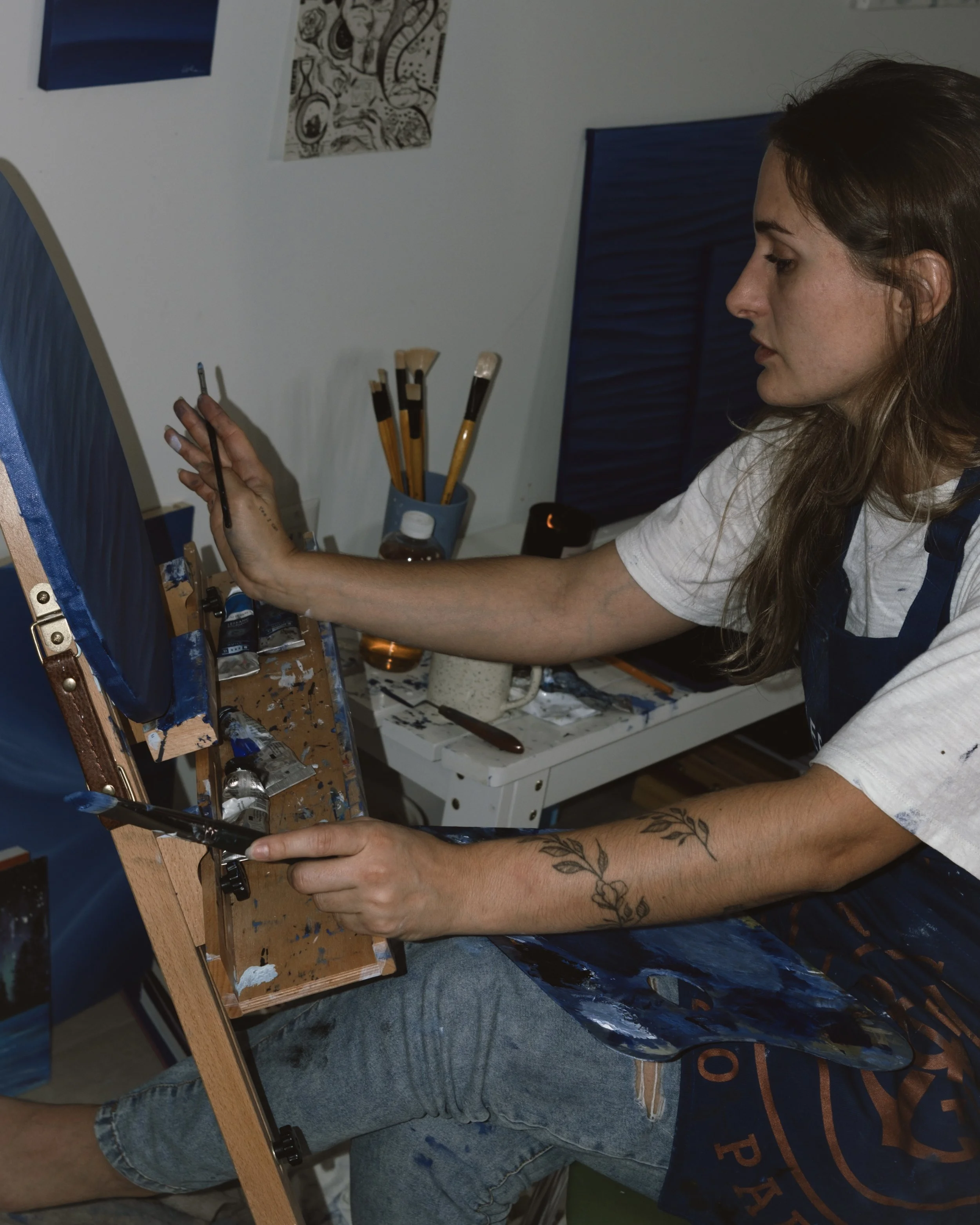
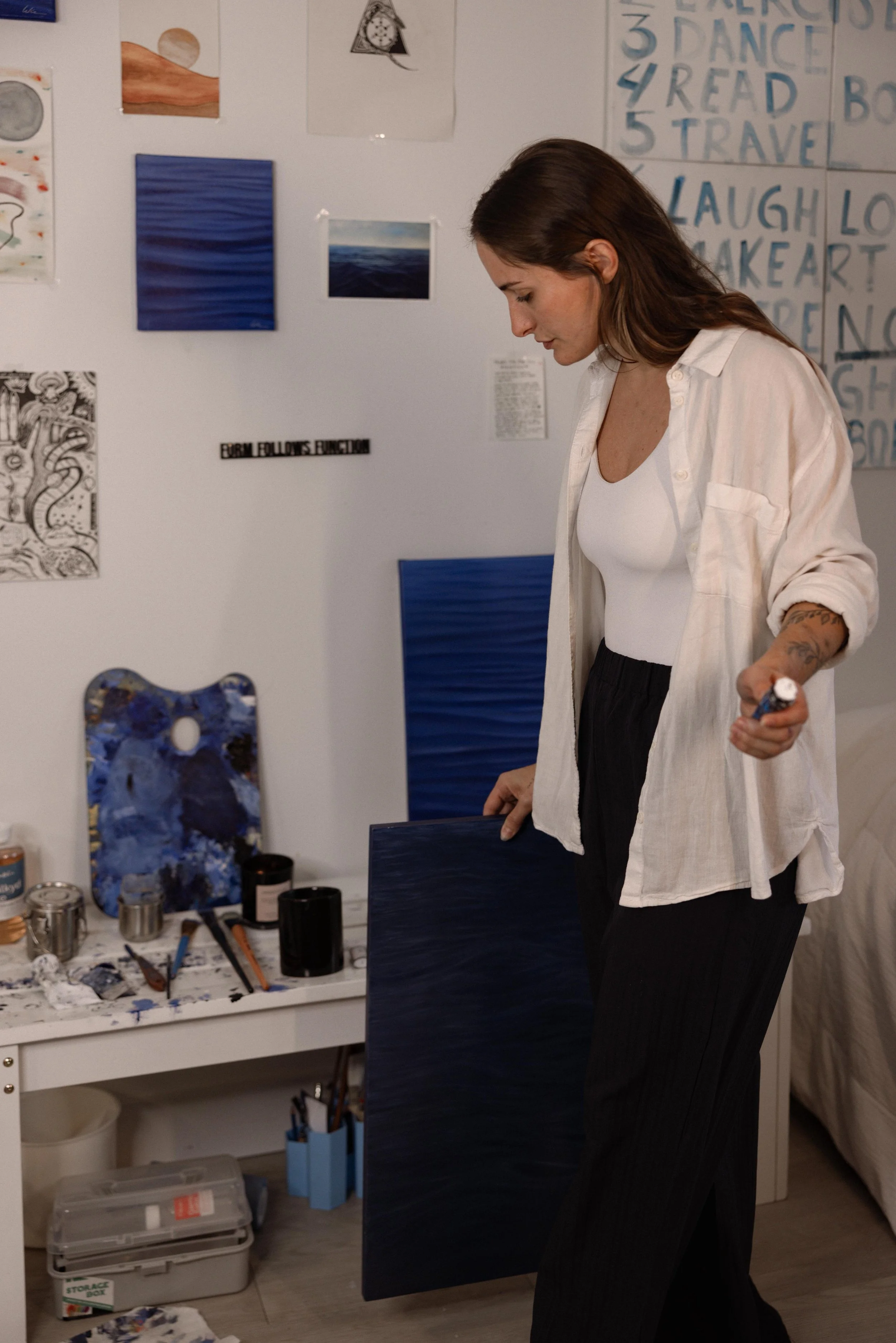
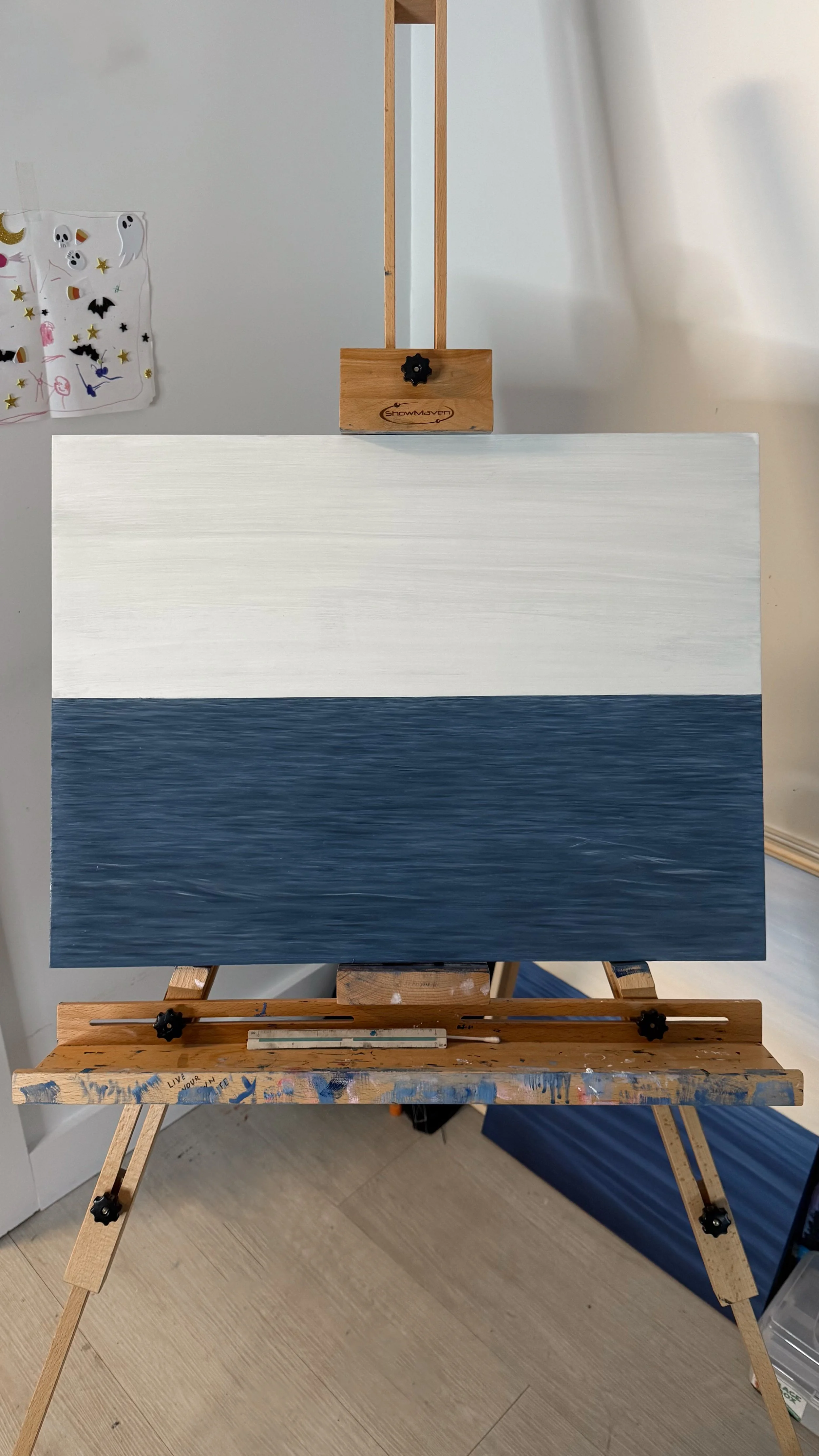
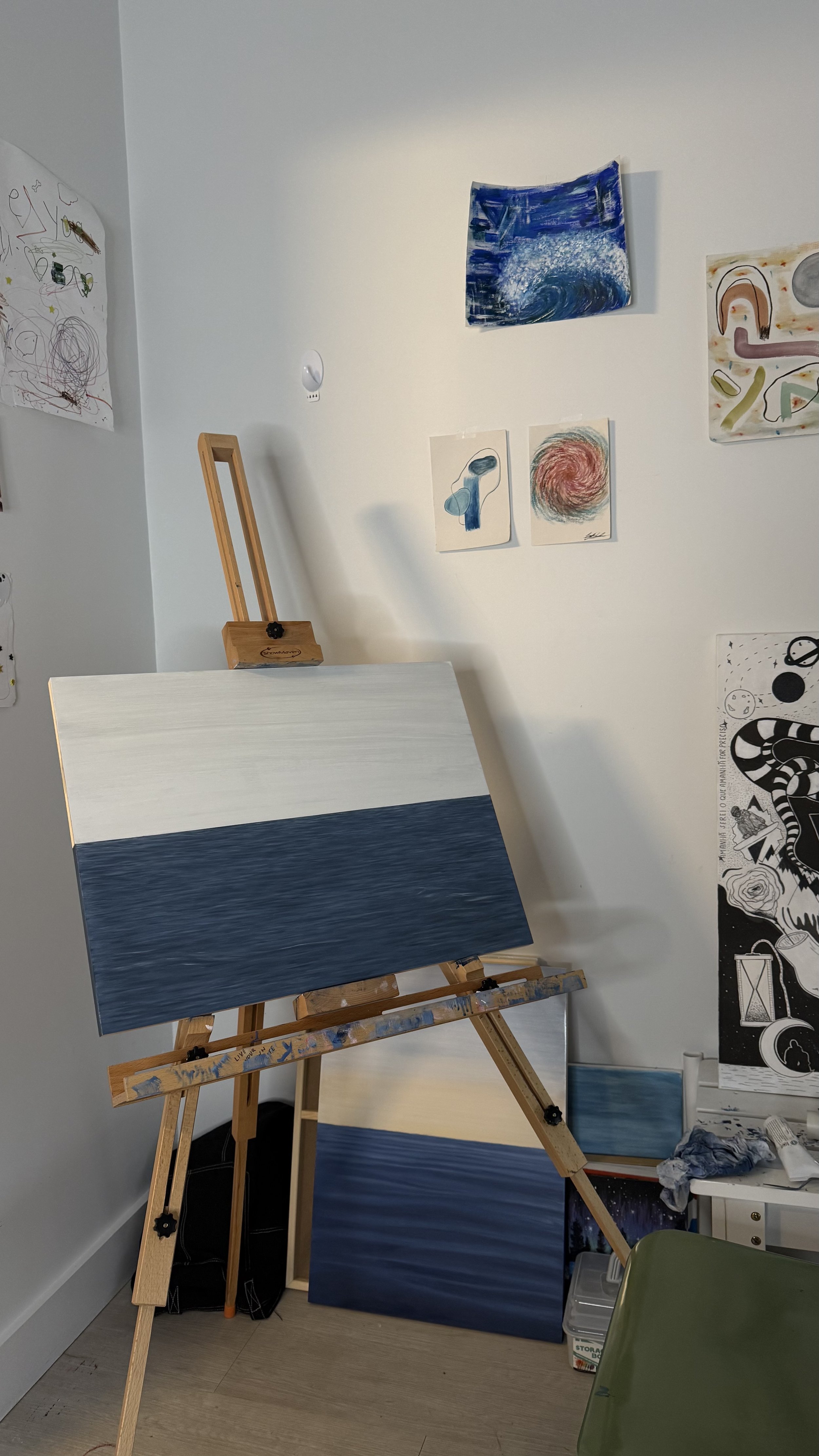
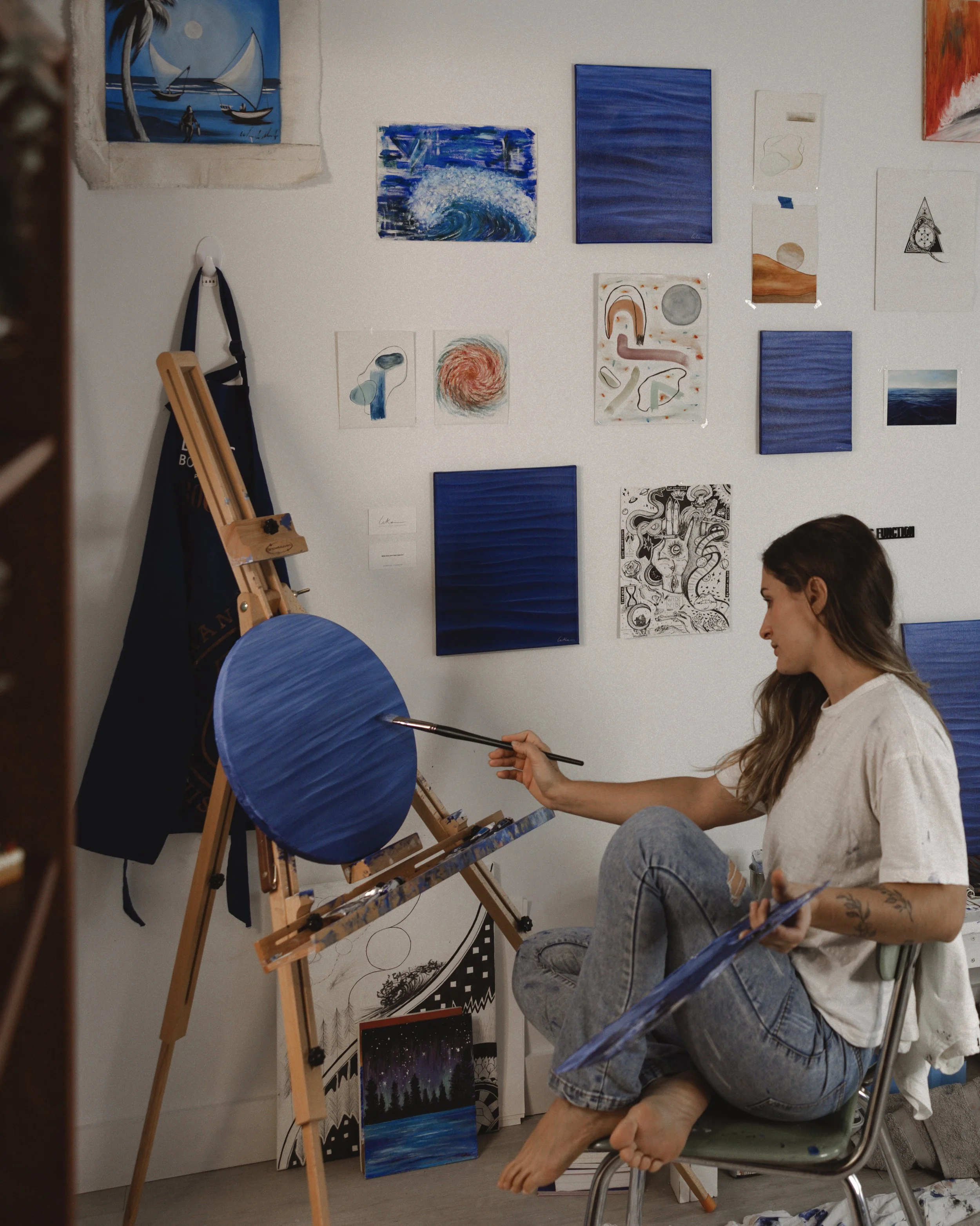
Answer: Yes, I do. Before painting, I need to organize and clean the space, light a candle, meditate, do yoga, or write in my journal. These routines help ground me and put me in the right state to create, almost like aligning the “verticality” that runs through my work. I build the ocean gradually, letting gesture, color, and drying time define the rhythm, that helps me trust the process. I often paint while listening to piano, because it puts me in the same contemplative state I want to transmit through the work. I only start painting when I feel fully present.
3. Artistic Influences
Question: How do you balance historical or artistic influences with your personal style, and how do these influences manifest in your work today?
Answer: My influences come from Brazilian architecture and nature, from photography that values authenticity and emotional perception, and from artists who use color and gesture as an extension of themselves. Architecture gave me structure, photography gave me presence, painting gave me emotional depth. But intuition and what I’m feeling in the moment are what truly guides my work. I don’t use visual references to begin a piece, I always start from the inside out.
4. Emotion & Expression
Question: How do you use your art to evoke emotions, and what role does emotion play in your creative process?
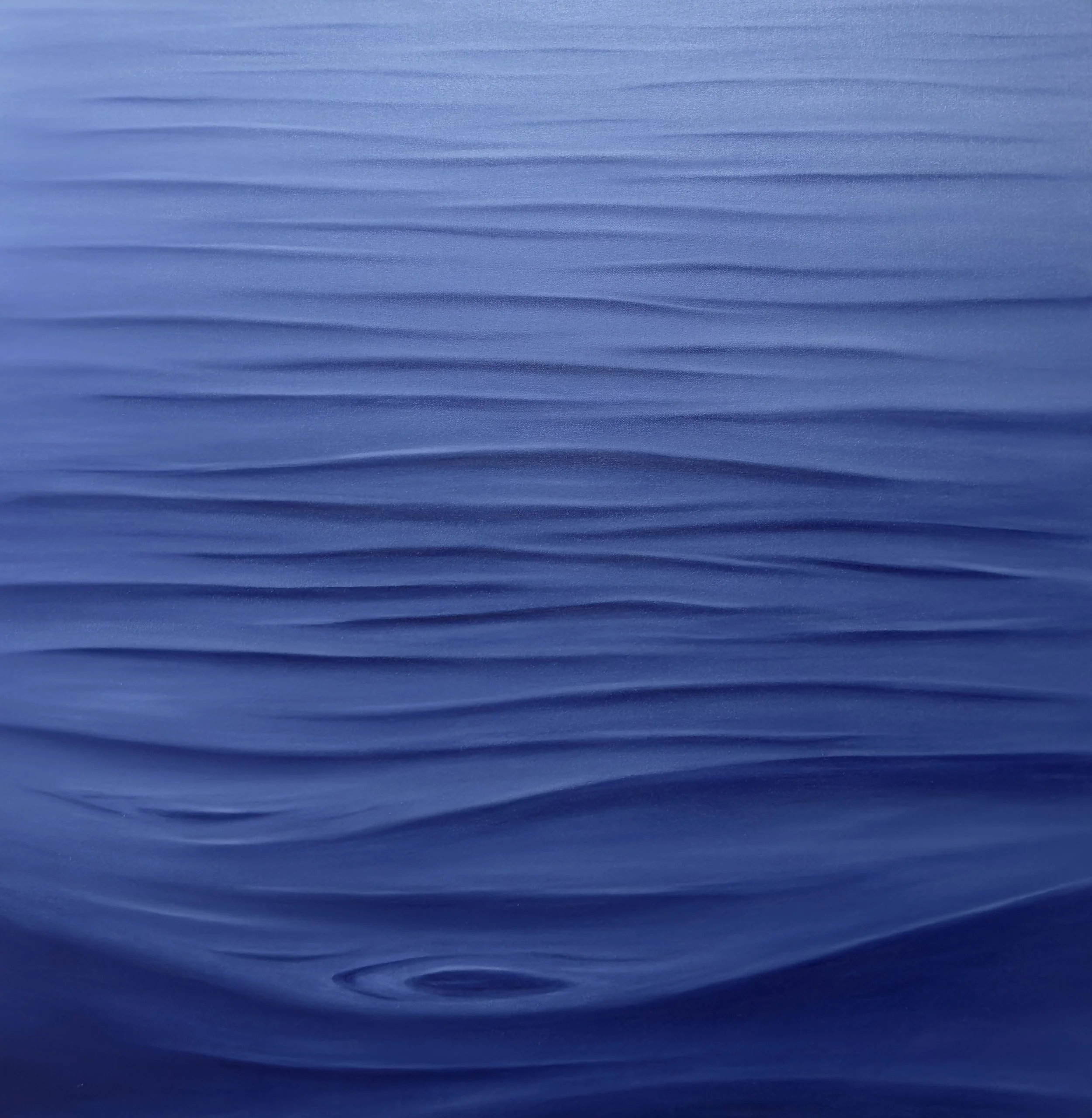
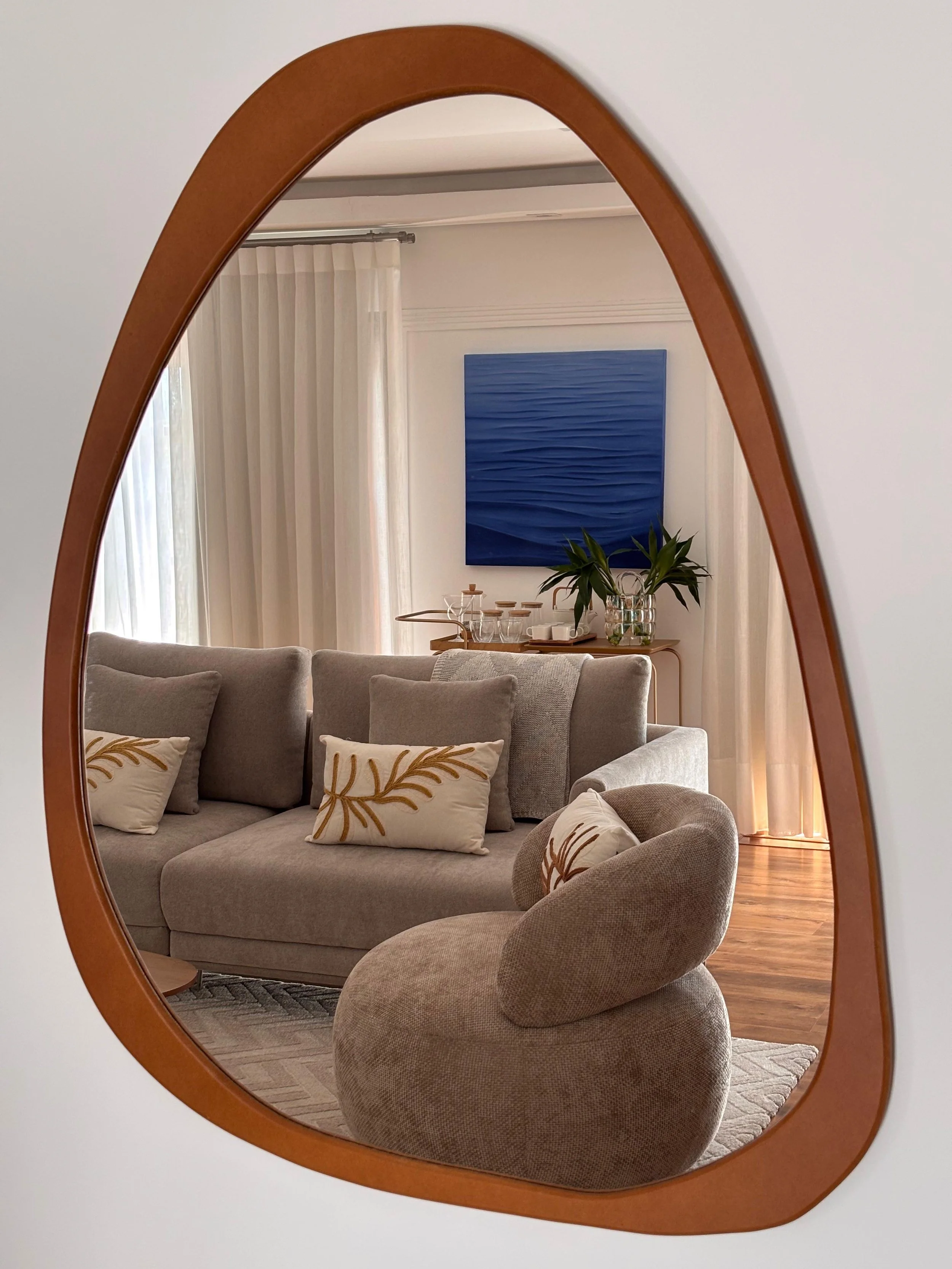
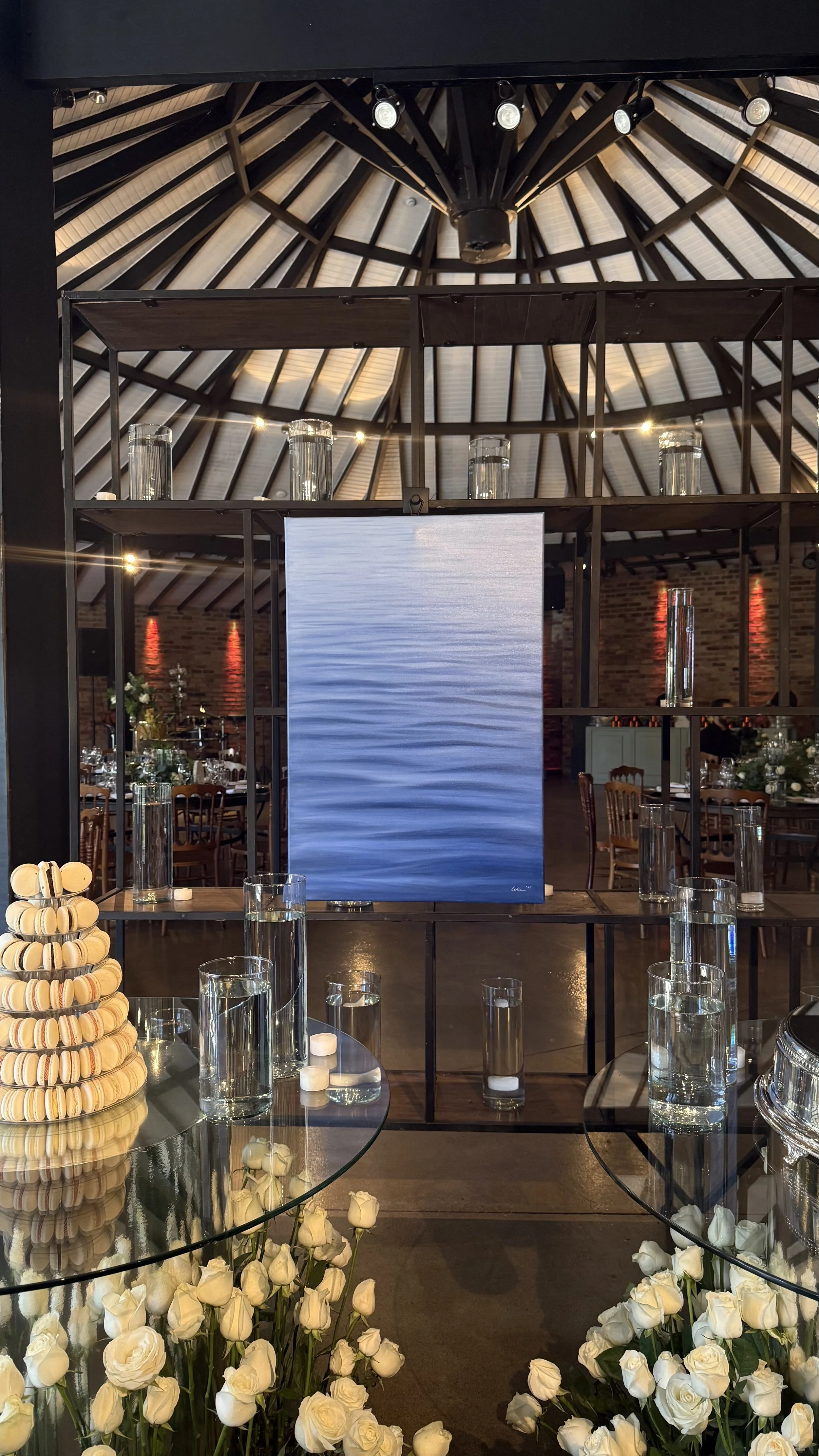
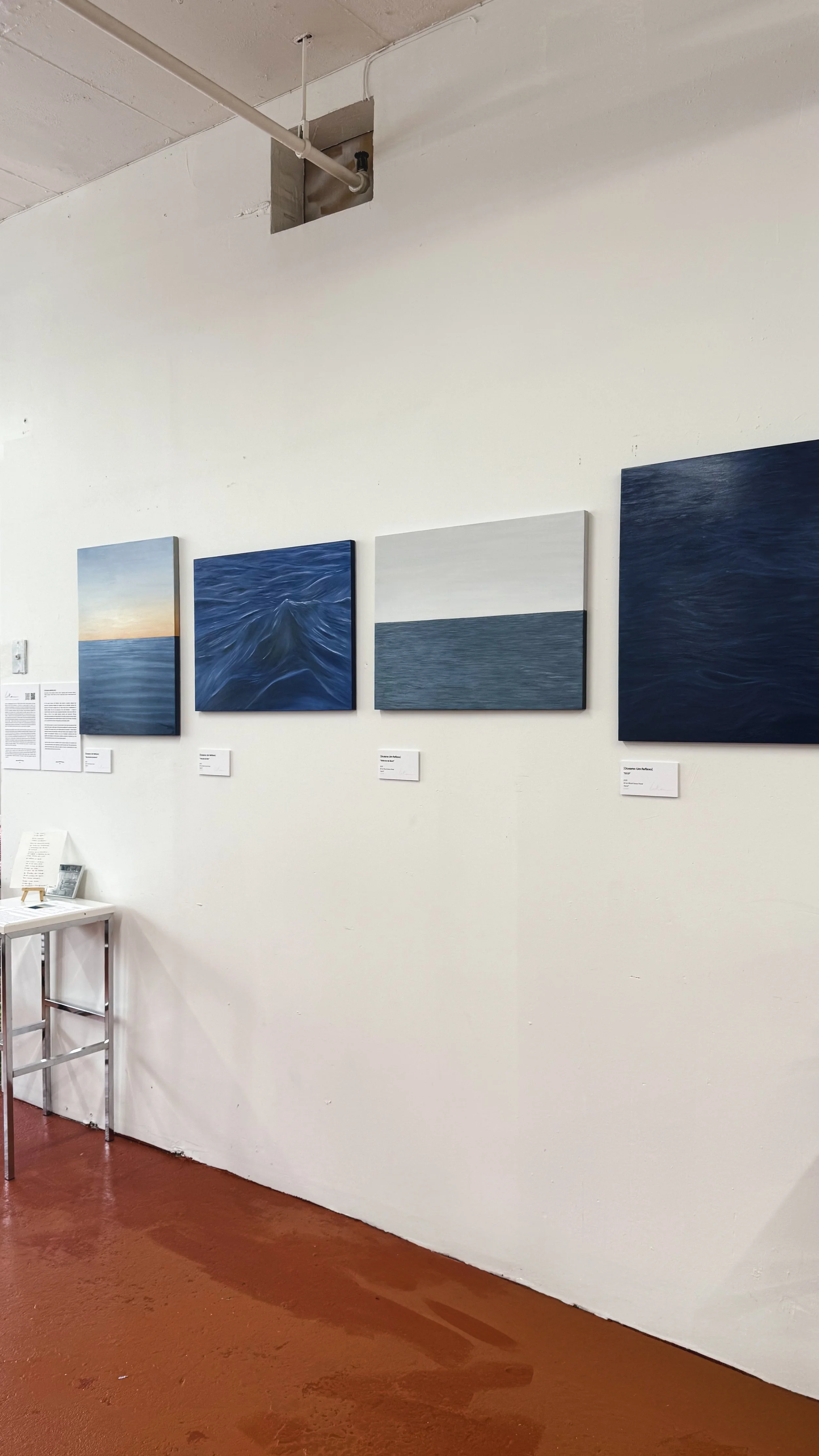
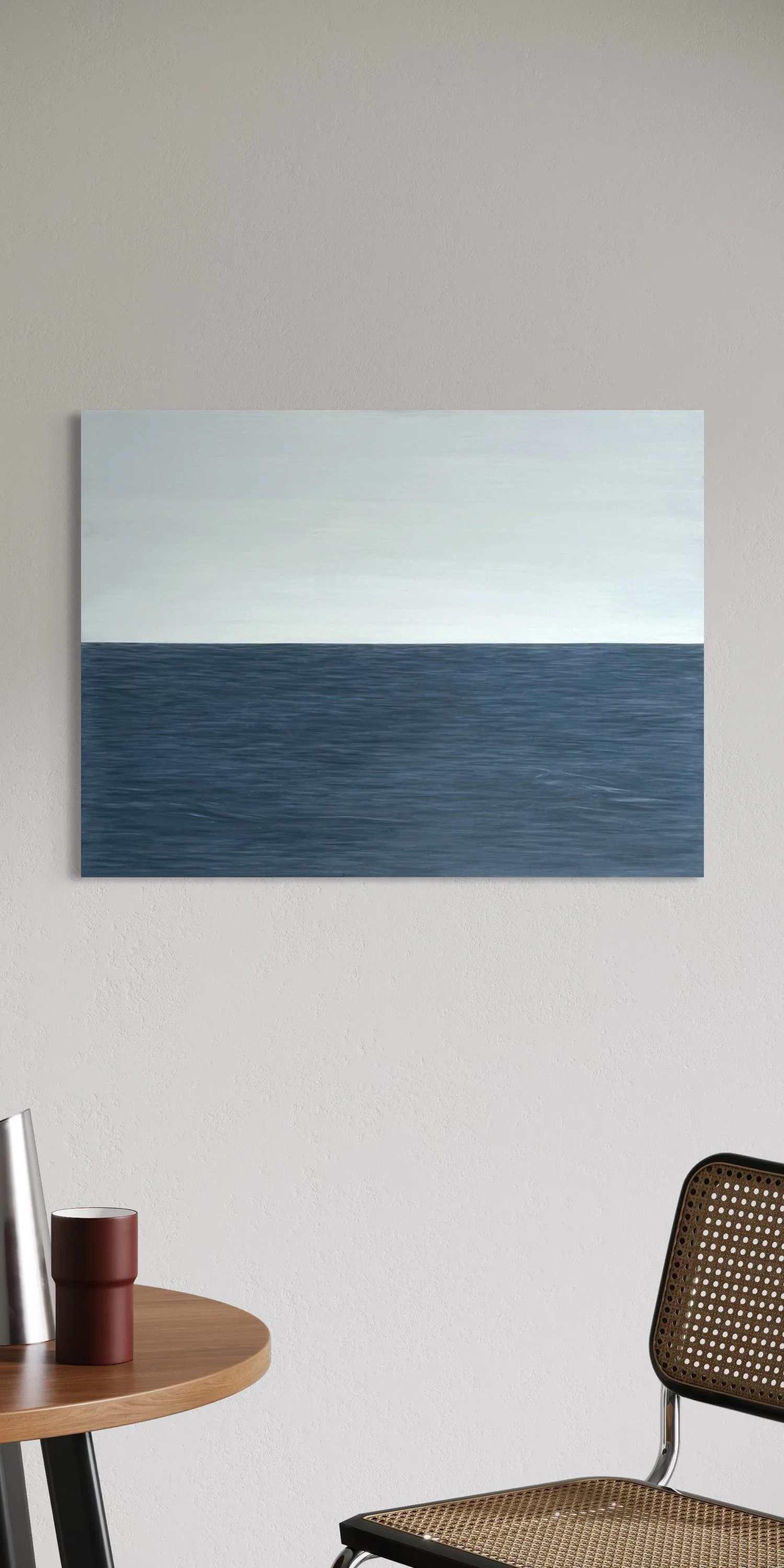
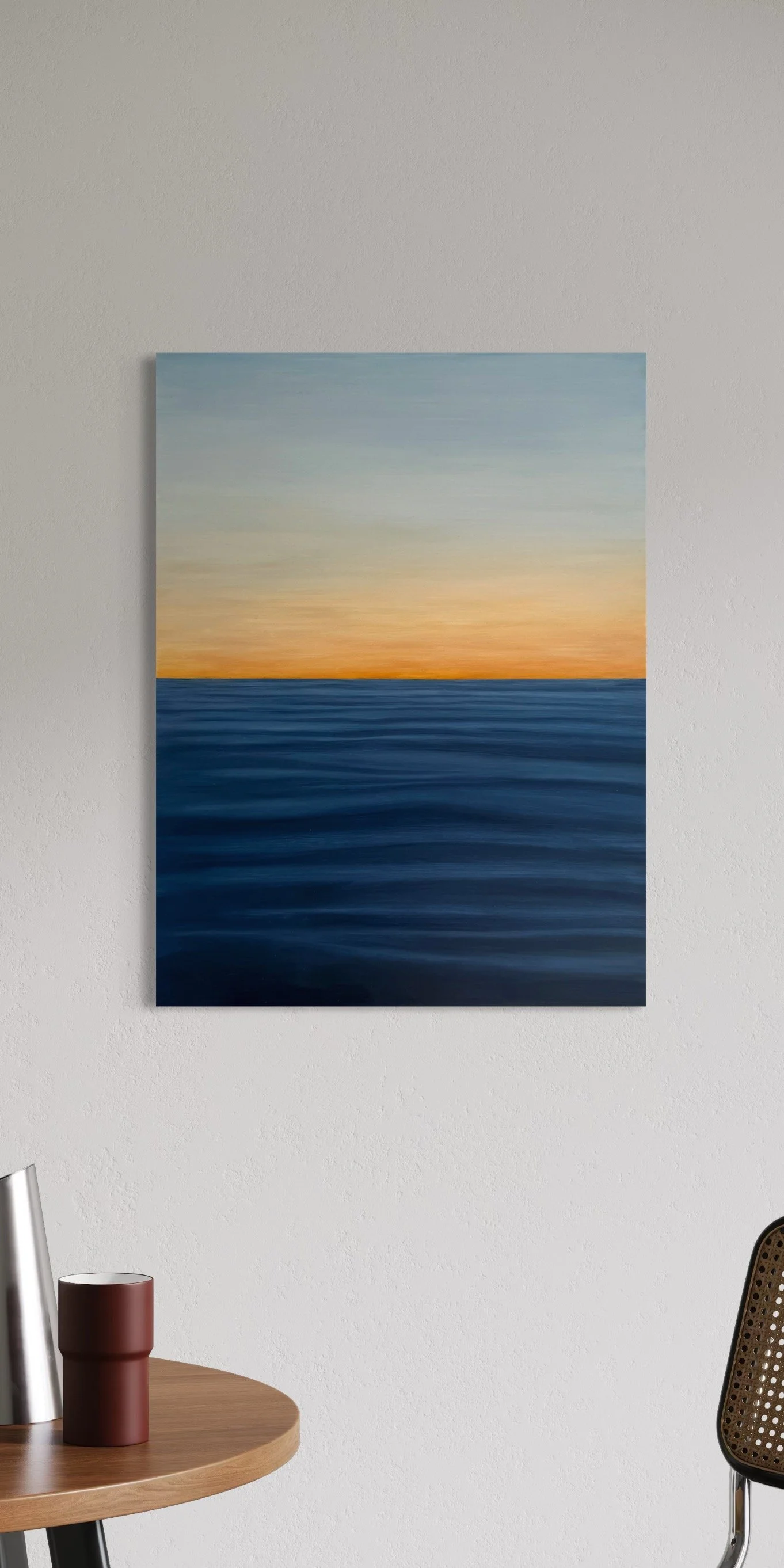
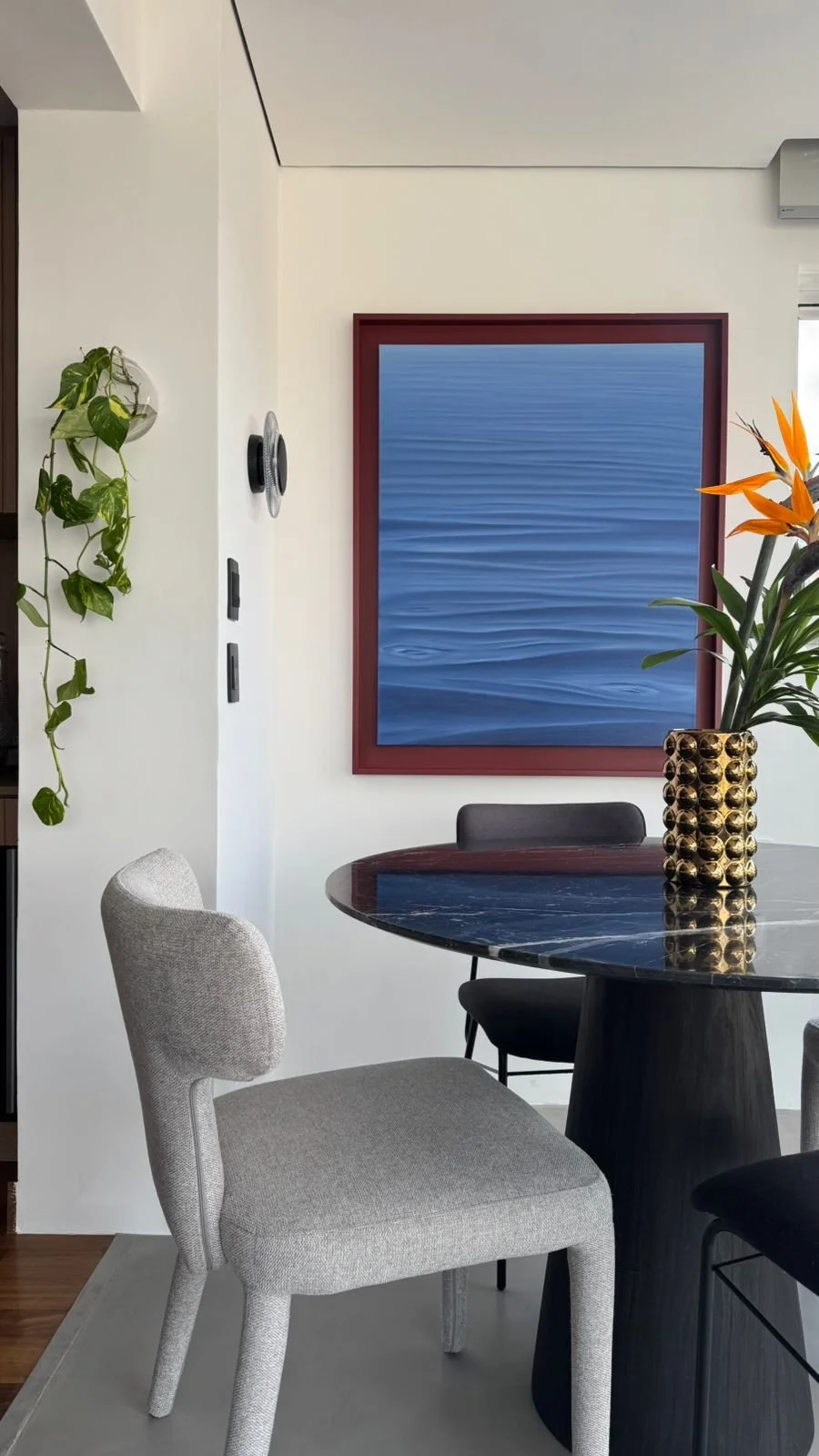
Answer: Emotion is the most important foundation of my work. My oceans are created to make the viewer feel something before trying to understand anything. I see each piece as a space for contemplation, a place where someone can breathe and recognize themselves. It’s not about explaining emotion, but about opening space for each person to access their own. In series like “Oceano: Um Reflexo”, the ocean appears as an expression of internal states, not as a literal view, I explore in it the duality between calm and movement. In “The Sea Within Me”, the idea is a sanctuary of calm after emotional chaos. All of it comes from real experiences that later become paintings.
5. Standout Projects
Question: Can you share a project that stands out to you and describe the creative process behind it?
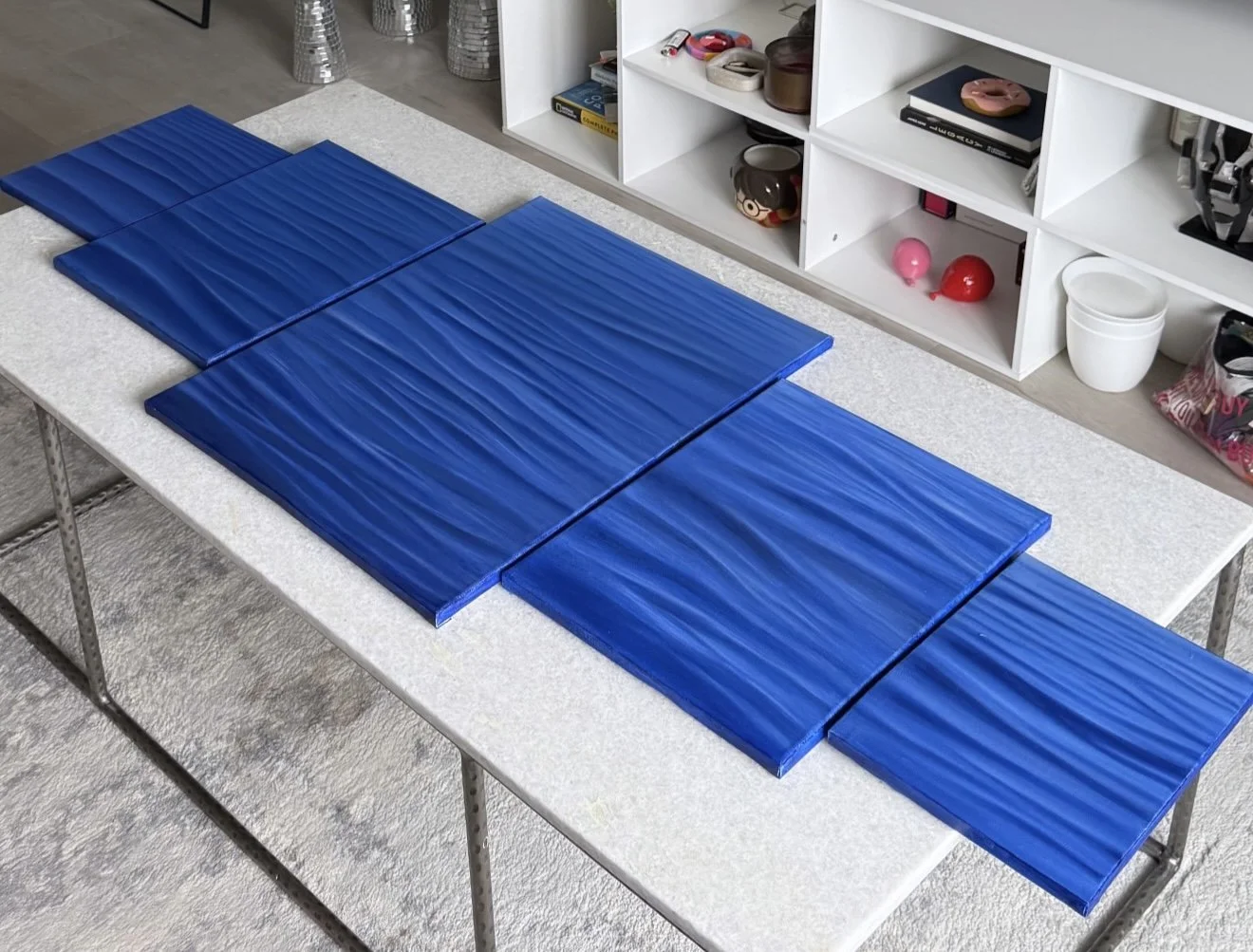
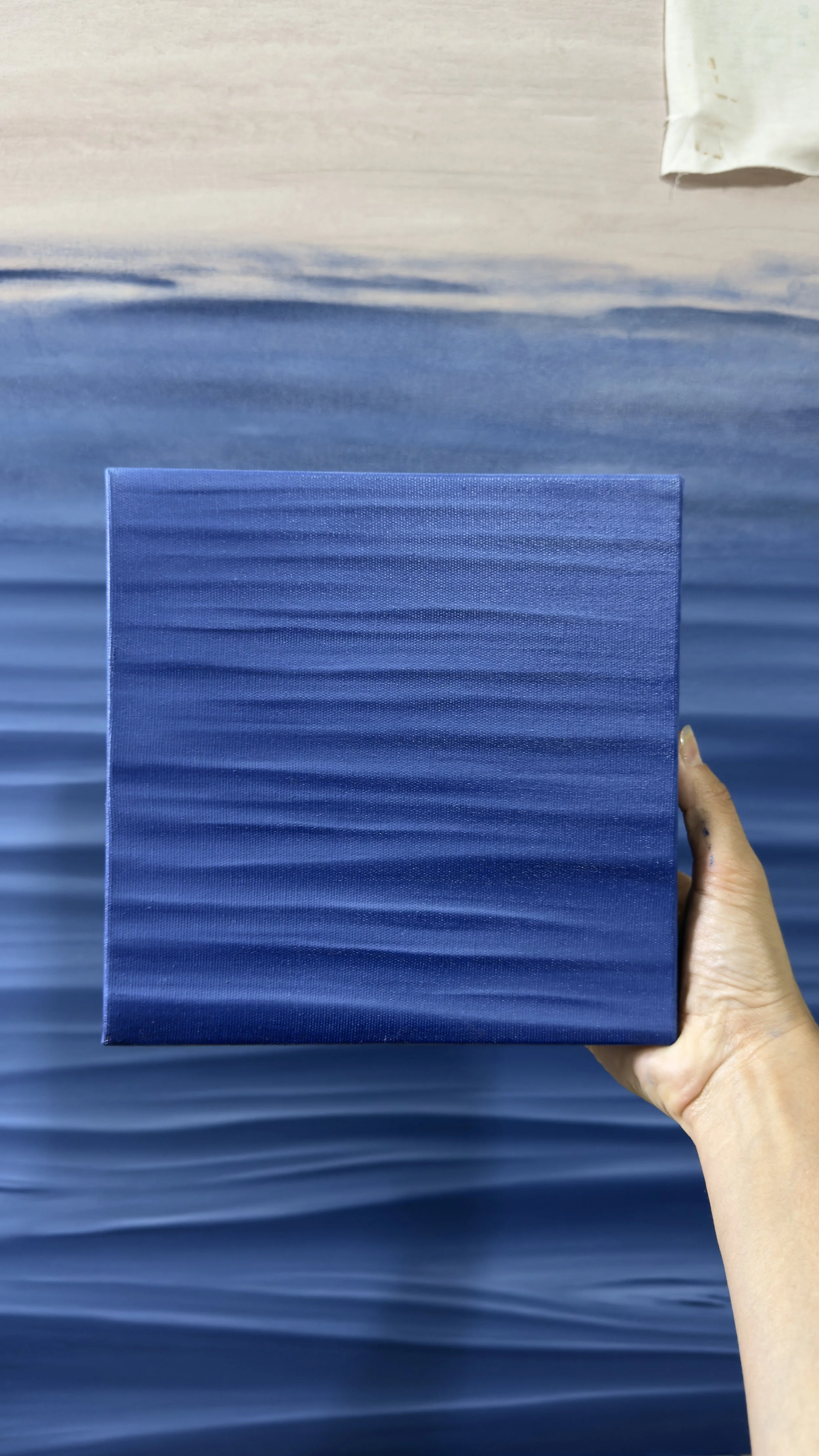
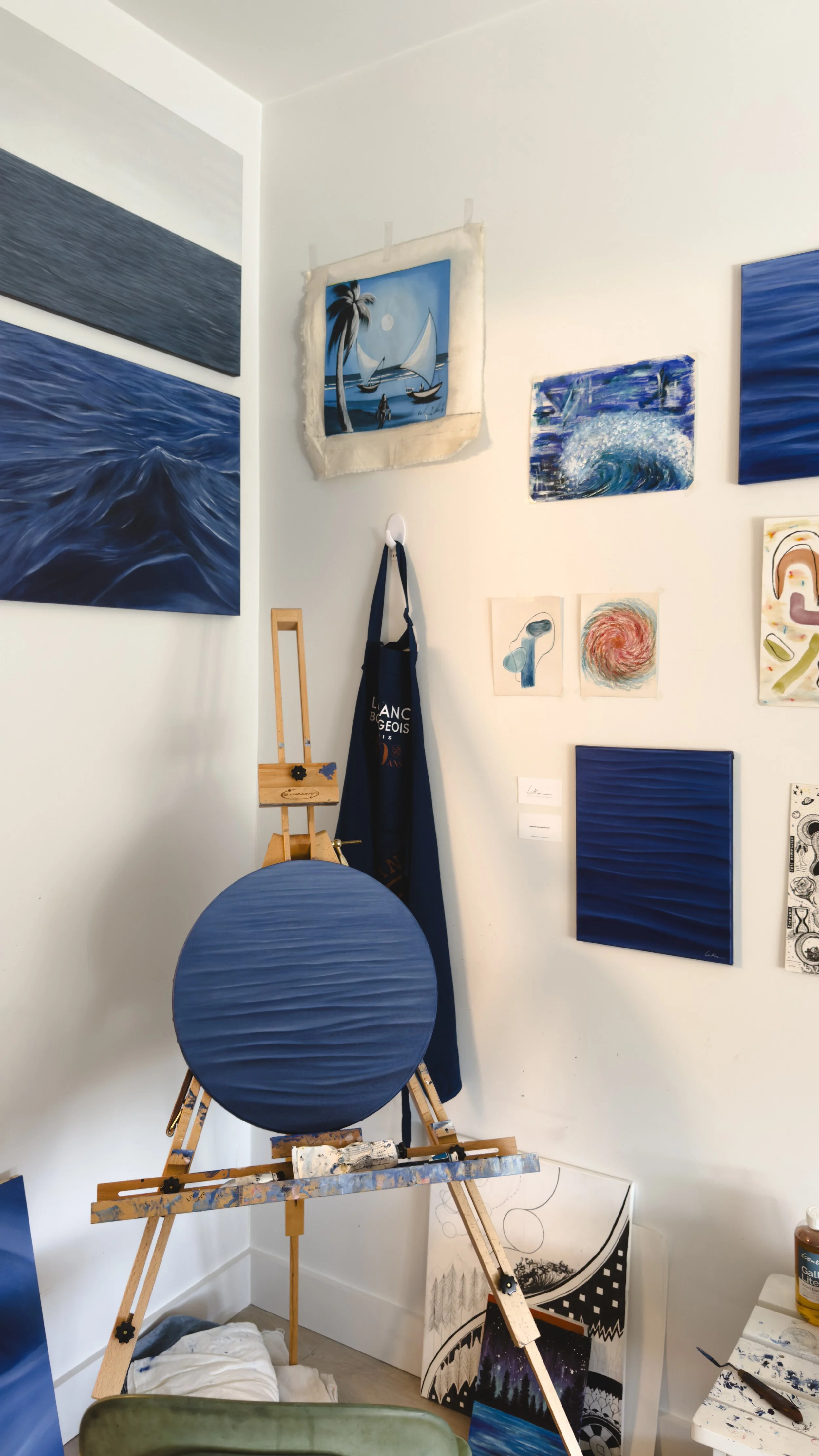
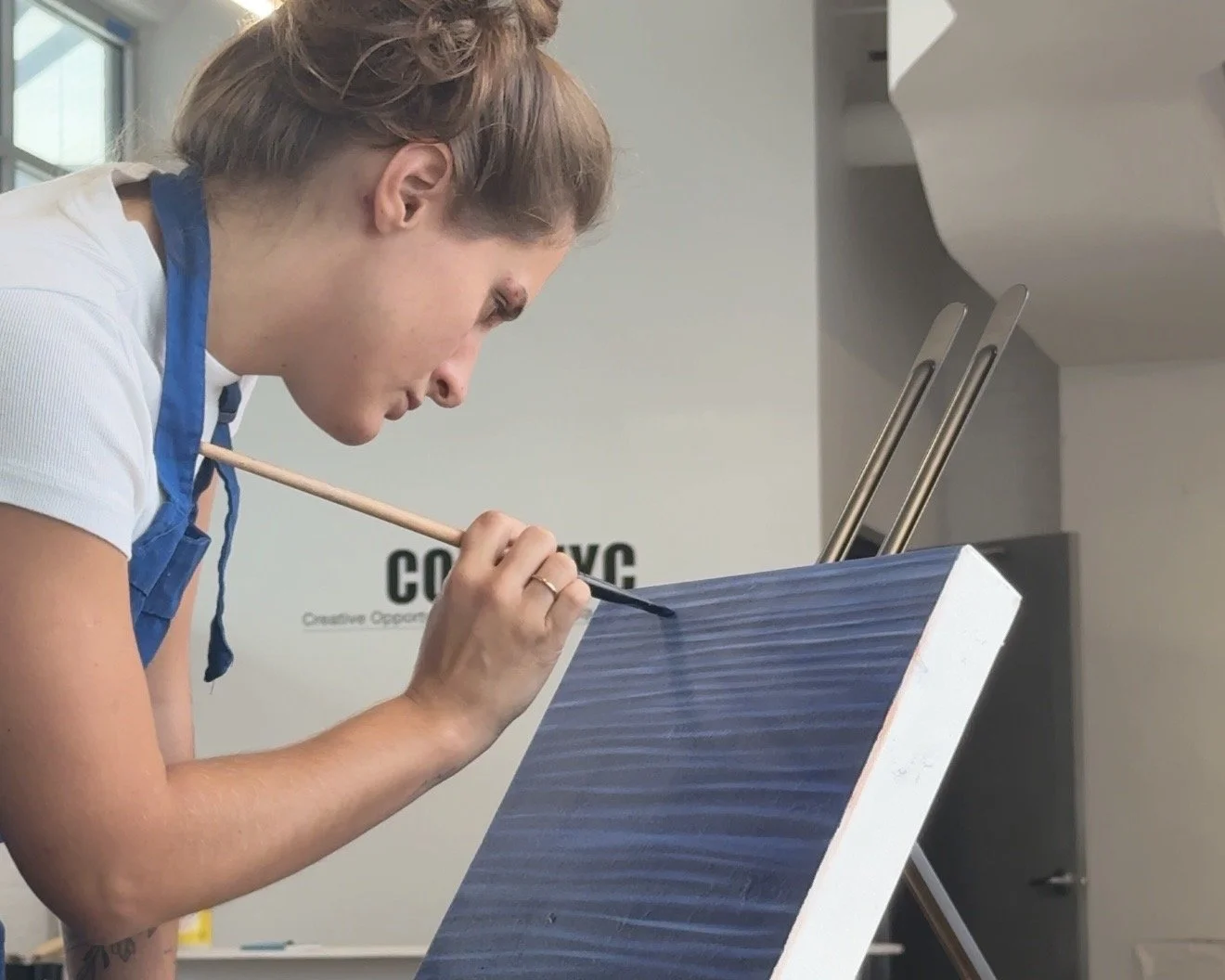
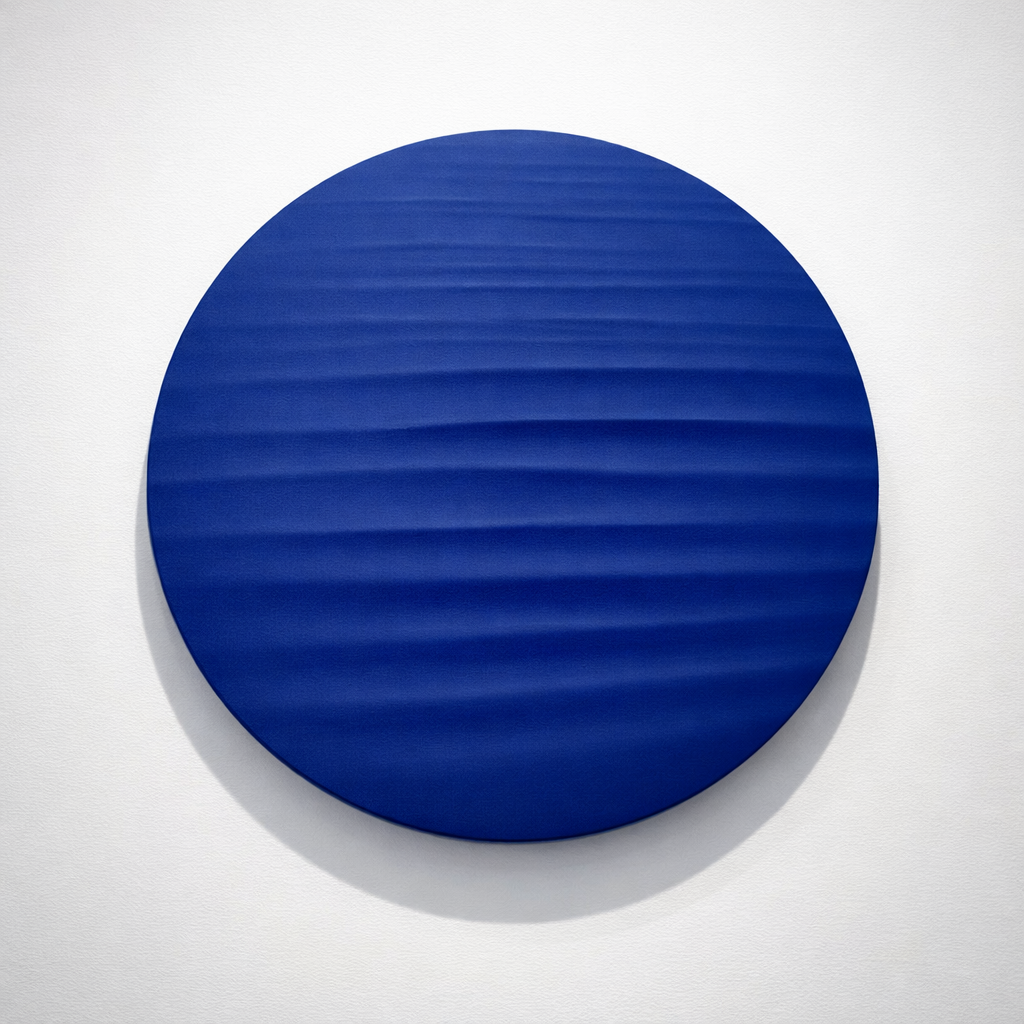
Answer: The series Sereno is the core of my research today. It began about two years ago and continues to expand, it’s where I experiment, deepen, and discover new layers of my own emotional depth. It translates internal states into gradient and gestures of blue, creating paintings that invite contemplation. I continue developing the series in studios between Nyc and Sao Paulo, exploring formats, scales, and surfaces such as cotton, wood, and gesso panels. During my residency at COPE NYC, I expanded this investigation testing materials, working on larger canvases, and developing this relation between ocean and emotion that guides my work.
6. Feedback & Growth
Question: How do you incorporate feedback from critics or audiences into your work, and how do you balance this with your own artistic intuition?
Answer: I appreciate hearing what people have to say about my work. Sometimes we get stuck in our own narrative and stop seeing points that could evolve. When feedback comes from curators or people who follow my work closely, I listen carefully. But I always filter everything through the essence of my practice. If it’s constructive and aligned with what I’m building, I integrate it. If not, I thank them and move on. For me, growth is about balancing both listening and identity.
7. Motivation & Inspiration
Question: How do you stay motivated and inspired, even when facing creative blocks or challenges?
Answer: When I feel blocked, I switch focus on what I’m doing. I photograph, write, go for a walk, call someone, or simply do everyday things. It brings me back to center and releases the pressure around creativity. My practice is multidisciplinary, painting, photography, and architecture, and these three things keep me balanced. Architecture organizes, photography observes, painting feels. When one area gets stuck, I move to another, and that helps me return to the flow.
8. Exhibiting Work
Question: How do you feel about exhibiting your artwork with The Holy Art Gallery, and what does this opportunity mean to you?
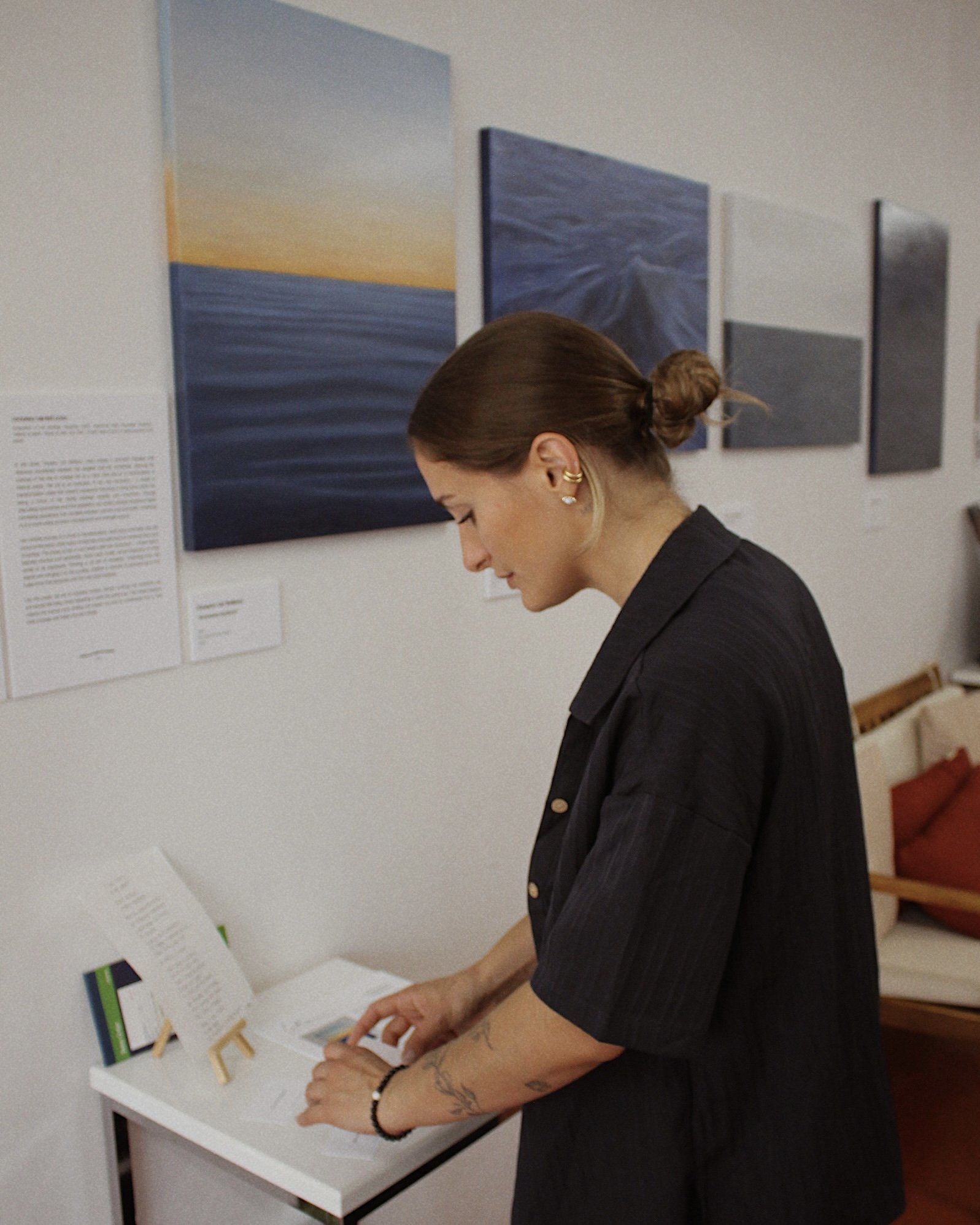
Answer: Exhibiting with The Holy Art Gallery is an important step for me. It’s an opportunity to share my research on the ocean with a broader, international audience, and to strengthen my presence in the art environment. It also validates the path I’m building. Bringing Oceano: Um Reflexo to Tribeca places this exploration alongside a city that is deeply part of my story.
9. Future Goals
Question: What are your long-term goals and aspirations as an artist, and how do you plan to achieve them?
Answer: I want to expand Sereno and continue deepening my research on water, memory, feelings, and emotional states. I also want to participate in more international residencies to test my practice in different contexts, and explore more the expression of feeling not only with painting but also with photography. Beyond that, I want to further consolidate my multidisciplinary approach, painting, photography, and possibly installations, integrating architecture and art more directly. Ultimately, my goal is to strengthen my niche and my connection with myself as an artist.
10. Audience Connection
Question: What do you hope viewers take away from experiencing your art, and how do you aim to connect with them on an emotional or intellectual level?
Answer: I want people to feel through my work, for it to be an experience. I want them to connect with their own emotions, to perceive the depth and the emotional weight that exists there. For me, art works when it creates connection.