Artist spotlight : Woong Ryu
Artist Statement:
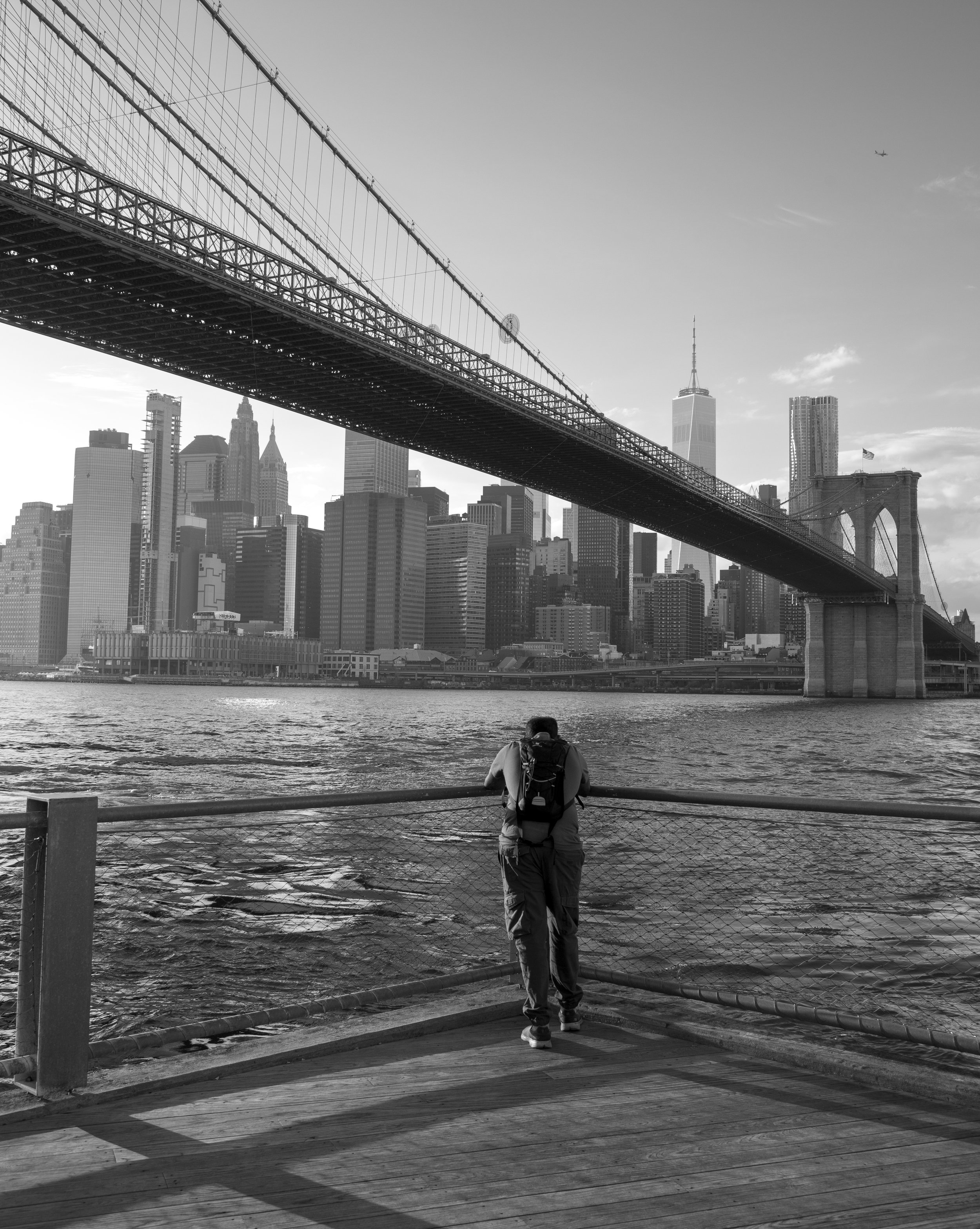
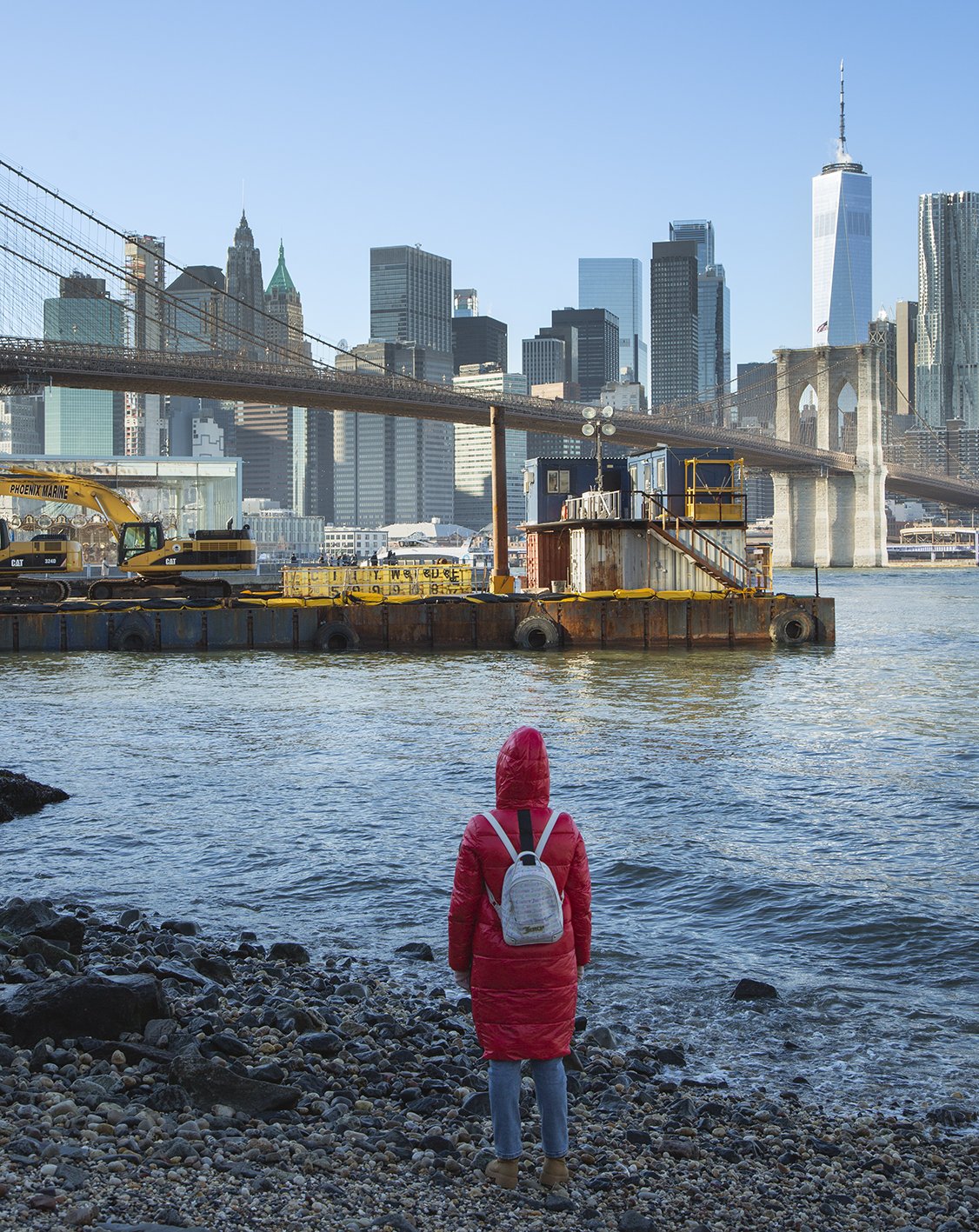
Project “Behind” was created during my lonely days of my abroad studies in America. After my mandatory military service in Korea and transfererd to the School Of Visual Arts at New York I felt very lonely and homesick a lot during my stay. While I was walking through the streets with my camera I saw people standing alone from behind and wondered if they are feeling the same way I do right now or are they thinking of different feeling as they stand alone. As I capture more peoples from behind it makes me imagine what those people are thinking and saying to each other from the behind since I could’t see their faces making the viewers think of them mysteriously and imagine those people’s emotions from behind. Starting this project helped me lessen my negative feelings as I imagine people’s various of emotions from behind I started to think harmoniously with mixture of positive and negative feelings.
Social Networks :
Instagram handle: @rwoong_photo @hellbam30
Personal Website: N/A
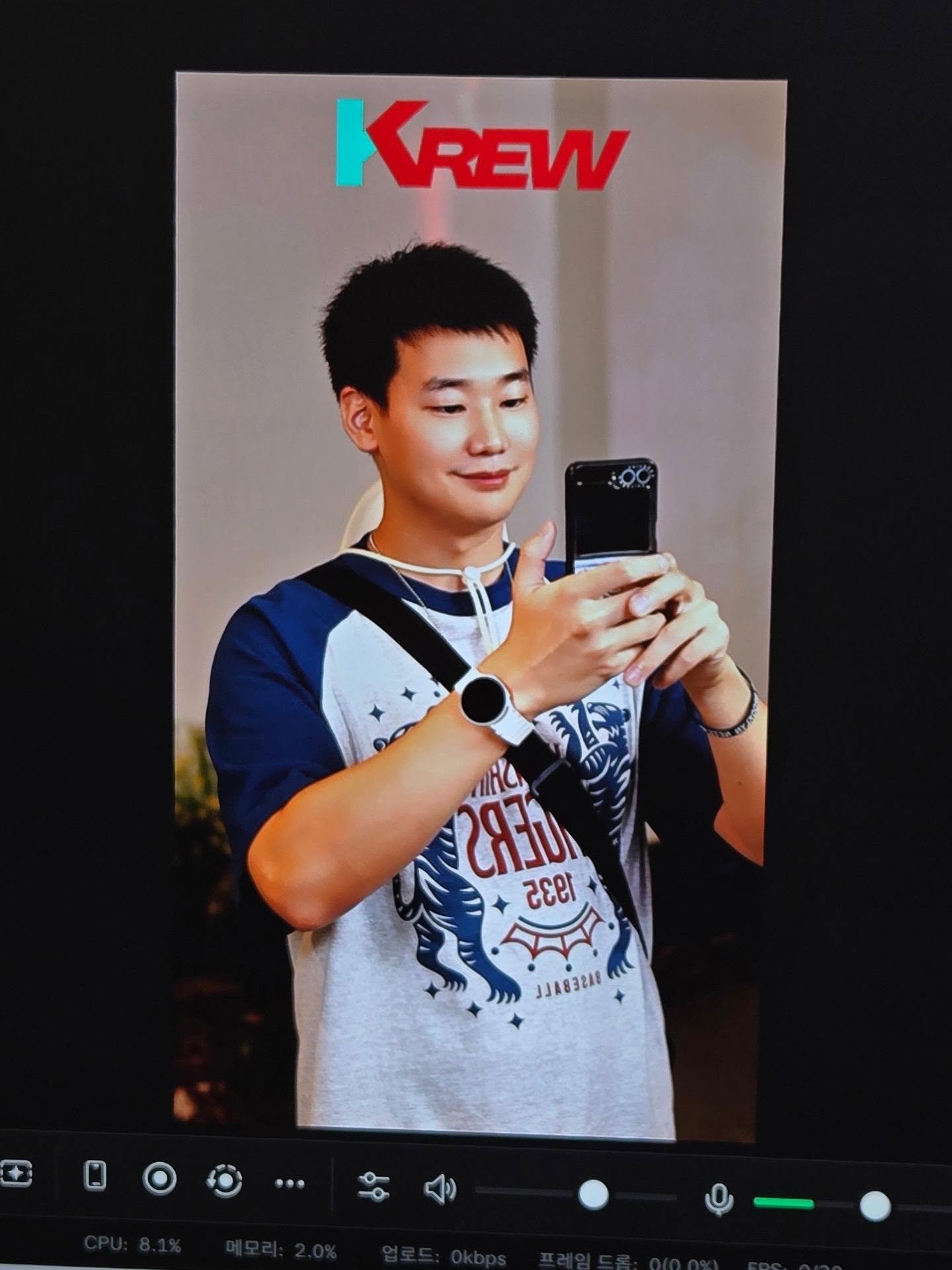
Woong Ryu
1. Inspiration & Style
Q: What initially inspired you to become an artist, and how did you develop your unique artistic style?
A: I got my inspiration to be a photographer by watching a lot of comic books. I saw characters holding DSLR cameras and taking pictures traveling around the world. Which led me to buy my first DSLR camera during my middle school days and take pictures. My unique artistic style comes from seeing lots of anime and comics, making people’s imagination see through my works.
2. Creative Process
Q: Do you have any rituals or routines that help you get into a creative mindset when starting a new project?
A: No I just go with the flow in life you learn every moment happens unexpectedly and I try to capture that moment in my camera.
3. Artistic Influences
Q: How do you balance historical or artistic influences with your personal style, and how do these influences manifest in your work today?
A: My artistic influence comes from Henri Cartier Bresson with his capturing decisive moments. Even today as I create my work I always keep on mind to capture decisive moments as it is my origin to have a dream to become a photographer.
4. Emotion & Expression
Q: How do you use your art to evoke emotions, and what role does emotion play in your creative process?
A: I create my art to make people have feelings of imagination as they look at my work and I want them to imagine and feel what it feels like in that scenery of my work.
5. Standout Projects
Q: Can you share a project that stands out to you and describe the creative process behind it?
A: Project “Behind” which was created during my studies in the U.S. As I was getting lonely and homesick I felt I was getting left alone in the world and started to take pictures of people’s behind as I imagine what emotions flow once people see them.
6. Feedback & Growth
Q: How do you incorporate feedback from critics or audiences into your work, and how do you balance this with your own artistic intuition?
A: I do listen to their opinion and suggestion to make my work better next time I try shooting with the same concept but I try keeping my philosophies of my photography while taking that feedback with decisive moments and trusting my own instinct. In the end what matters most as you're making your own art work is your own choice.
7. Motivation & Inspiration
Q: How do you stay motivated and inspired, even when facing creative blocks or challenges?
A: I do face slumps, desperation, and lost my ways on my photography when the shots doesn’t go my way or not getting many likes on social media but I know some people support my works and I myself couldn’t give up on my dream to become photographer so I keep on pushing and picturing beyond limit to keep me motivated.
8. Exhibiting Work
Q: How do you feel about exhibiting your artwork with The Holy Art Gallery, and what does this opportunity mean to you?
A: Feels like walking into a checkpoint of something getting closer to greatness, An opportunity to show my work more to the world and a small beginning to an uncharted area to break my artist limit and carry on to the next level.
9. Future Goals
Q: What are your long-term goals and aspirations as an artist, and how do you plan to achieve them?
A: My long-term goal is to be part of the National Geographic photographer as I travel around the world and picture wonders of the world and give people the joy and imagination of seeing the pictures that I took just as my origin of becoming a photographer in the first place. I will continue to participate in art shows in various art shows and photo contests to show more people my artwork and continue to introduce photographer Woong Ryu to the world.
10. Audience Connection
Q: What do you hope viewers take away from experiencing your art, and how do you aim to connect with them on an emotional or intellectual level?
A: Imagination. As people watch people behind they let themselves imagine what emotions that person is flowing with, what does that person in the picture see with their eye is it the view? endless thoughts flowing inside that person’s life? How you see it it’s up to you(viewers).
That sensitivity to color became the foundation of everything that followed. After training in the visual arts and years of experimenting with pigments, textures, and techniques, a realization grew: color is not decoration. It is a language. A language that can heal, connect, and bring to life what we cannot capture in words.
DNH Artful Living was born from the conviction that art does not belong behind museum walls, but at the heart of your daily life. It is an invitation to look more consciously, feel more deeply, and live more beautifully, with color as your compass.
2. Creative Process
Do you have any rituals or routines that help you get into a creative mindset when starting a new project?
Answer: My art always starts with color. Color is not just a visual element, it is a language. Every hue has a voice, every combination tells a story. I believe color has the power to heal, inspire, and connect.
In a world that is becoming ever faster and more digital, I choose slowness and tactility. My canvases are an invitation to pause, to feel, and to discover the beauty in the moment. Every work carries an intention, not only aesthetic, but emotional. It is art you don't just see, but feel.
I work with materials I select with care, respecting their origin and impact. Sustainability is not an afterthought but a core value: from the pigment I choose to the canvas I paint on. Creation and responsibility go hand in hand.
3. Artistic Influences
How do you balance historical or artistic influences with your personal style, and how do these influences manifest in your work today?
Answer: I treat art history as a conversation partner rather than an authority. Several of my collections are open dialogues with work that came before: a Breitner series, my own reading of Vermeer's Girl with a Pearl Earring, a Delft Blue series, and pieces in conversation with Matisse, Klimt and Tiffany. The Geisha and Kimono collections come from a long fascination with how Japanese art uses colour and pattern as emotional shorthand rather than as ornament.
The balance is simple in principle and difficult in practice: I borrow the structure, never the palette. I take a composition, a gesture, a piece of visual grammar that has proven it can hold attention for centuries, and then I ask what it becomes when it is rebuilt in my own colour. Matisse gave me permission to let colour do the drawing. Vermeer taught me what a single point of light can carry. Breitner taught me that a city is a mood. What shows up in the work today is not their palette, it is their courage.
4. Emotion & Expression
How do you use your art to evoke emotions, and what role does emotion play in your creative process?
Answer: Emotion is not the outcome of my work, it is the brief. I begin with the feeling and reverse engineer the painting from it.
Colour is the fastest route I know into someone's nervous system. It reaches people before language does and before they have decided what they think. That is not a mystical claim; it is why hospitals, hotels and homes feel the way they feel. I use warm saturation when I want to raise energy, muted and layered tones when I want to give someone permission to be still, and high contrast when I want to interrupt.
I also try to teach this. And the recurring discovery is that people already know how colour makes them feel; they have just never been given the vocabulary. My work sits against a specific problem: interiors have become colourless by default, and living without colour is a quiet way of living without feeling. The paintings are an argument against that.
5. Standout Projects
Can you share a project that stands out to you and describe the creative process behind it?
Answer: Exhibiting in Barcelona at FIABCN, the Fira Internacional d'Art de Barcelona, in 2023 stands out, and not for the reason I expected.
The preparation was the hard part. Showing abroad forces you to choose which version of your practice you are willing to be judged on with no context, no story attached, no home audience who already knows you. I built the selection around a single question: does this work still speak when nobody explains it? That meant cutting pieces I was personally attached to and keeping the ones that carried their emotion without a caption. I reworked one canvas three times in the weeks before shipping because the colour was polite rather than honest.
What I learned there changed how I work. Visitors who did not share my language, my country or my references stopped in front of the same pieces and described the same feelings back to me, often in different words. That was the proof I needed that colour genuinely travels. Everything I have made since has been built with that test in mind.
6. Feedback & Growth
How do you incorporate feedback from critics or audiences into your work, and how do you balance this with your own artistic intuition?
Answer: I listen closely to audiences and selectively to critics, and I try to be honest about the difference.
The feedback I trust most is physical rather than verbal. What people stand in front of, how long they stay, what they photograph, which piece they walk back to. Collectors often send me photographs of the work installed in their homes, and those images tell me more about whether a piece is doing its job than any review. Our workshops are the other source: when you watch people react to colour in a room, you learn very quickly which of your assumptions are actually true.
Where I hold the line is on intention. If feedback tells me a piece is not landing, I take it seriously and I look again at the execution. If feedback tells me a piece should be softer, safer or more neutral so it fits more living rooms, I do not take it. The moment I start painting toward the beige middle, I have nothing left worth showing. Feedback improves the craft; it does not get to set the direction.
7. Motivation & Inspiration
How do you stay motivated and inspired, even when facing creative blocks or challenges?
Answer: Blocks, in my experience, are almost never a shortage of ideas. They are a shortage of honesty about what I actually want to say, and no amount of studio time fixes that directly.
So when I am stuck I stop making and start looking. I go back to colour itself: to fabric, to markets, to walks where the only task is to notice light. I return to the collections that made me want to paint in the first place. And I go back to people, because the community around this work is not a marketing layer, it is a genuine source of energy. Workshops in particular unstick me, because teaching forces me to articulate things I usually leave intuitive.
The deeper motivation is that I believe the problem I am working on is real. Most people are living in rooms that were designed to offend nobody, on a schedule that leaves no room for attention. Colour is a small, practical, daily way back into feeling. That is a reason to get up in the morning even when a particular canvas is refusing to cooperate.
8. Exhibiting Work
How do you feel about exhibiting your artwork with The Holy Art Gallery, and what does this opportunity mean to you?
Answer: I am genuinely glad to be showing with The Holy Art. The reason is the audience.
Most of my work reaches people through my own channels, my studio, our workshops and our own website, which means it usually arrives with my story already attached. A gallery context strips that away. The work has to hold its own in a room full of other artists, in front of viewers who have no reason to be generous with me. That is exactly the exposure I want, because it is the same test Barcelona gave me and I trust what it teaches.
Beyond that, it matters to me that the work travels. I believe colour is a universal language, and a claim like that is worthless unless you are willing to put it in front of people outside your own country and see whether it holds. Exhibiting with you is a way of doing that, and of finding the viewers who respond to this work but would never have found it on their own.
9. Future Goals
What are your long-term goals and aspirations as an artist, and how do you plan to achieve them?
Answer: Three things, and they support each other rather than compete.
First, to keep making original work that gets more honest rather than more commercial. That is the core, and everything else is downstream of it.
Second, to keep art genuinely reachable. Alongside the originals I produce museum quality reproductions, because I do not accept that a home has to be wealthy to be beautiful. Originals sit in the higher range, and reproductions start under a hundred euros, and that spread is a deliberate position, not a pricing accident. I want the work to live in real rooms.
Third, to grow the practice outward: more international exhibitions, and a serious body of work in the space where art meets wellbeing. We have been developing this toward healthcare and hospitality environments, where color is not an aesthetic upgrade but a measurable part of how a space affects people. If I can show that convincingly, colour stops being treated as taste and starts being treated as infrastructure.
The plan for getting there is unglamorous: keep painting, keep teaching, keep showing outside my comfort zone, and keep the community close.
10. Audience Connection
What do you hope viewers take away from experiencing your art, and how do you aim to connect with them on an emotional or intellectual level?
Answer: I hope they leave feeling something they had not planned to feel.
Intellectually, I want people to walk away with a suspicion that colour is doing more work in their lives than they have ever given it credit for. That the room they sit in every evening is shaping their mood. That neutral is a choice, not the absence of one. If someone leaves the work and then looks differently at their own walls, I have done something useful.
Emotionally, I want the work to make room. My paintings are not asking anyone to admire them. They are asking for a pause, and in that pause, for a person to notice their own state. That is why I care so much about tactility and slowness; those are the qualities that invite you to stay.
If I could choose one sentence to be the takeaway, it would be the one this whole practice is built on: live beautifully, live deeply, live connected. The paintings are just the most direct way I know how to say it.