Artist spotlight : Xexilia Shadows
ARTIST STATEMENT:
Art has always been my voice when words fall short. Through my work, I seek to capture the intangible—the emotions, thoughts, and experiences that defy easy explanation. Whether through my illustrations, my web comics, or paintings displayed in fine art museums, my goal is to forge a connection, inviting viewers to explore the quiet, mysterious corners of their own hearts alongside mine.
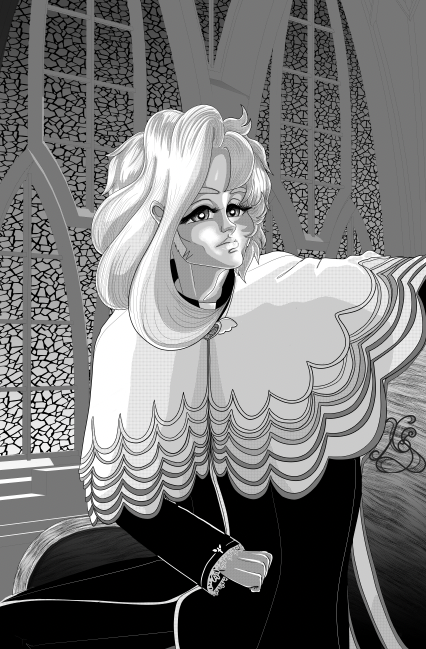
I have always been drawn to the interplay of light and shadow, of bold lines that define and the spaces left intentionally undefined. My ongoing web comic series, Eternity Concepts, is the purest embodiment of this philosophy. Born in 1999, it remains a living, breathing entity—a story that has grown with me over the decades. Few retro web comic artists remain active today, but Eternity Concepts persists as both a deeply personal work and a story that transcends time.
Now a resident gallery artist, my work has taken on new dimensions, allowing me to explore how the intimacy of storytelling interacts with the grandeur of fine art spaces. Yet, the themes remain the same: connection, identity, and the search for meaning. My creations often center on the journey of those who feel unseen or unheard, reflecting my own path as someone who has navigated life on the periphery, finding strength and beauty in solitude. Many, but not all, my works also reflect my role within the LGBTQAI+ community and advocacy for the rights of those within it; This fight for equality is woven into the fabric of my work, where themes of love, identity, and acceptance shine brightly, even in the face of resistance.
My journey has been shaped not only by my creative pursuits but also by the challenges I have faced; From infancy, I endured mysterious ailments that were deemed psychological or fabricated, with promises I would one day “grow out of it.” Instead, I eventually discovered I had been living with endometriosis, polycystic ovarian syndrome, and undifferentiated connective tissue disease (UCTD), and Hashimoto’s. This lead to a very active, inner life and mind, due to the fact I was never healthy enough to play or be anywhere near as physically active as others, which also caused extensive social isolation. I took solace in reading, art, and the internet.
Though my body falters, my spirit remains unbroken. Art is my sanctuary, my way of transforming pain into something meaningful and beautiful. Each line, each shade, carries with it a fragment of my story—one of persistence, quiet defiance, and the belief that even the most fragile among us can create something lasting and powerful.
In my work, I strive to remind others that there is beauty in struggle, depth in introspection, and strength in vulnerability. Art allows me to connect with others in ways I could never manage with words alone, and I am endlessly grateful for the opportunity to share my world with you.
My work has never stopped evolving, and grew into a career as a published author, writer, teacher, traditional fine artist, digital artist, front end web developer, and even licensed tattoo artist. Because my work spans so many fields, many of my works are not known to those who collect or follow it, so if you’re surprised to learn I’m working in creative fields you were unaware of–don’t be, and be prepared, as I’ll only be creating more and in new areas than previously ever explored.
Social Networks :
Instagram Handle: @xexiliaoshadows
Website: pexiliaoshadows.com
Portfolio: https://xexiliaoshadows.com/portfolio
Xexilia Shadows
1. Inspiration & Style
What initially inspired you to become an artist, and how did you develop your unique artistic style?
Answer: I was very ill since I was born, not enough where my parents or doctors were concerned, but enough where I was left home, alone, by the time I was six; I was alone a lot, and the only friends I had. . .were the ones I drew on paper.
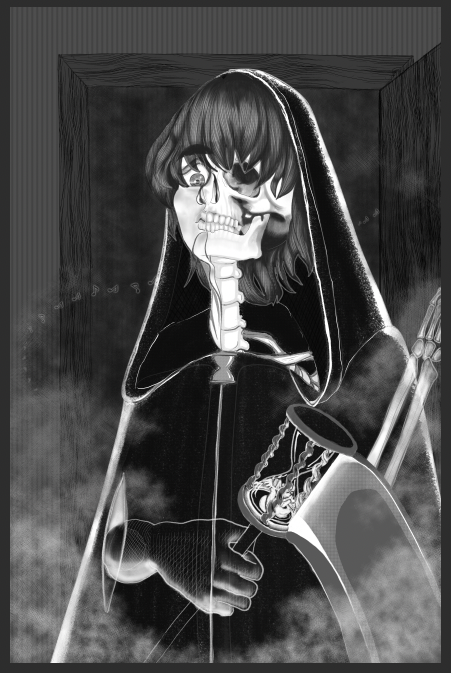
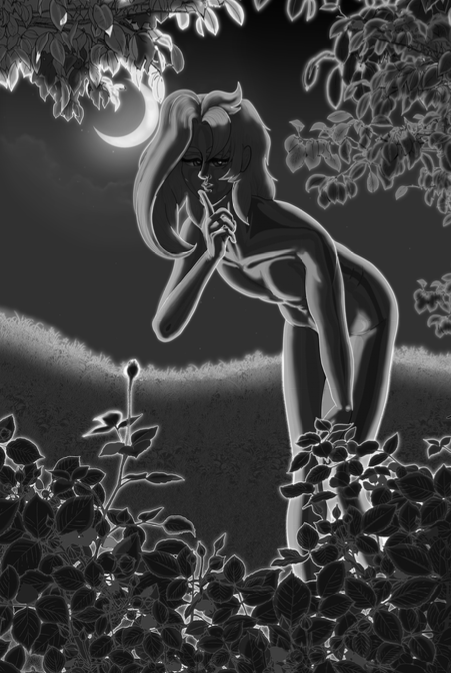
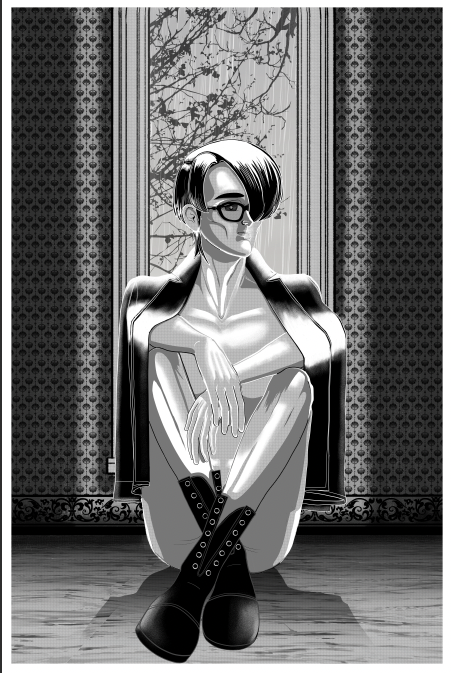
My style is a mix of anime and realism, and people either love it or hate it; I was sick of anime characters looking so plain and being another source of unrealistic ideals in terms of appearance.
2. Creative Process
Do you have any rituals or routines that help you get into a creative mindset when starting a new project?
Answer: Usually my work comes from emotional places, but my routine involves listening to music and letting my mind wander; I also have to be riding in the passenger seat of a car as I do this. Something about the movement and, I’m sure, the flicker rate of trees and such passing by helps get my brain into making theta waves easier—I employ a lot of means to induce select brain waves.
3. Artistic Influences
How do you balance historical or artistic influences with your personal style, and how do these influences manifest in your work today?
Answer: My influences from history are all the old masters, mainly da Vinci, though Vermeer is up there, too—and others are anime from the 1990’s, which is what a lot of people tell me they notice in my work; I assume these are manifesting via the eyes, as I have had a lot of feedback on how different—and difficult for others to try and draw—the hair and facial features of my characters in my manga, Eternity Concepts, are. . .which is probably because of my love of realism; I have to stop myself from making work excessively real—It’s art, it’s supposed to have some elements of fantasy and dreaming over reality.
4. Emotion & Expression
How do you use your art to evoke emotions, and what role does emotion play in your creative process?
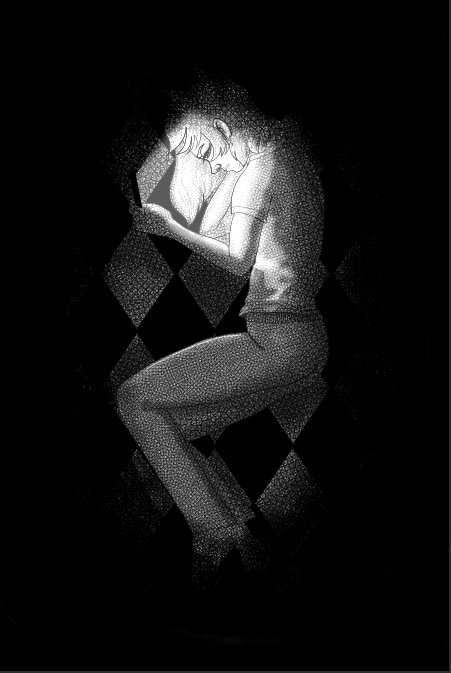
Answer: I don’t really set out to invoke emotions, but I have had a lot of people remark that my work on display at my studio (In a gallery local to me) has “A lot of pain”; When I looked around at the pieces, I. . .realized the majority were from or of very difficult emotions or experiences. Obviously, emotion plays a HUGE role in producing my art, which may be why there’s so much in my pieces; I honestly try to make normal, happy things and it all comes out creepy, weird, and trying to cover up sadness.
5. Standout Projects
Can you share a project that stands out to you and describe the creative process behind it?
Answer: My stand out project will always be Eternity Concepts, my webcomic. The process behind it was beginning the series in 1999 and realizing my art had a long way to go—I have OCD so anytime my art improved, I destroyed and restarted the series; While I worked on getting better at art, I also worked to get better at writing by using everything and everyone around me as story research. I did that for well over a decade, and as a bonus, I got much better grades in school once I viewed ever class as free story research that could be critical to an amazing idea or story.
6. Feedback & Growth
How do you incorporate feedback from critics or audiences into your work, and how do you balance this with your own artistic intuition?
Answer: Oh. . .the audience will ask for things that make no sense and will ruin entire plots for some idea that’s born out of wanting to make your creation more like someone else’s that they also like but is the kind of thing people make after doing a lot of market research to ensure their work appeals to the masses and sells t-shirts. My rule, that I teach when I’m teaching writing, is “F&%k the Audience”. Do not worry about them and do not try to appeal to them; You cannot make all of the people all of the time.
Constructive criticism regard improving artistic methods and techniques is one thing, but I do not take advice from random people, or at least not a single one online I never asked. As I said, people really love or hate my art style, and will contact me to inform me of it; I always tell them, “Okay! F$%k you!”—which always throws them off. Why? There are plenty of people who do like my art, and I’m going to focus on them, not the one person who thinks I’m supposed to change all my work to appease them. Ultimately, the person who I need to like my work most is me—And you cannot please everyone!
7. Motivation & Inspiration
How do you stay motivated and inspired, even when facing creative blocks or challenges?
Answer: Music, switching mediums; Right now I learned I have Complex Regional Pain Syndrome in my right arm and leg, so I’m trying to adjust to drawing left handed, since I feel like I have too short of a time I can use my right hand and arm before the excruciating pain sets in.
8. Exhibiting Work
How do you feel about exhibiting your artwork with The Holy Art Gallery, and what does this opportunity mean to you?
Answer: I feel blessed! Honestly, I was following the gallery online for a good while before I ever submitted a piece to an open call. Since Eternity Concepts has a church as a major setting, I thought it was a cool, weird circumstance to be part of and showing with Holy Art! I planned—and still hope—to attend some showings in person, but I only learned about CRPS recently and it’s slowly destroying me. I’m always excited to show with Holy Art—I just wish I could go to the events.
9. Future Goals
What are your long-term goals and aspirations as an artist, and how do you plan to achieve them?
Answer: I’m trying to sell my original pieces for the kind of money someone spends to later donate the piece and avoid taxes. I can be that artist, and I do not mind!
In all seriousness, this is called a ‘blue chip artist’ and it’s a huge, high goal. . .that also has nothing to do with comics, which may surprise people, but my goal as an author is not the same as my goals in art; The point is, I believe in going big—in aiming for the moon. I might miss, but I’ll land among the stars, as they say.
My plan to achieve it is simply showing my work—Because I am really terrible at making sure I do that.
10. Audience Connection
What do you hope viewers take away from experiencing your art, and how do you aim to connect with them on an emotional or intellectual level?
Answer: I am to connect emotionally and intellectually, but when it comes to my illustrations or paintings, anymore I just hope people like it; I often find people don’t always realize a piece is an emotionally significant work trying to scream what I wasn’t allowed to say. For whatever reason I don’t hear from my audience often, even in person—At galleries, people will discuss my work and how much they like it, but rarely talk to me. I’ve recently learned I speak extremely quietly and being in a wheelchair causes people to move aside so I can get by, but not to realize I’m the artist and trying to speak with them. I might need a booster seat and a megaphone,