Connie Dai
ARTIST STATEMENT
My practice explores the transformation of narratives, emotions, and identities through costume and sculptural forms. I am interested in characters who exist outside conventional perspectives figures who are misunderstood or defined by the voices of others. I seek to reimagine these identities and reveal the psychological and emotional layers hidden beneath their external representations.
I am drawn to dark aesthetics, gothic imagery, and the unsettling qualities found within mythology and storytelling. Combining textile experimentation, sculptural construction, and material manipulation, I transform abstract emotions and imagined narratives into physical forms that exist between costume, sculpture, and the body.
My work investigates the relationship between appearance and perception, exploring how materials, silhouettes, and textures can communicate inner states and create ambiguous characters. Through wearable forms, I aim to create immersive worlds that invite viewers to question familiar narratives and discover alternative interpretations.
Social Networks :
Website: https://conniedai.myportfolio.com/
Instagram: @cncxcnc @devillincc
Connie Dai
1. Inspiration & Style
What initially inspired you to become an artist, and how did you develop your unique artistic style?
I was initially drawn to expressing emotions through different mediums. I began with fashion design, but gradually realised I was more interested in observing and constructing narratives through objects rather than purely designing garments. This led me towards costume design.
I am often drawn to characters that are marginalised or misinterpreted within scripts. I am interested in how these figures are framed through external narratives rather than their own voices. This has led me to focus on the uncanny and the psychologically unsettling aspects of storytelling.
My work often explores dark, eerie, and uncomfortable atmospheres. While these emotions may evoke fear or unease, I see them as a direct way of communicating my ideas. I believe darkness open up imagination rather than closing it, allowing viewers to project their own interpretations into the work.
2. Creative Process
Do you have any rituals or routines that help you get into a creative mindset when starting a new project?
When starting a new project, I usually begin by understanding the narrative or concept behind it, such as a script or story. I analyse the character not only through their written description, but through their emotional state, psychology, and implied presence within the narrative.
And I develop visual directions and research related artistic practices and fabrication methods that could support the concept. I then experiment with silhouette, materiality, and textile choices.
The process is highly iterative. I continuously refine the work during making, while always keeping the character in mind, imagining how the costume exists on or as the body.
3. Artistic Influences
How do you balance historical or artistic influences with your personal style, and how do these influences manifest in your work today?
My work is strongly influenced by Tim Burton with his use of dark, gothic visual language and his ability to create emotionally charged worlds.
I am also deeply interested in mythology, especially narratives that evoke fear or ambiguity. I am drawn to how mythological figures often exist between reality and imagination, allowing space for reinterpretation.
I translate these influences into my own practice by combining dark aesthetics with character-based storytelling and sculptural costume design. This allows me to construct figures that feel both familiar and distorted at the same time.
4. Emotion & Expression
How do you use your art to evoke emotions, and what role does emotion play in your creative process?
I aim to create tension within my work, characters feel as if they are in a state of becoming or searching for identity, while being observed by the viewer.
I am interested in discomfort and psychological ambiguity. I prefer to create situations where meaning is uncertain and open-ended rather than providing clear narratives, allowing viewers to question what they are seeing and who the character might be.
5. Standout Projects
Can you share a project that stands out to you and describe the creative process behind it?
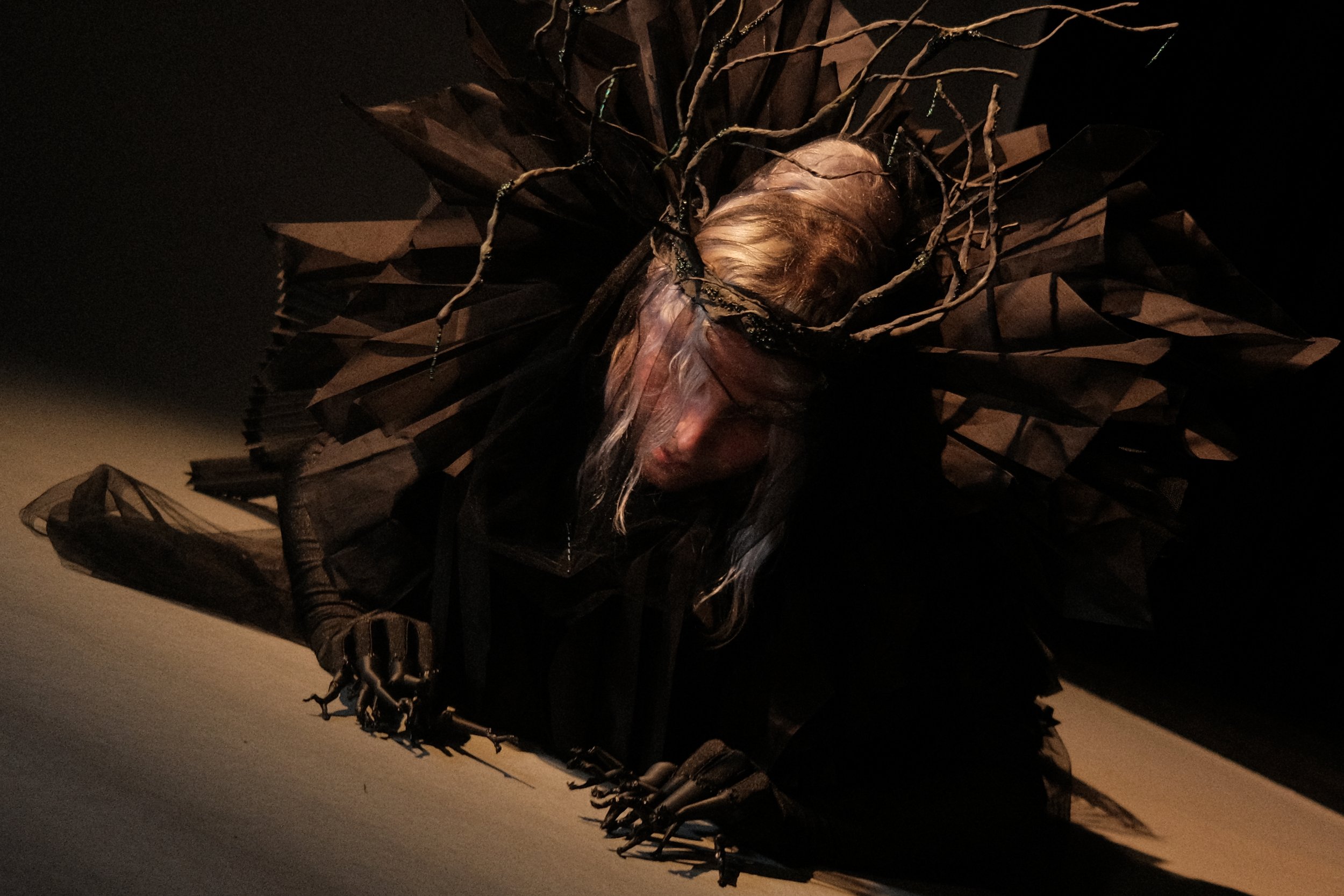
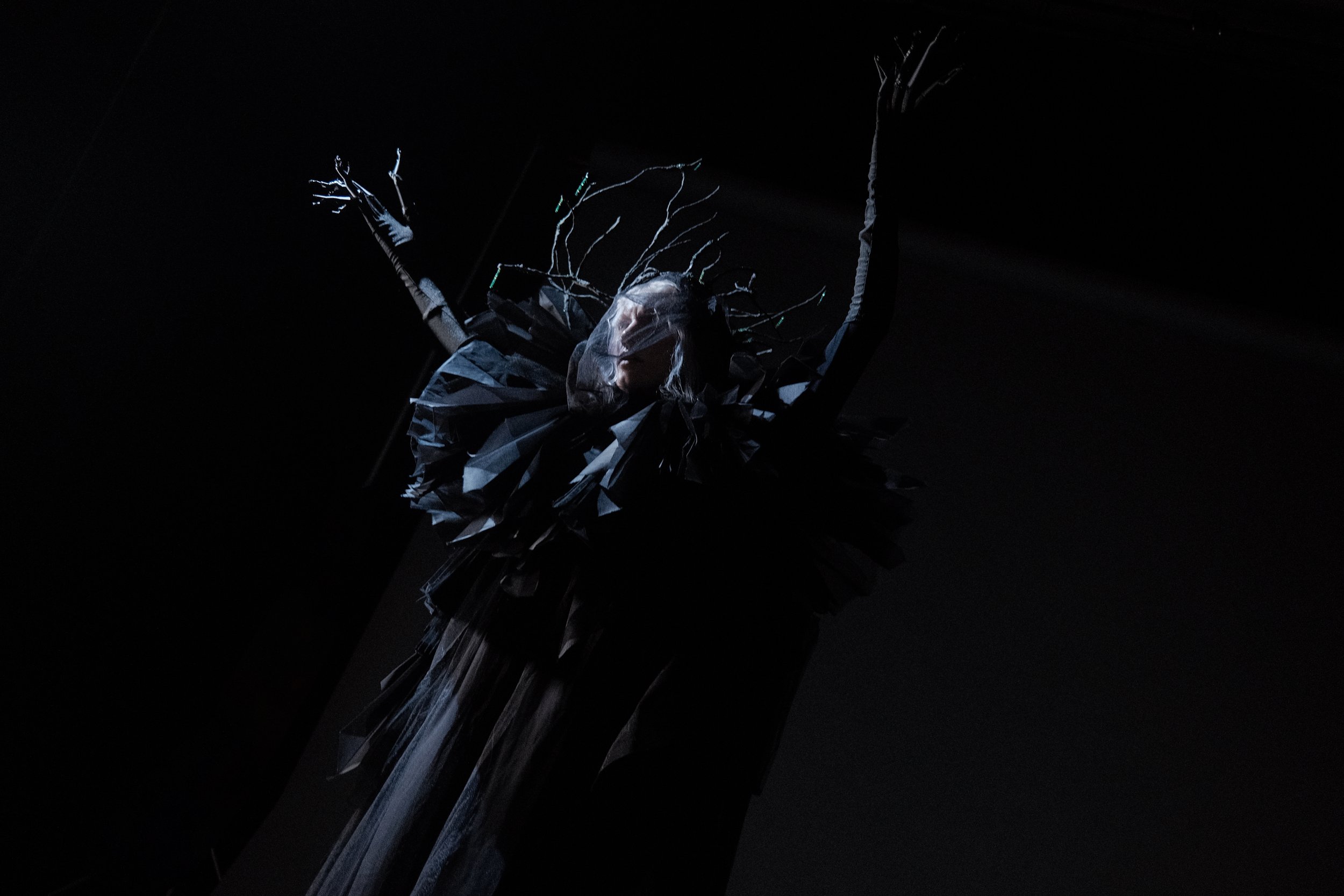
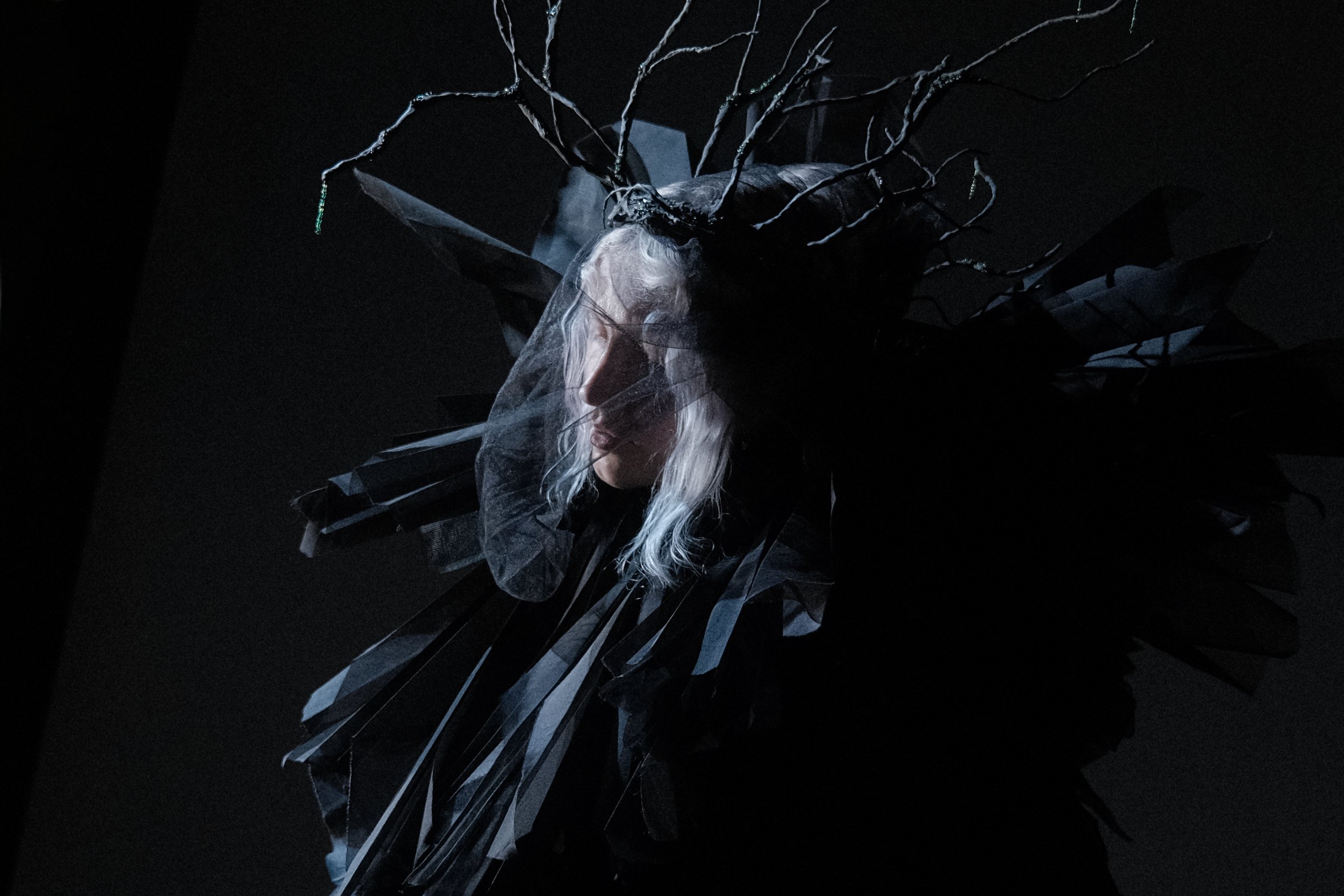
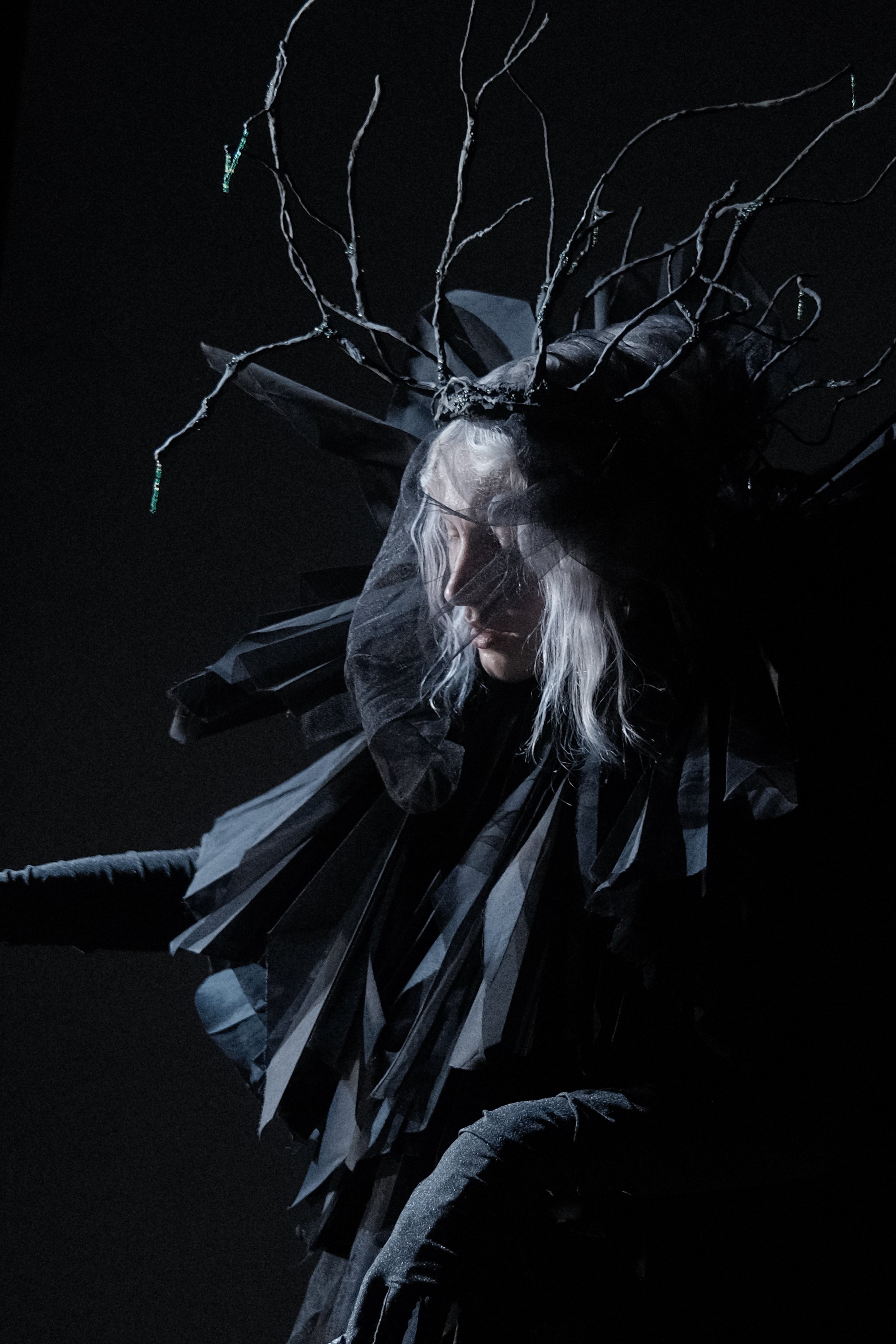
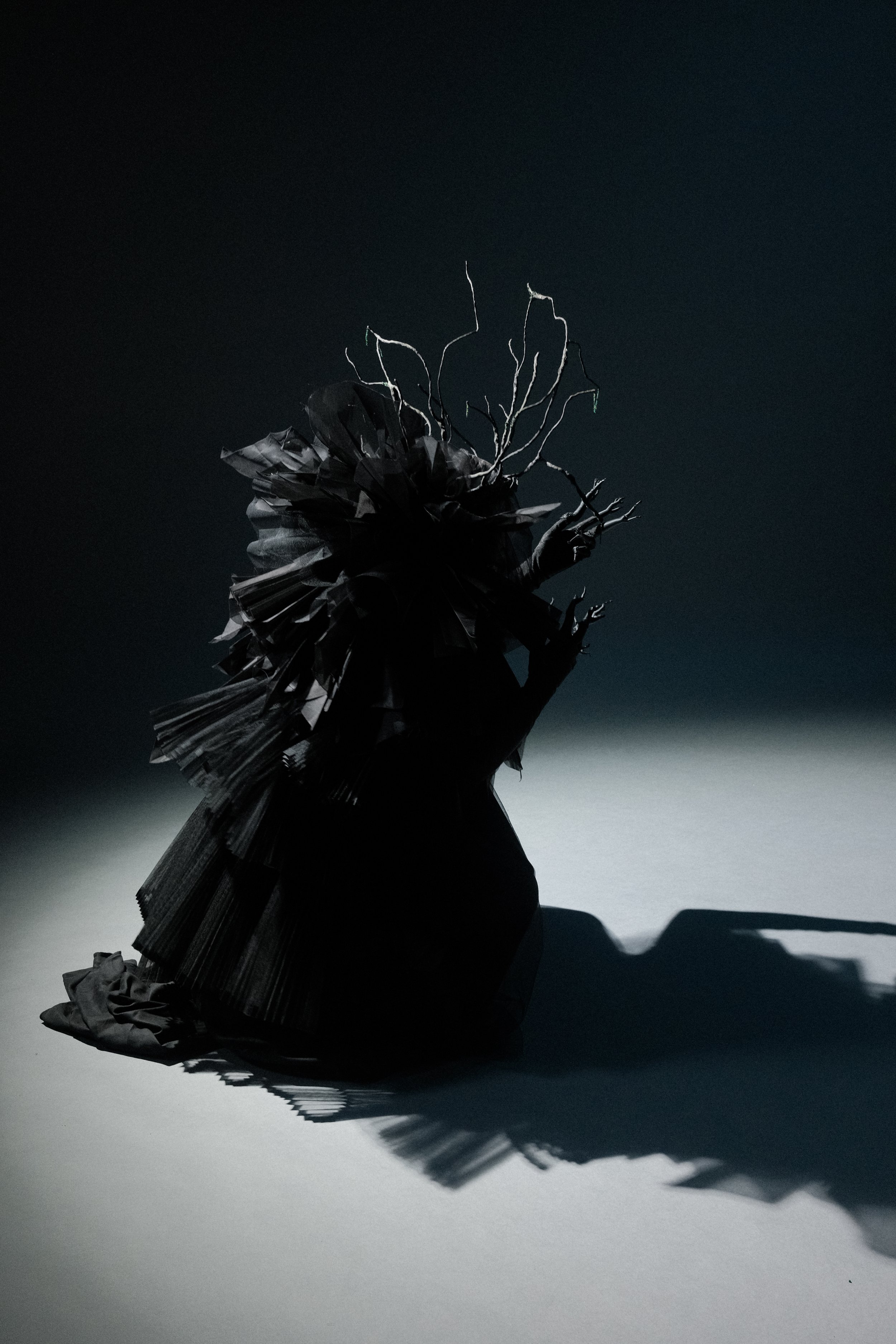
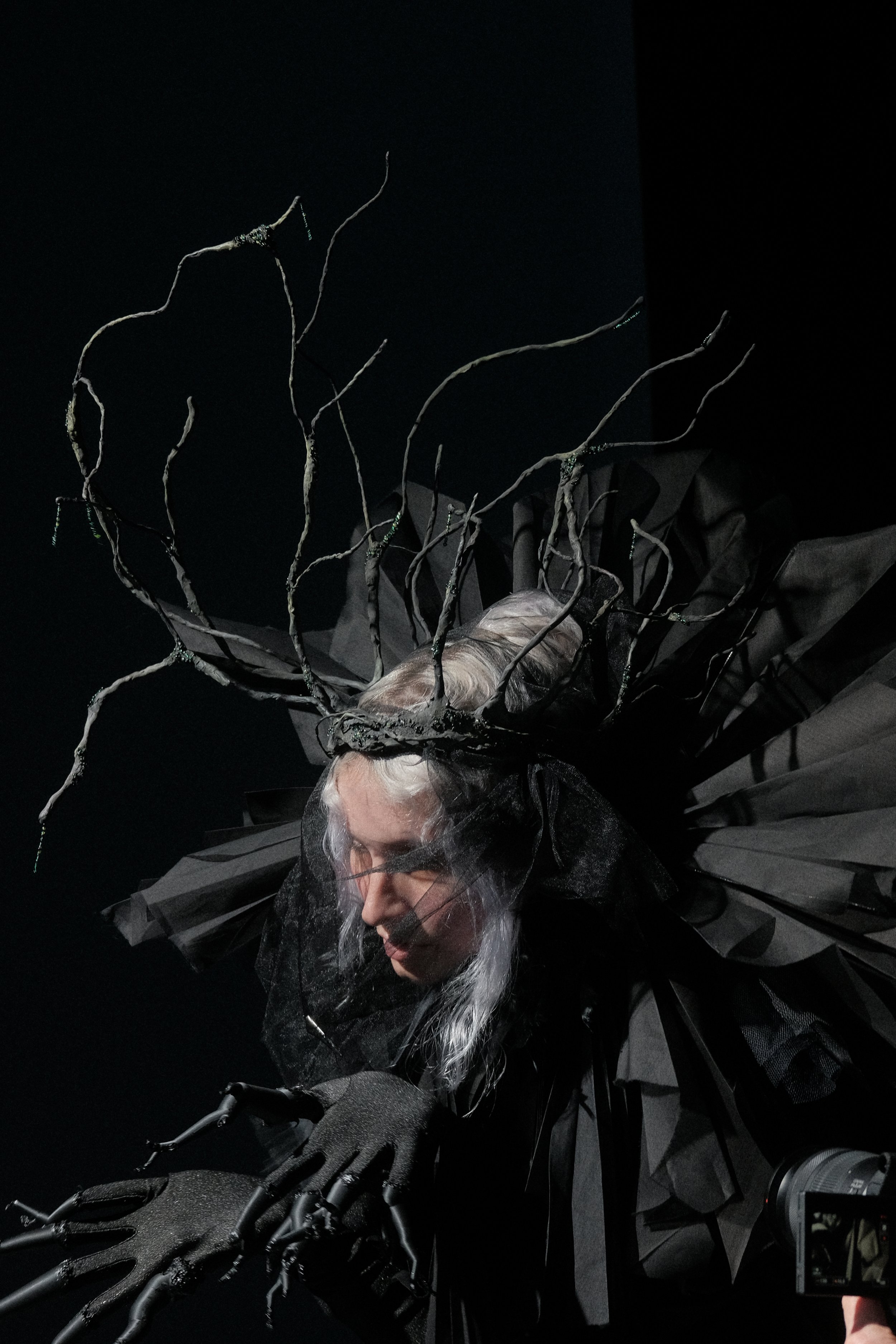
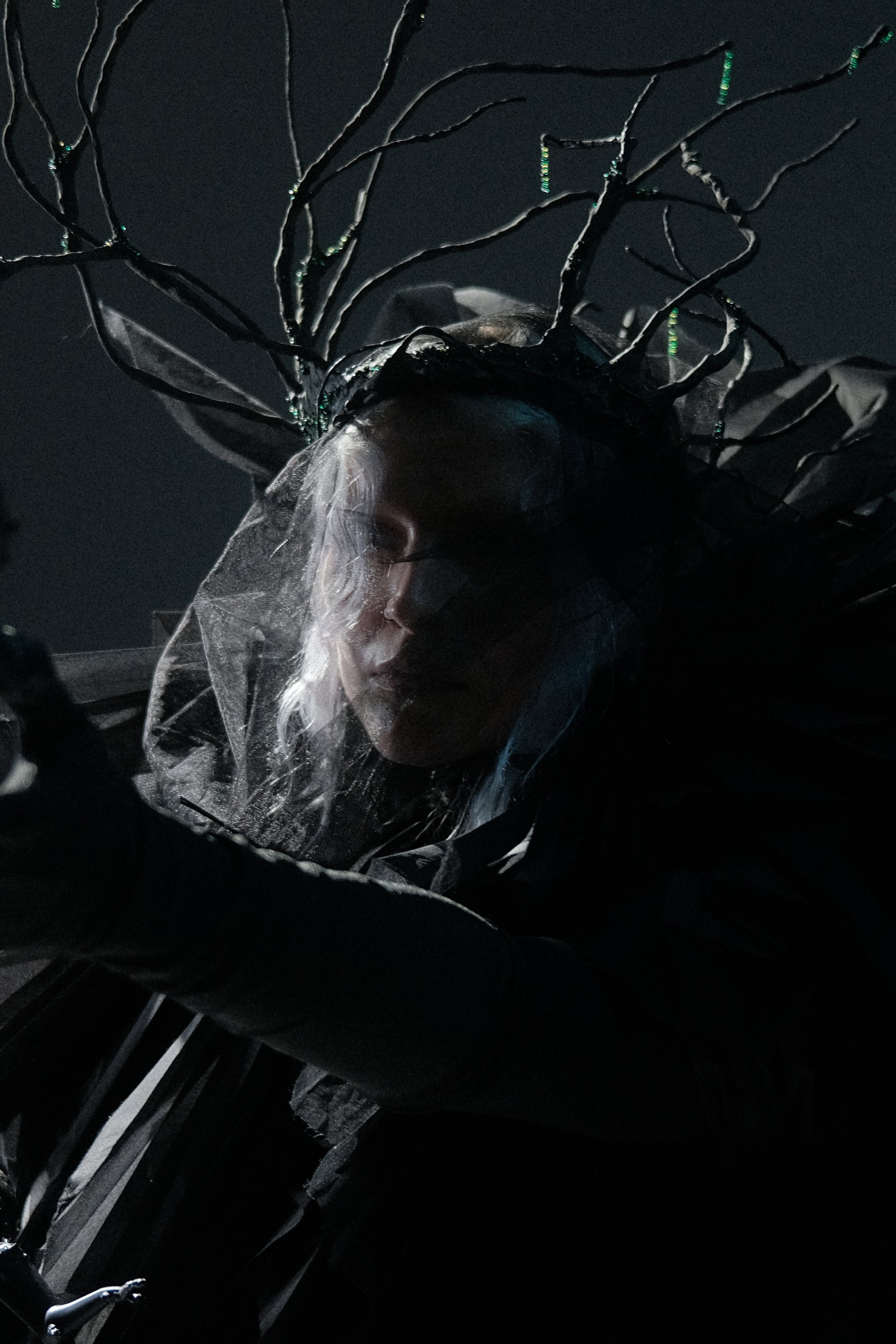
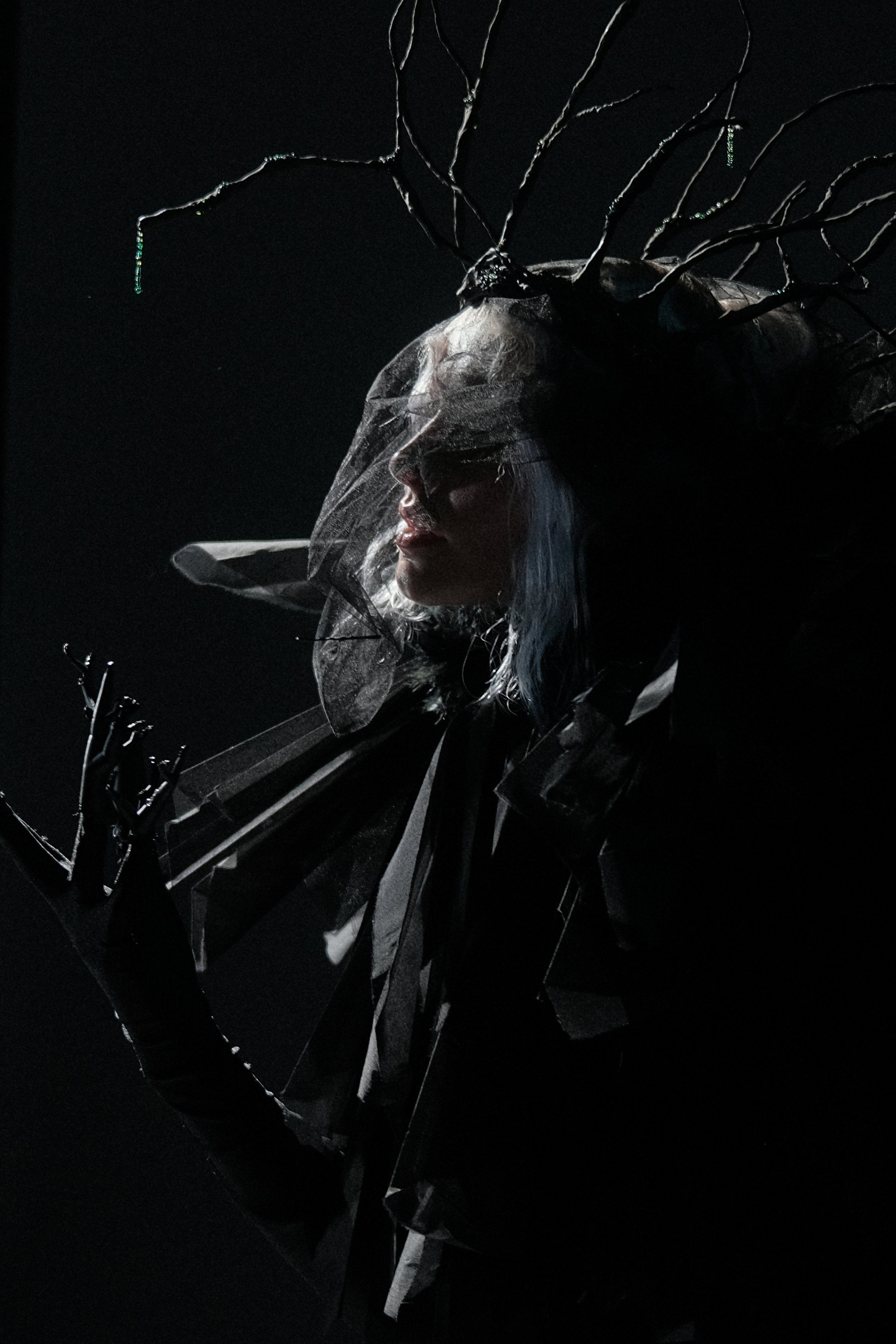
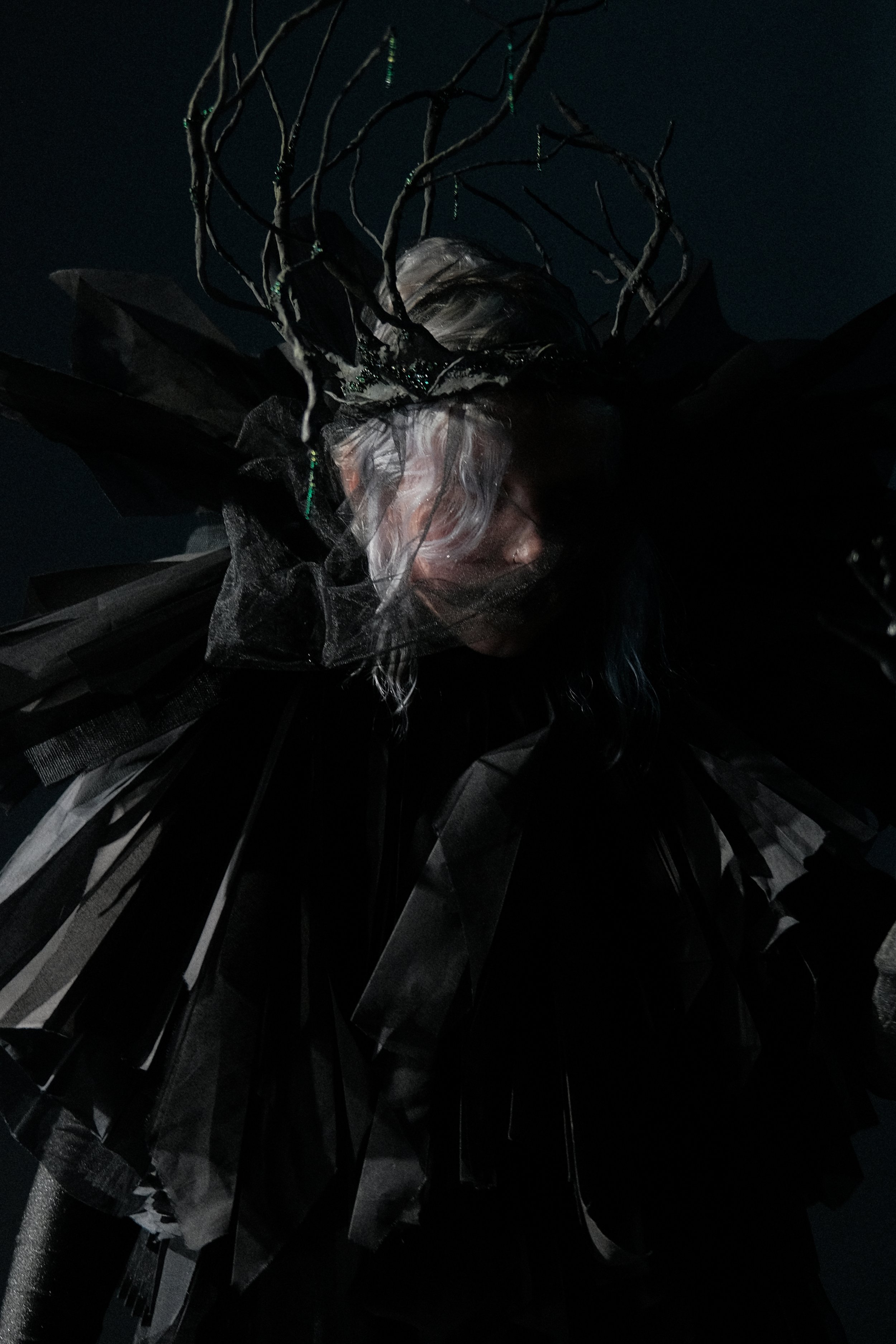
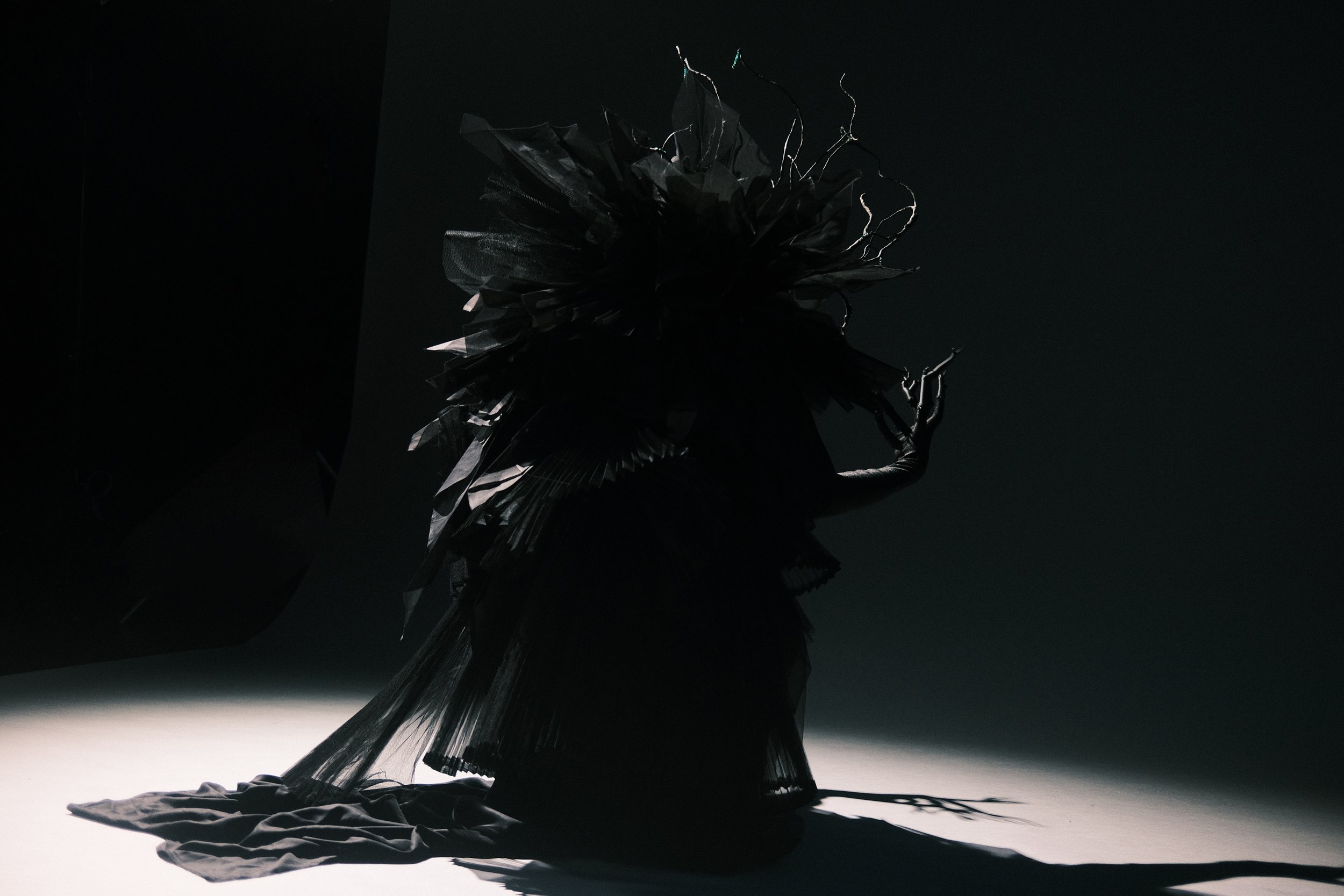
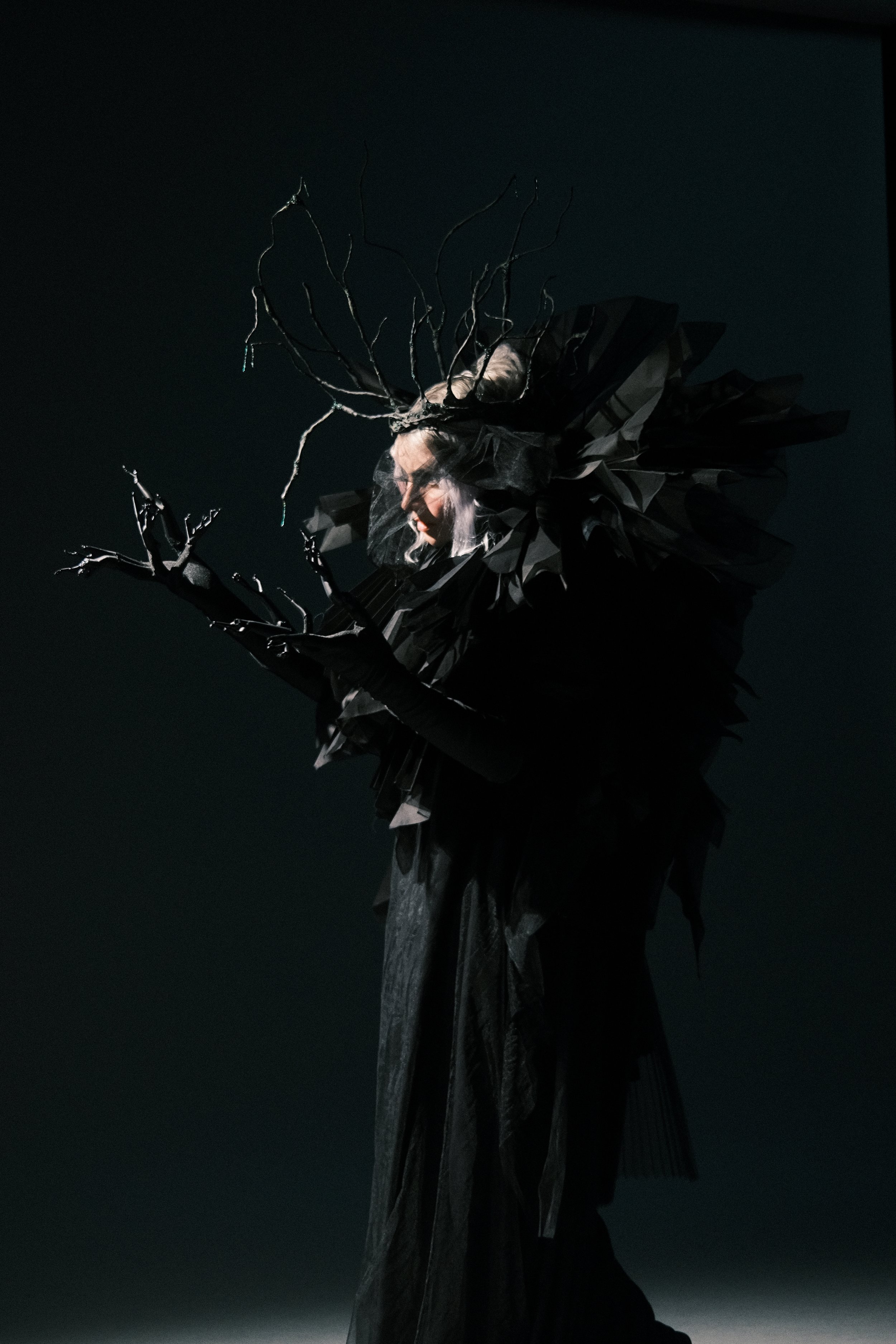
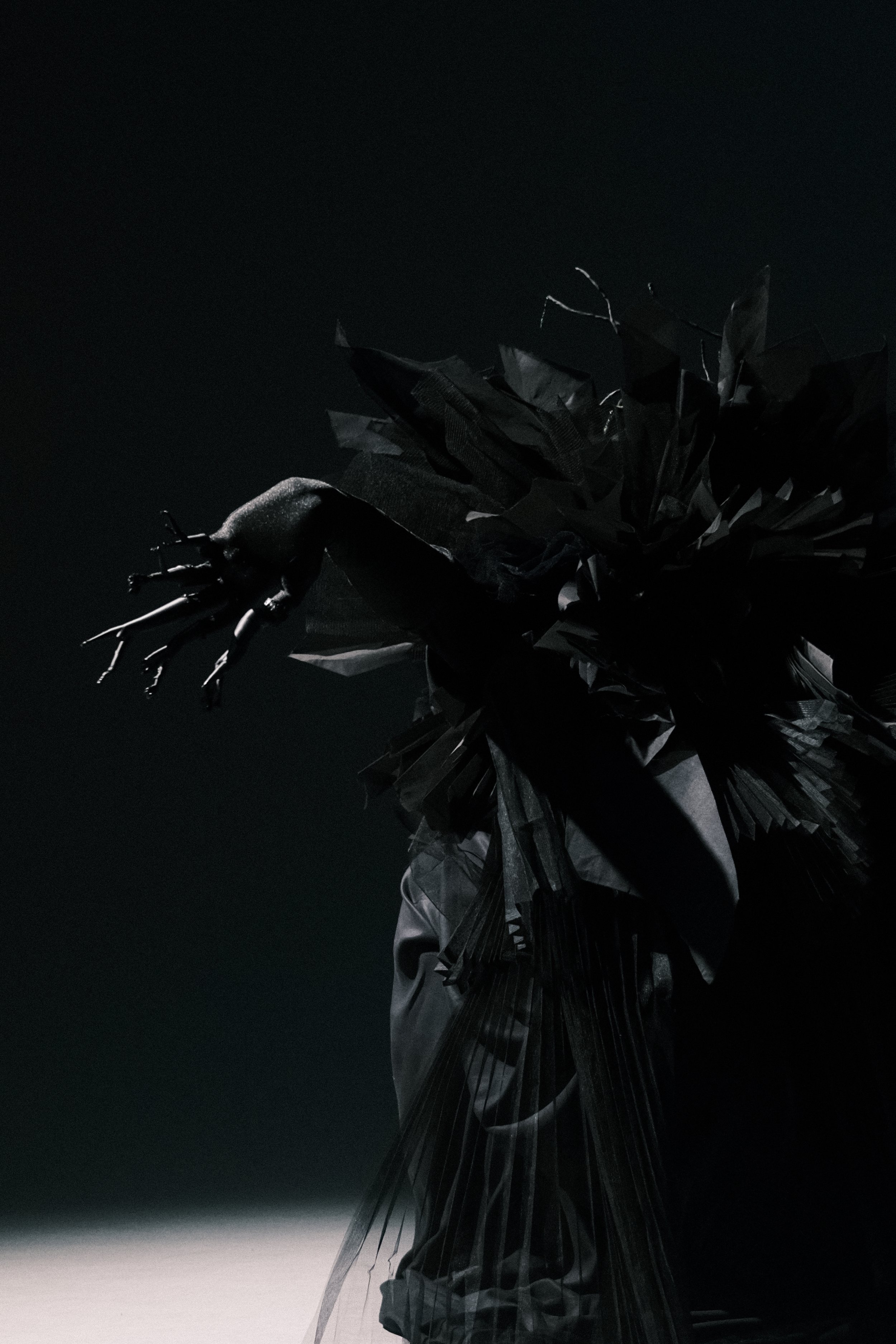
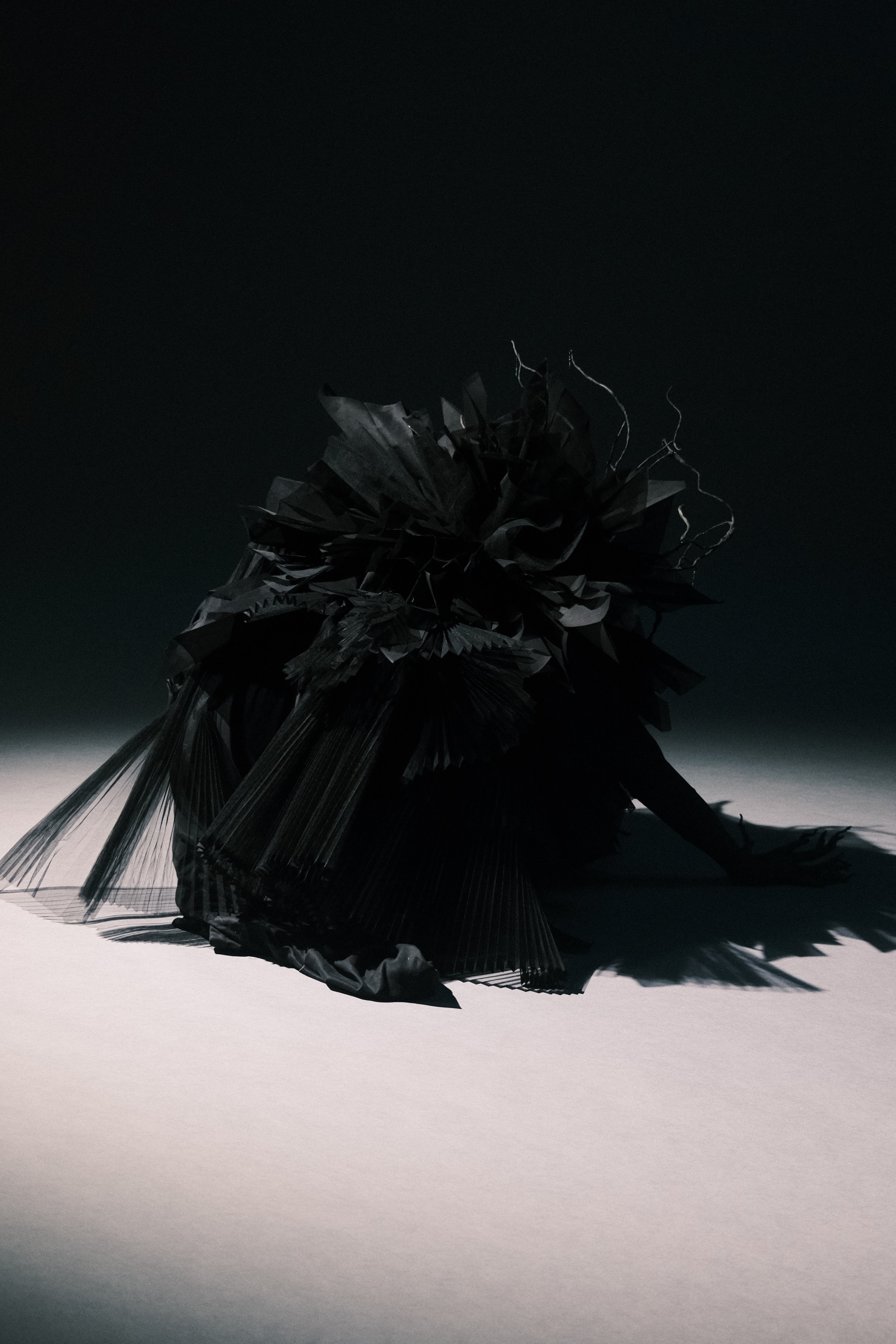
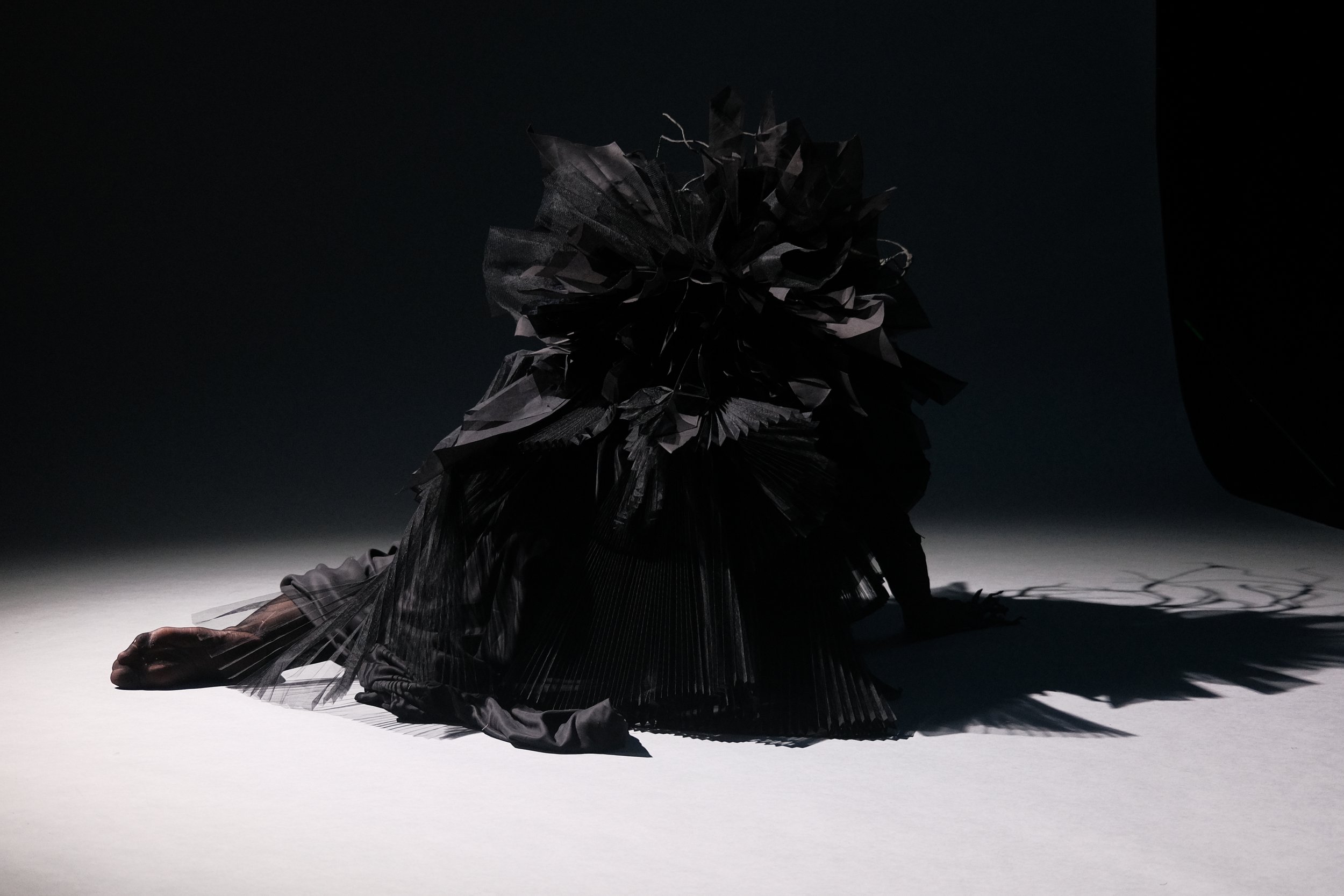
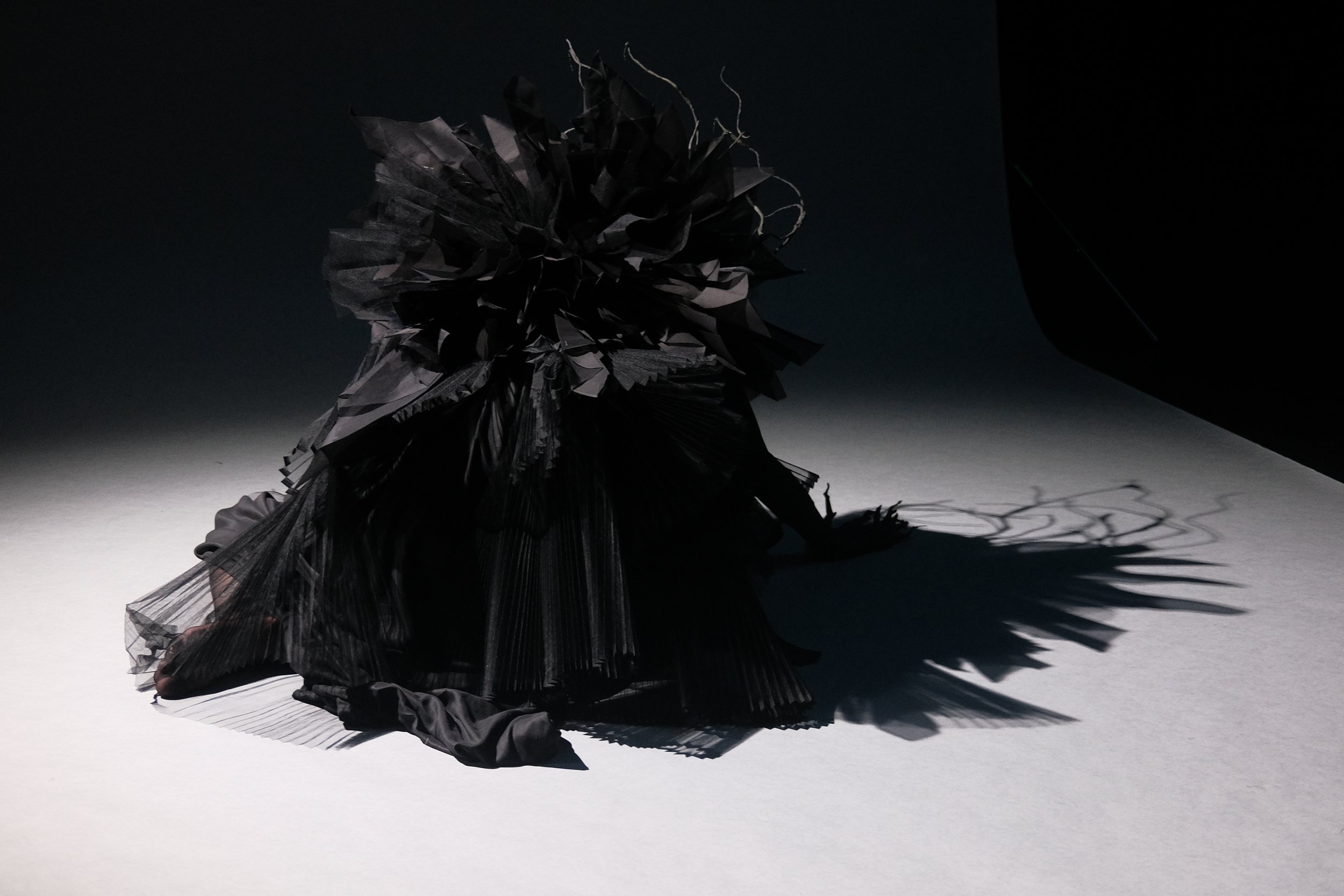
The project that best represents my practice is Sycorax. It was developed as part of my course work from Shakespeare The Tempest.
I became interested in Sycorax as a figure who was defined through external interpretation, particularly through the male power Prospero’s narrative. This led me to question how female characters are historically constructed through male-centred perspectives. I reimagined Sycorax as a protective force connected to nature and the island itself.
The work takes the form of a sculptural costume. I used materials such as organdie to express a sense of intangible, dark presence, and incorporated steel wire and clay to construct organic, branch like forms. The piece situates the character within a liminal space between body, nature, and myth.
6. Feedback & Growth
How do you incorporate feedback from critics or audiences into your work, and how do you balance this with your own artistic intuition?
I value feedback from others and find it useful in expanding the way I think about my work. Different perspectives often help me see new possibilities within a project.
However, I also believe it is important to critically evaluate feedback and decide what aligns with my own artistic intentions. These external inputs are filtered and integrated into my own creative decision-making process.
7. Motivation & Inspiration
How do you stay motivated and inspired, even when facing creative blocks or challenges?
My ideas do not always come continuously, and I sometimes stuggle with having clear direction, which can feel frustrating.
During these moments, I step away from my usual practice and engage in different activities. This distance often allows ideas to reemerge naturally, and when I return to my work, I usually feel more motivated and focused.
8. Exhibiting Work
How do you feel about exhibiting your artwork with The Holy Art Gallery, and what does this opportunity mean to you?
This is my first opportunity to exhibit my work in London. Being selected by The Holy Art Gallery is a meaningful opportunity for me as I am in my first year of living in London,.
I feel grateful to be able to present my work within an international context and to begin building my early career presence in London. This exhibition is an important milestone in my development as an emerging artist.
9. Future Goals
What are your long-term goals and aspirations as an artist, and how do you plan to achieve them?
My long-term goal is to continue developing my practice within the fields of costume, performance, and interdisciplinary art. I am particularly interested in expanding my work through collaboration and exhibition opportunities.
I hope to further establish myself within the creative community in London and continue exploring ways to merge fashion, storytelling, and sculptural practice.
10. Audience Connection
What do you hope viewers take away from experiencing your art, and how do you aim to connect with them on an emotional or intellectual level?
I hope audiences experience the emotional tension embedded in my work, particularly the sense of unease and ambiguity surrounding the character.
Rather than offering a fixed interpretation, I aim to create space for audiences to question the narrative and consider alternative perspectives, especially those that are often marginalised or unheard within traditional storytelling.