Hannah Ferry is a Norfolk-based artist, art therapist, and fire dancer known on social media as @healingartshannahferry. Her work focuses on mental wellbeing, nature, and the therapeutic power of creativity
Social Networks :
Instagram handle: @healingartshannahferry
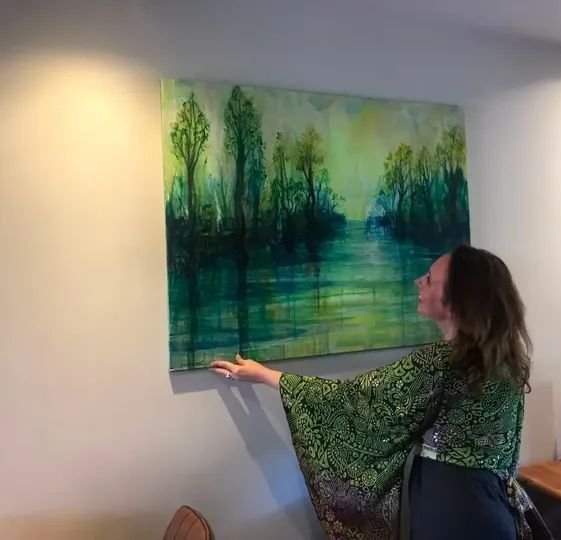
Hannah Ferry
1. Inspiration & Style
What initially inspired you to become an artist, and how did you develop your unique artistic style?
I grew up in a creative, eccentric home in the Oxfordshire countryside. My father was an antiques dealer with a very good eye, and my Grandfather taught me how to draw in perspective. He too was involved in creating and draught-Manship. I spent many happy days outside, playing and connecting with nature, I have always liked being creative as I am dyslexic. This meant school was hard work; I found solace in art.
In 2004 I completed my BA in Fine Art Painting at Camberwell College of Arts. At this time my work was focused around body image and feminine identity, which reflected my age. (I was finding myself).
Art helped me make sense of difficult feelings and emotions and has continued to do so, a guiding light through the journey of life; hence why I trained as an art therapist, completing my MA in 2010 at Roehampton University.
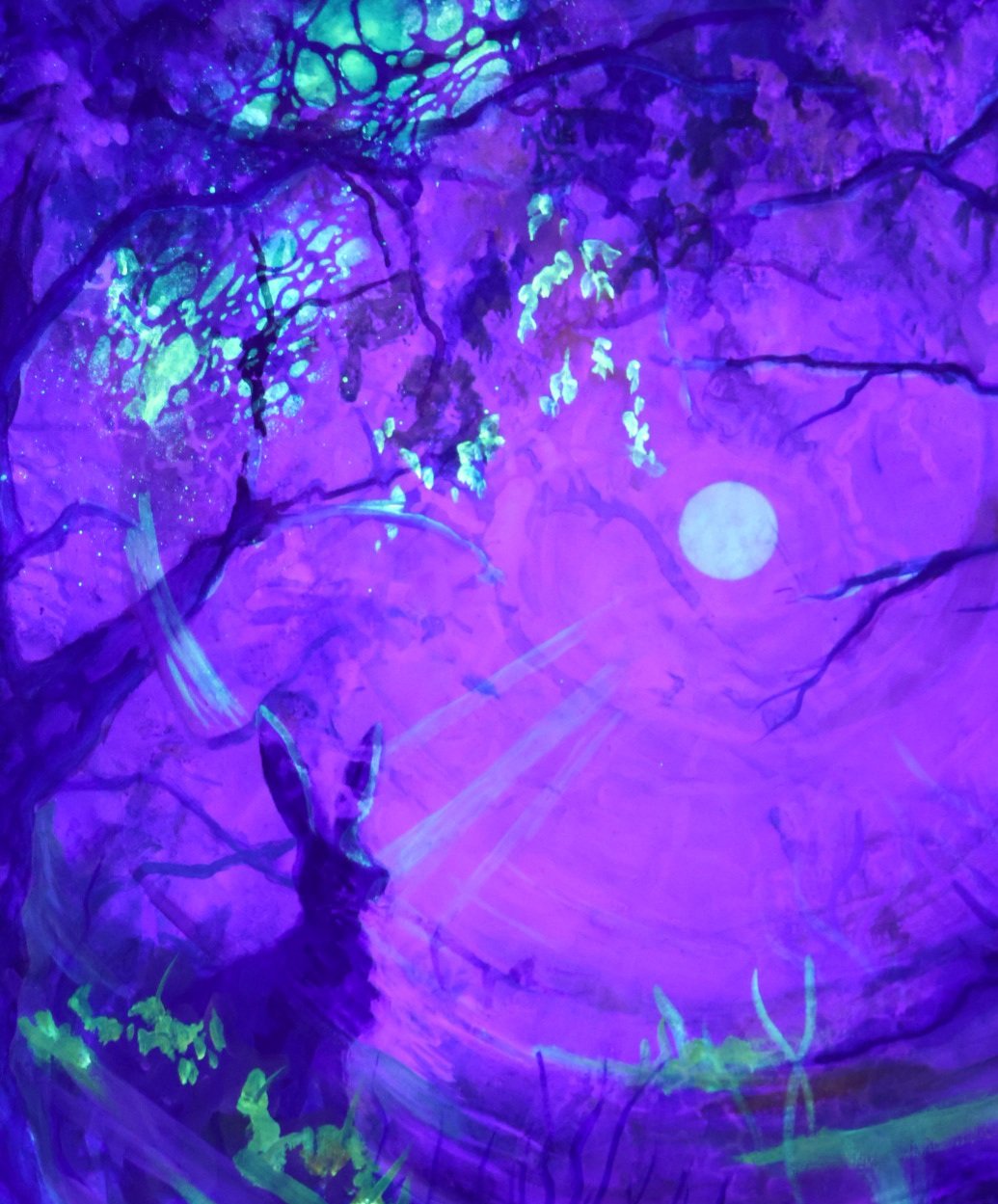
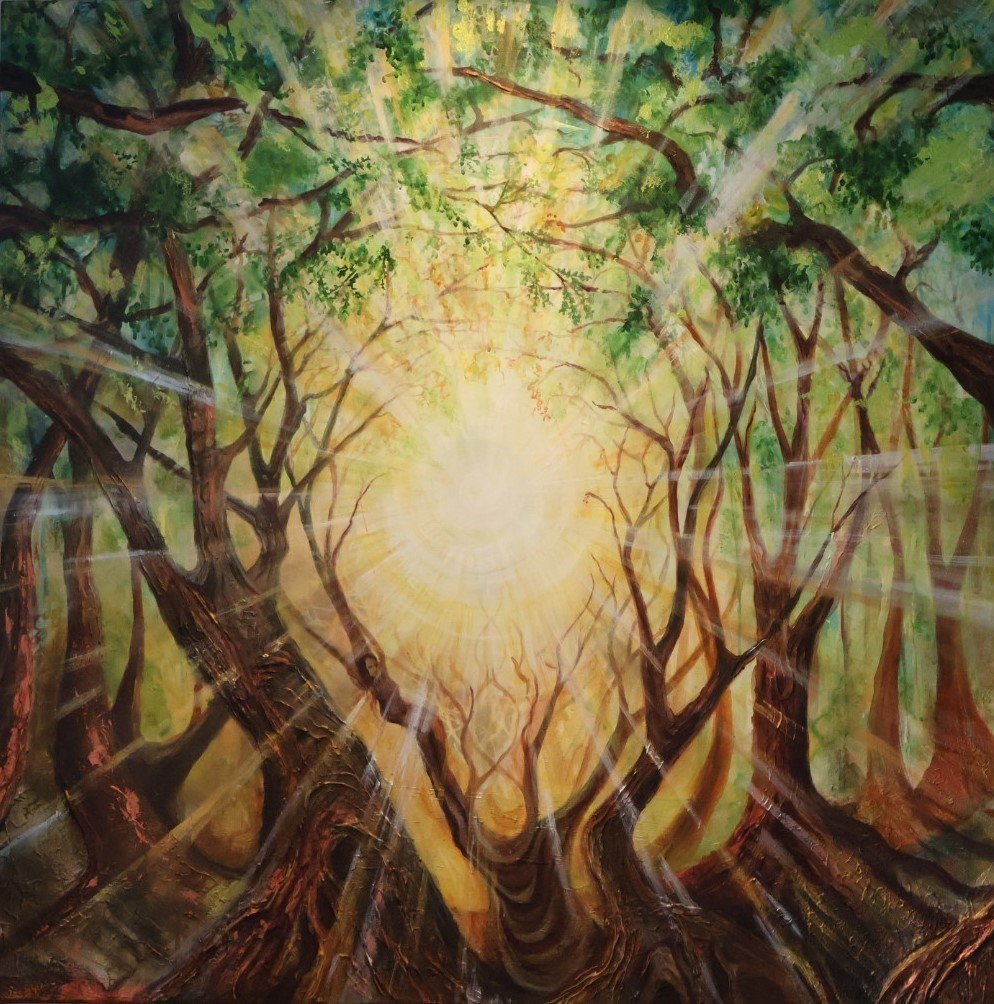
My artistic style has evolved over the years as have I. Currently my work is focused on nature, trees and light, echoing the magical Norfolk countryside where I live.
2. Creative Process
Do you have any rituals or routines that help you get into a creative mindset when starting a new project?
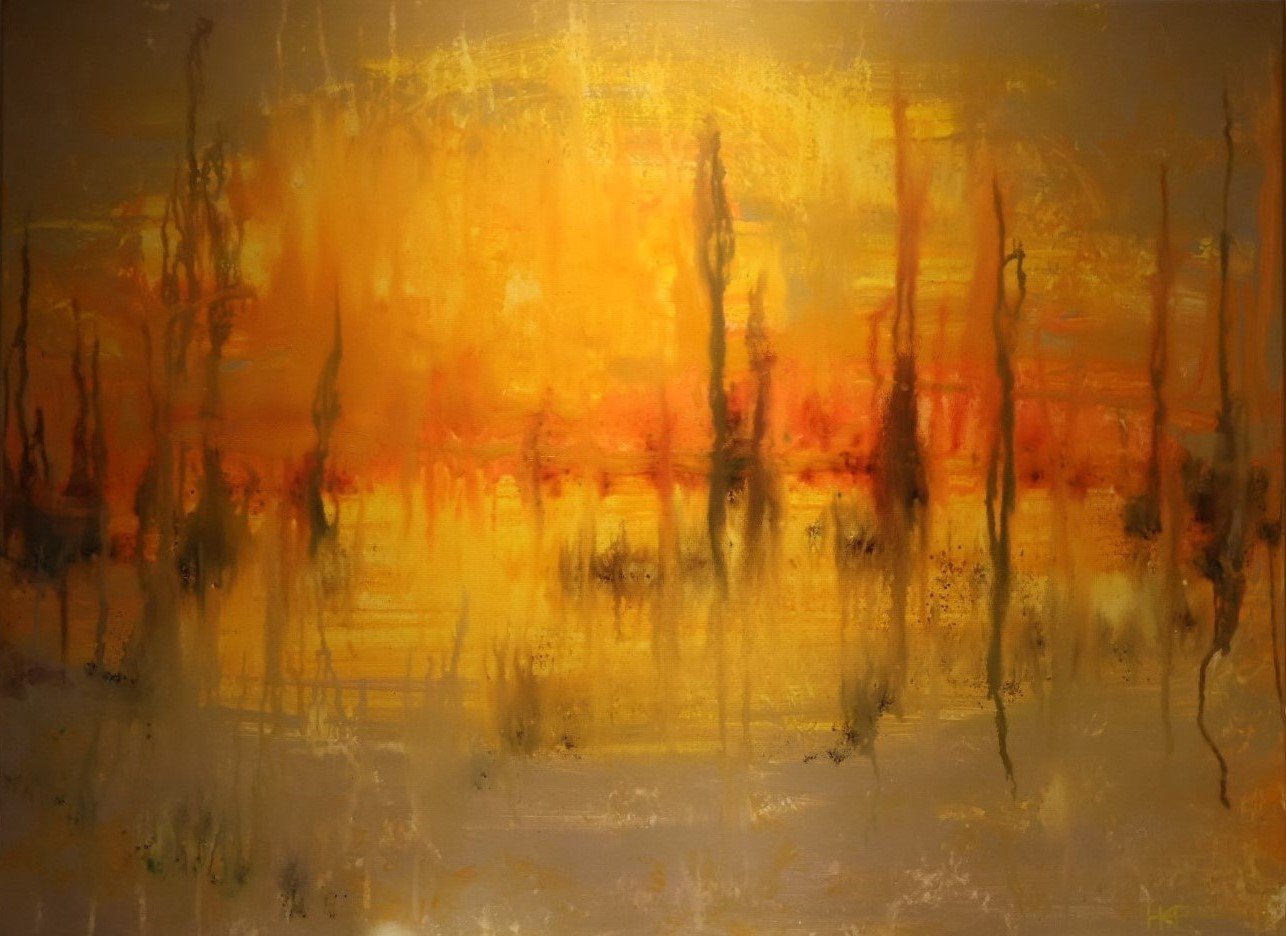
I love a blank canvas, backgrounds to my paintings start with paint pouring, spraying water and using powdered pigments to free up my mind through play and chaos. This was not always the case, during my BA, I was always concerned about the final piece over the process, but through working on my MA in art therapy, the process became more important, a place where healing happens. I often have a theme I am working towards but prefer creating an ‘embodied’ rather than a ‘diagrammatic’ image. Reference: Joy Schaverien 1991 ‘The Revealing Image’.
3. Artistic Influences
How do you balance historical or artistic influences with your personal style, and how do these influences manifest in your work today?
I’m lucky enough to have a community of living artists around me so I can often visit them in their studios and at exhibitions. Historical influences include: The German expressionists such as Max Beckmann as well as surrealists like Salvador Dali. Stanley Spencer in British art has influenced me over the years, and of course, Turner. My work echoes dream-like qualities, which can be found in these Masters.
4. Emotion & Expression
How do you use your art to evoke emotions, and what role does emotion play in your creative process?
The materials I use express emotions through their qualities (Vitality Effects). It is often a cathartic process and in recent times has become more spiritual in purpose, connecting to my own personal recovery.
5. Standout Projects
Can you share a project that stands out to you and describe the creative process behind it?
For many years I have conducted Healing Arts workshops, creating a safe space for others to express emotions and create authentic human connections as this helps and aids mental wellbeing. Something I feel very strongly about. Currently I conduct workshops at Scrapbox, a charity committed to environmental sustainability and promoting the reclamation and re-use of crafting and art materials. This feeds into my passion for the natural world in which we live.
6. Feedback & Growth
How do you incorporate feedback from critics or audiences into your work, and how do you balance this with your own artistic intuition?
My paintings are like my babies, so it can be painful to hear negative criticism, however, feedback is very important as it helps me to grow as an artist. Today, I am free, this allows me to learn more about myself and trust in the creative process.
7. Motivation & Inspiration
How do you stay motivated and inspired, even when facing creative blocks or challenges?
The key for me is staying present in the creative moment and allowing myself to play with the materials. If I’m not feeling it, I don’t force it. Visiting fellow artists is always inspirational and being held within the community, which often provides external influence and encouragement.
8. Exhibiting Work
How do you feel about exhibiting your artwork with The Holy Art Gallery, and what does this opportunity mean to you?
Exhibiting with you gives me both the exciting incentive and opportunity to expose my work to a wider audience. I also hope it will give Art Therapy a visual voice, allowing discussion around the importance of the creative arts in facilitating mental wellbeing.
9. Future Goals
What are your long-term goals and aspirations as an artist, and how do you plan to achieve them?
To become well-known, not only for the art which I produce but for the healing it can provide. Creativity, especially in these times, is an important, hands-on, tactile process and a very human one which should not be lost, I aspire to be a voice for our human instincts of connection and hope that the promotion of real interactions that can be seen as a tangible alternative to hyper reality and artificial intelligence.
10. Audience Connection
What do you hope viewers take away from experiencing your art, and how do you aim to connect with them on an emotional or intellectual level?
I hope my work will promote positive conversations around humanity and its interaction with nature. I find creativity grounding and spiritual. If my work nurtures and provokes difficult and positive emotions, then so much the better.