Artist spotlight : MARYAM DASTGERDI
Maryam Dastgerdi's abstract work is a deliberate exploration of personal dialogue and the compelling tension between opposing forces: the abstract and the concrete, the fast and the slow, the calculated and the unbidden. Drawing on a foundational expertise in mathematics, Dastgerdi’s canvases manifest a unique artistic duality where intellectual structure gives way to raw, emotional immediacy.
Her creative process is one of non-intentionality. It begins without expectation, relying on the immediate, fluid conversation between the artist, the materials, and the canvas. This spontaneity guides her signature styles, including the vivid, fluid movement of her liquid art and the distinctive, deconstructed geometry of Mubism, a Cubist-inspired form that is a deeply personal language of expression.
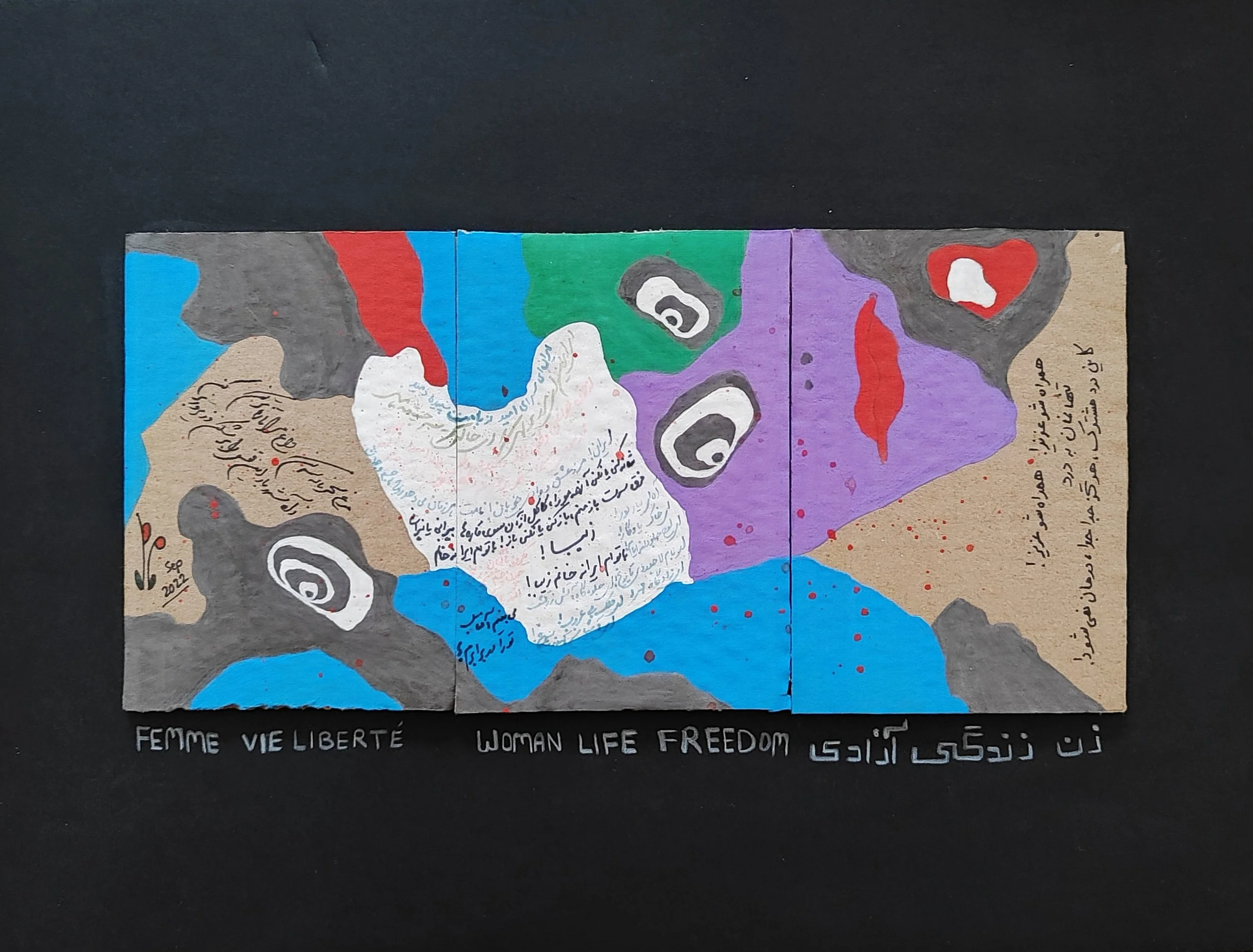
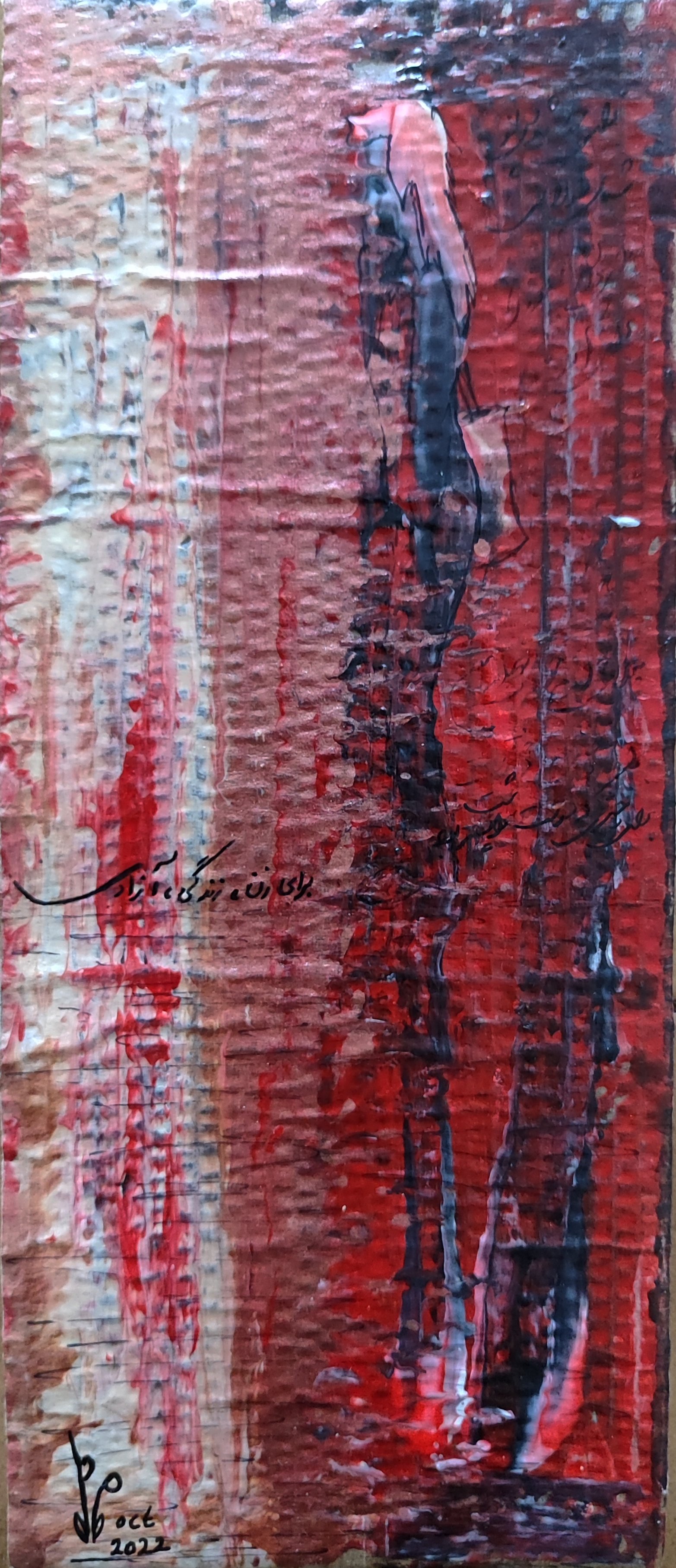
For Dastgerdi, painting is an essential practice of emotional translation. Her work is a channel for deep-seated experiences, serving as a powerful, public voice for internal emotions that were once silent. Themes of self-care, overcoming emotional blockage, and addressing human rights crises—as seen in the impactful “Iran beats in my heart” collection—are central to her practice. Through vibrant textures, striking color palettes, and embedded narrative, her art extends an urgent invitation for the viewer to engage in their own moment of reflection and personal discovery.
Dastgerdi’s long-term aspiration is to be an internationally recognized voice, allowing the colors, textures, and forms in her art to be the voice of the unheard, connecting emotionally and intellectually with an audience seeking to navigate their own internal narratives.
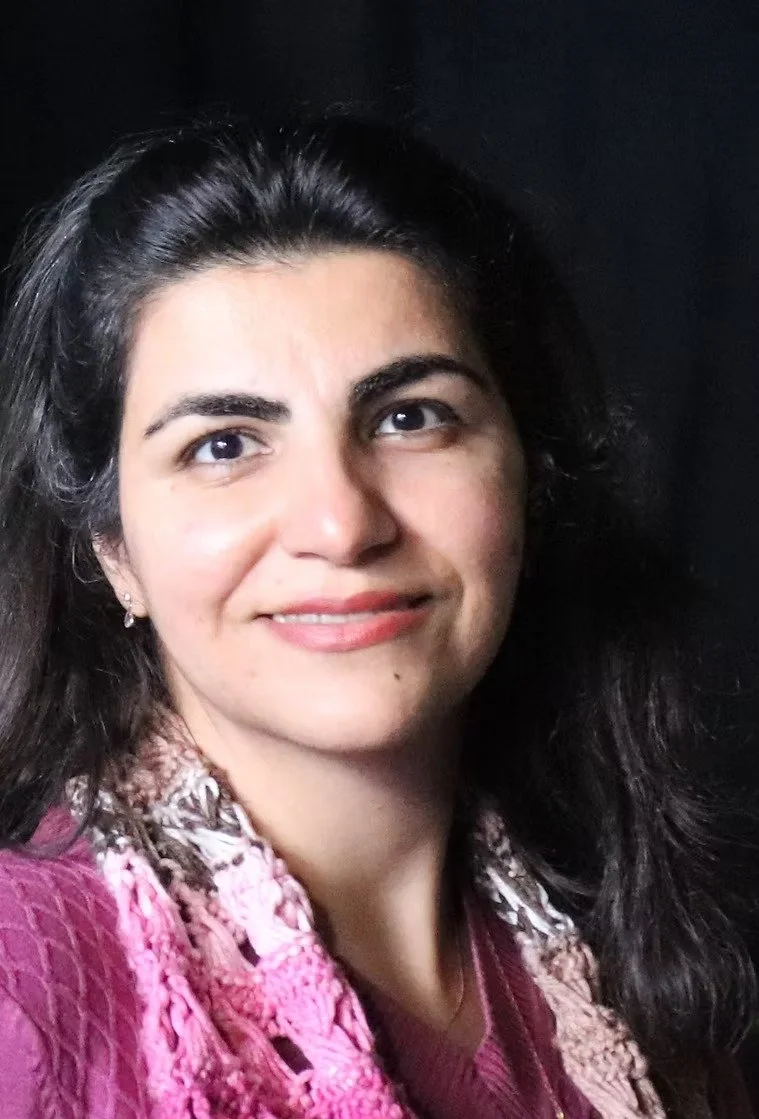
Artist : Maryam Dastgerdi
Inspiration & Style
What initially inspired you to become an artist, and how did you develop your unique artistic style?
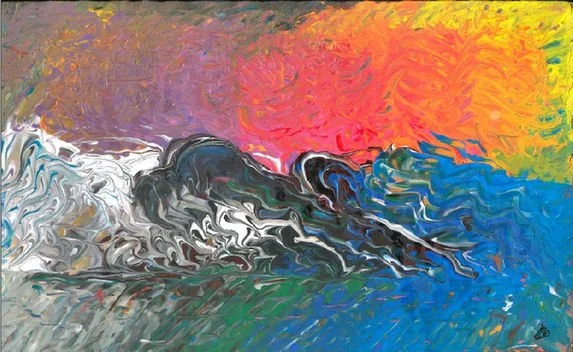
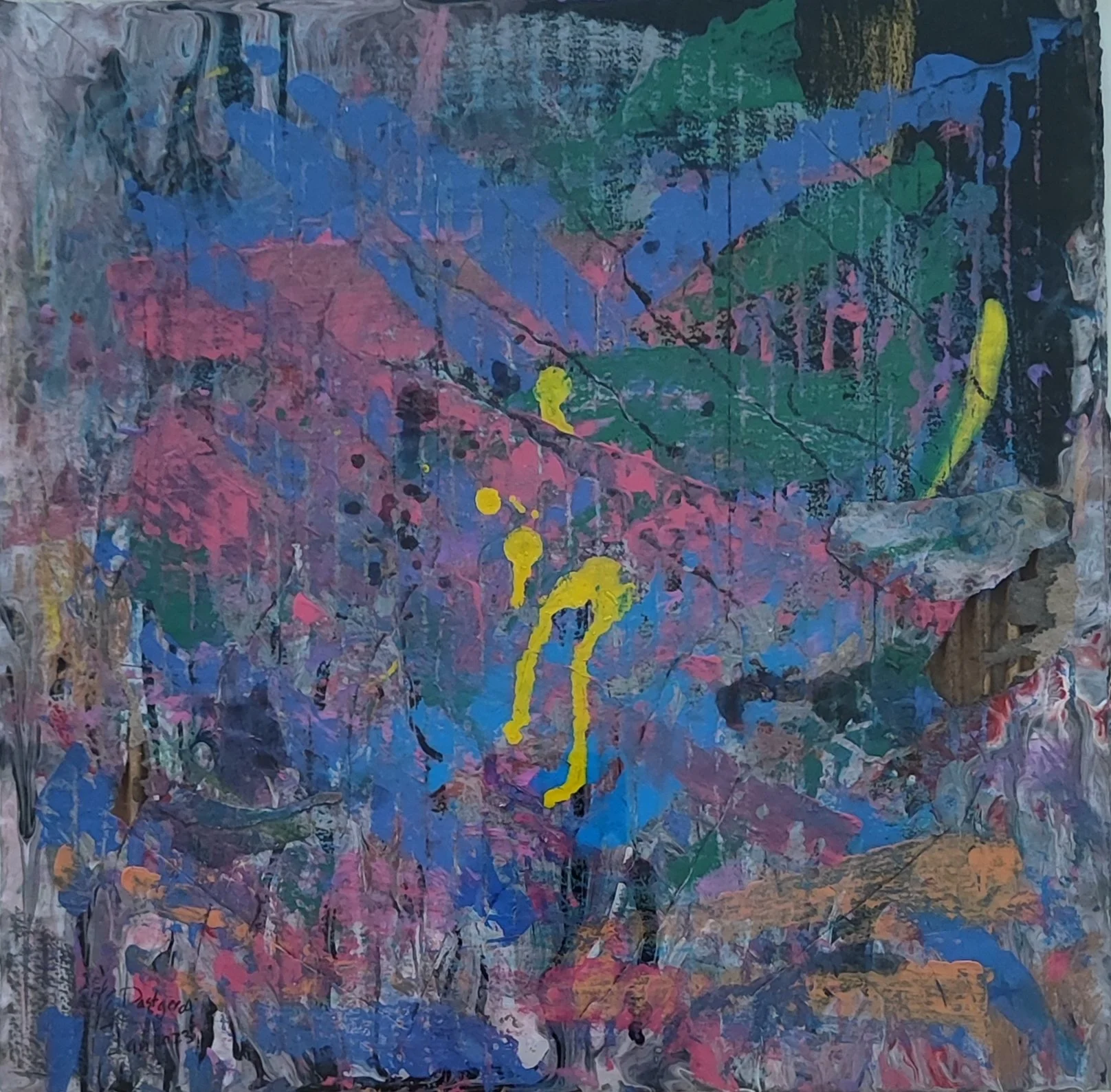
Art was a natural language for me as a child — painting, clay, writing, making small books. Later, I focused on mathematics and academic research, but art never disappeared. After my PhD and during the lockdown period, painting returned as a physical necessity rather than a decision. If you look at the two first artworks of mine that I created in 2021, Liberation and Inner Voices, you may see what I mean. The message was quite clear to me. I have to get back on art, this time on abstract painting. A part of me was marginalized for so long and didn’t want to stay hidden anymore. That’s how it started.
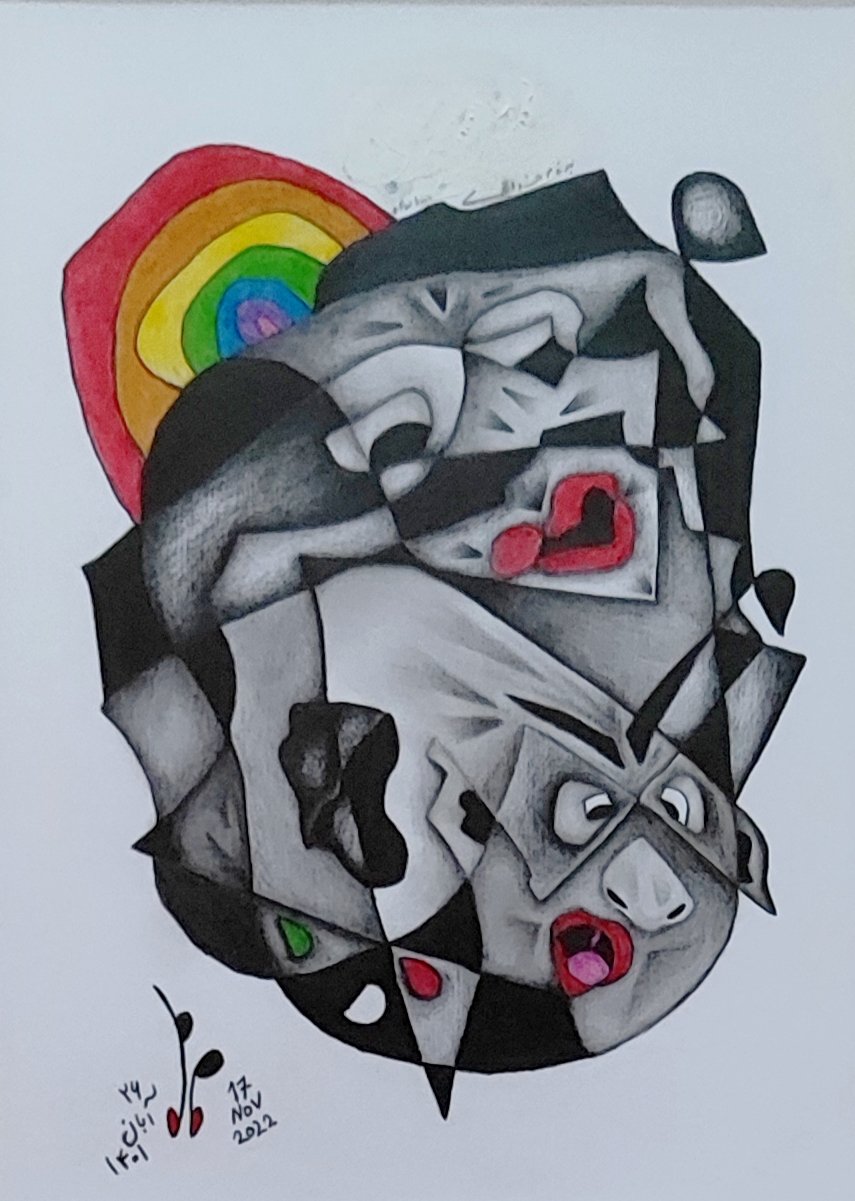
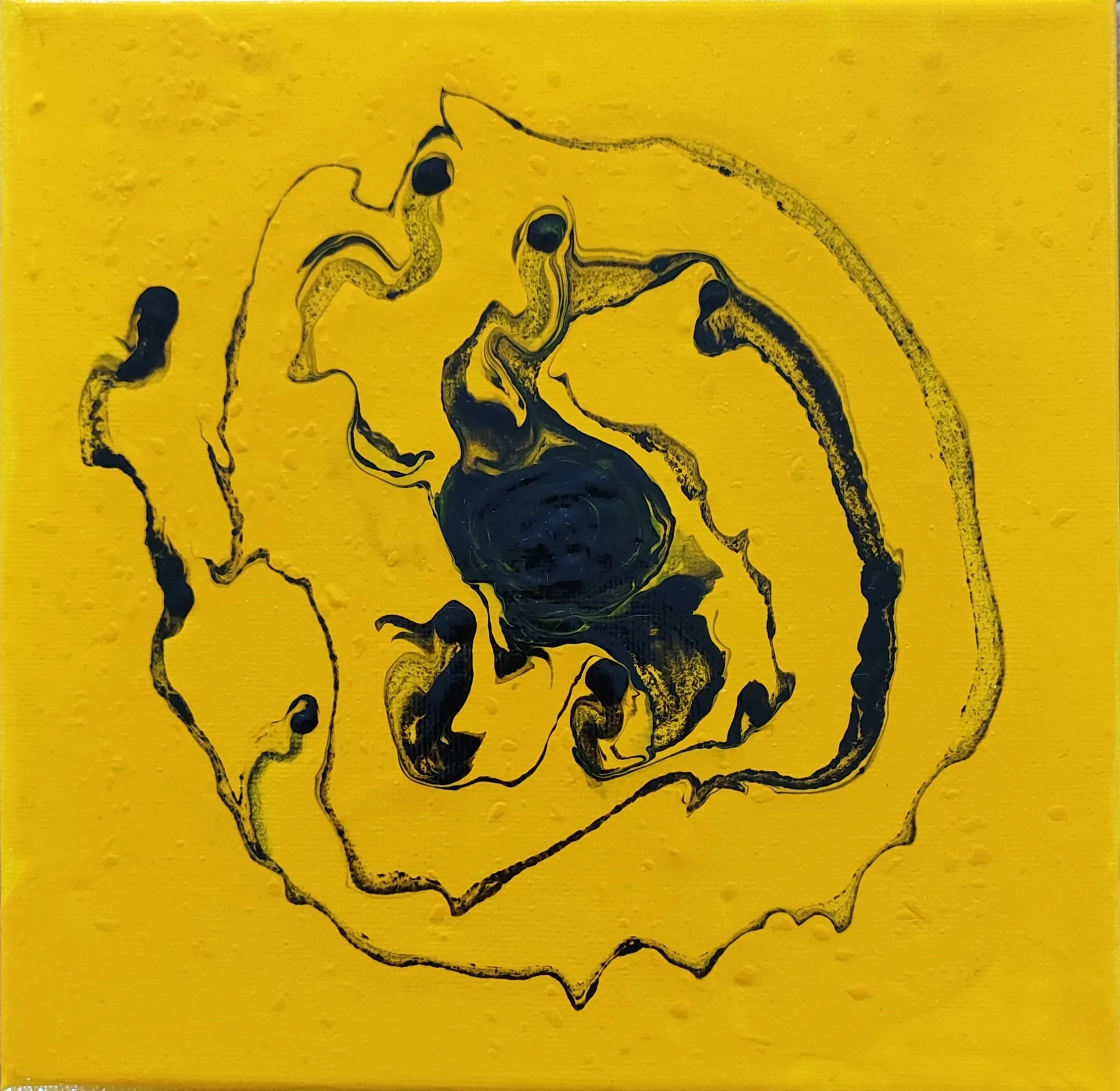
The Inner Voices has a particular unique style. It kept showing up in several works after that and I loved it. It reminds people of Picasso and Cubism, but I didn’t intend to create any cubism work. However, it suggested the name for this style Mubism: the Cubism of my little Maryam.
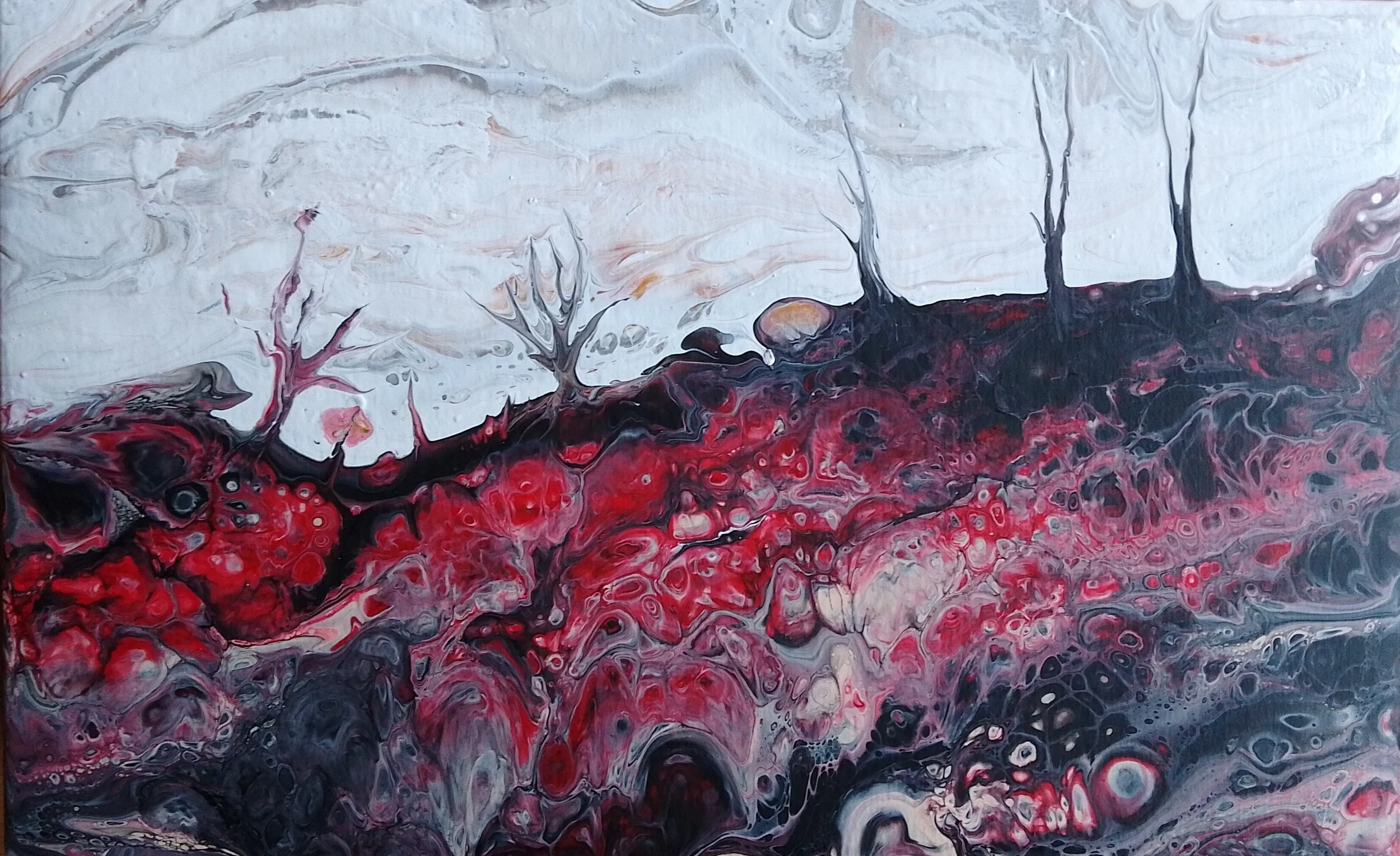
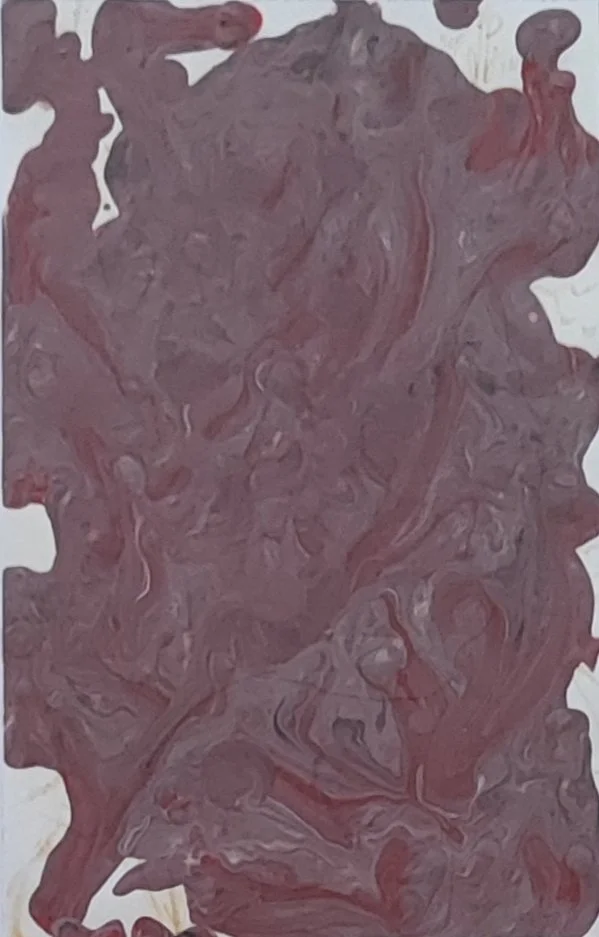
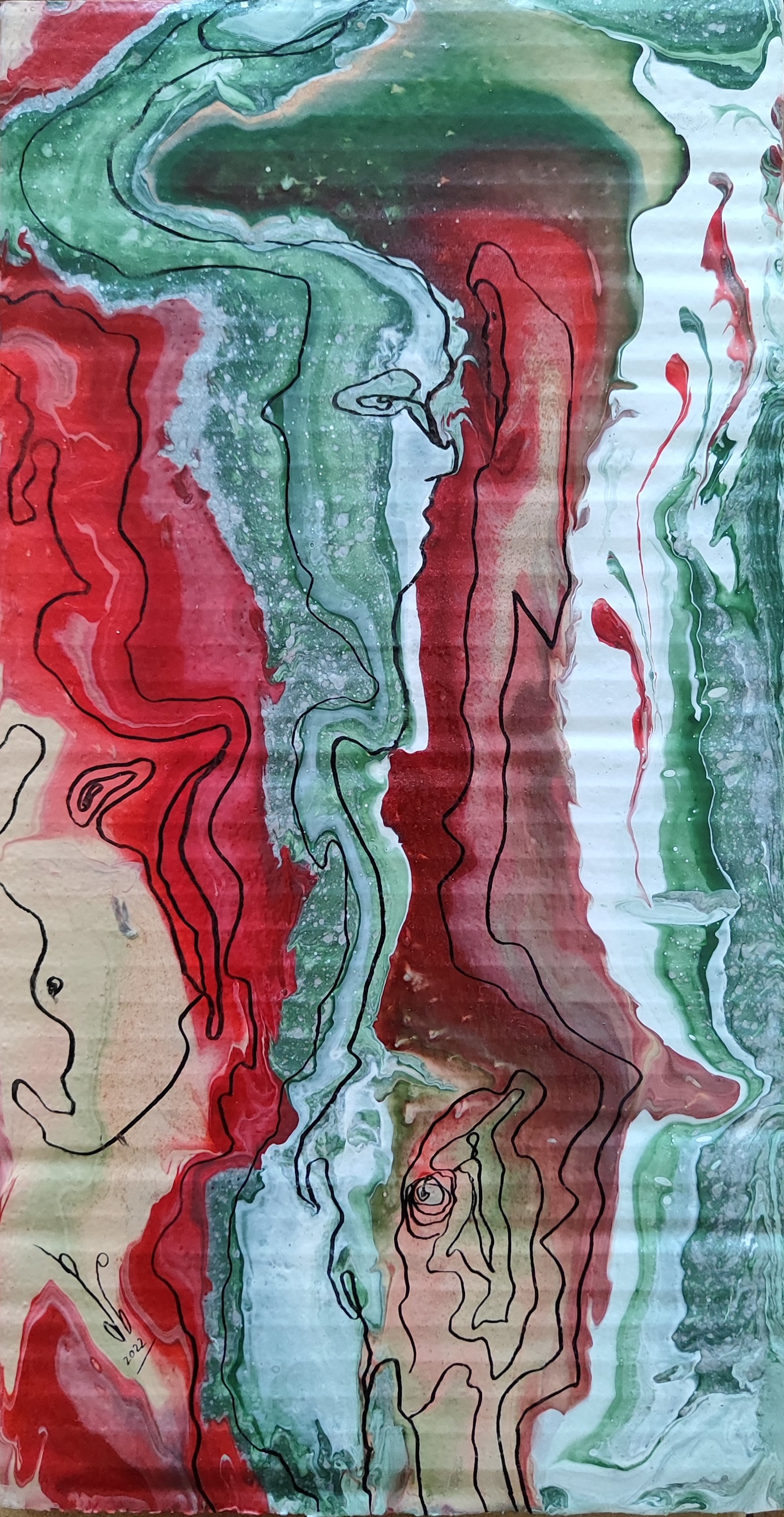
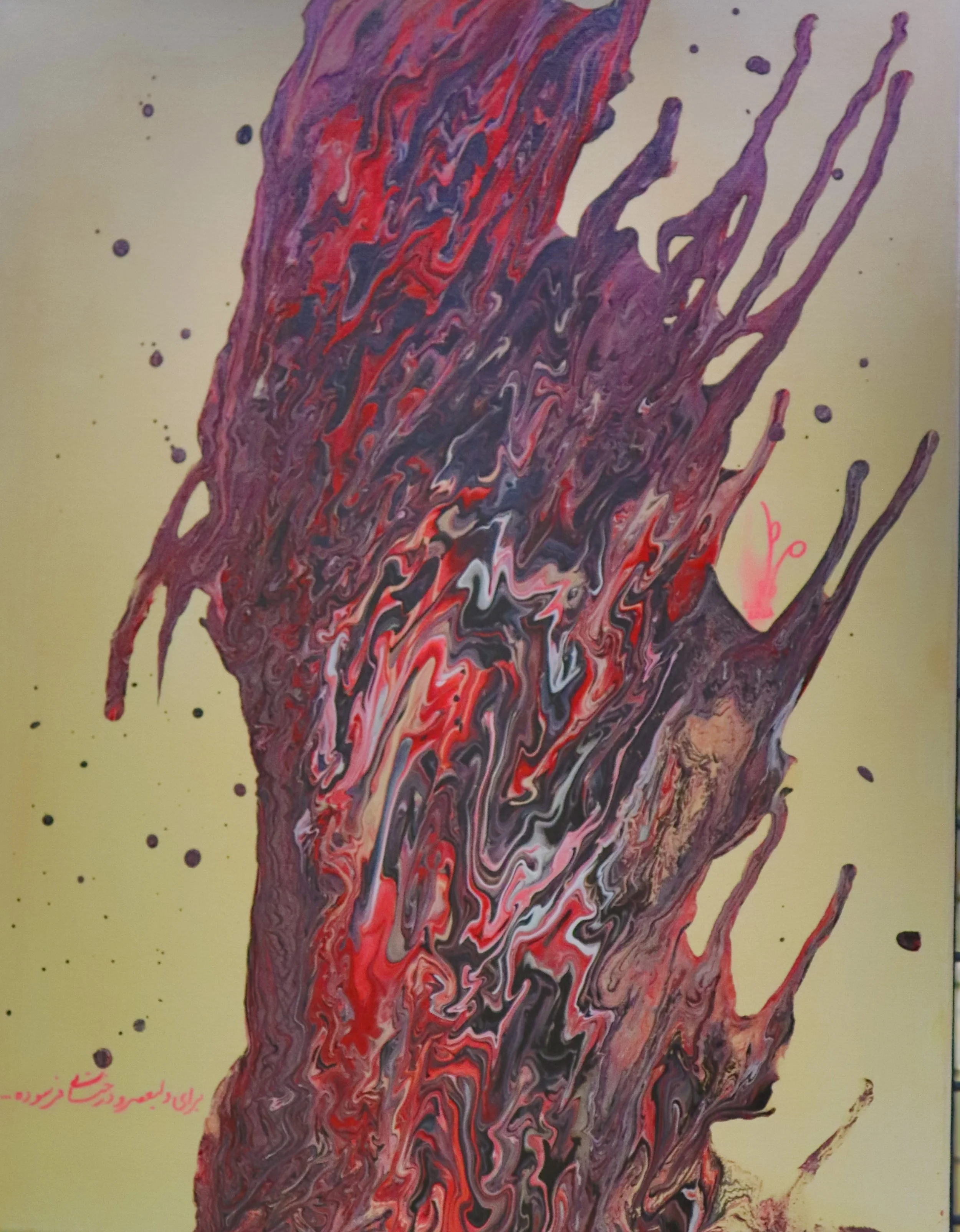
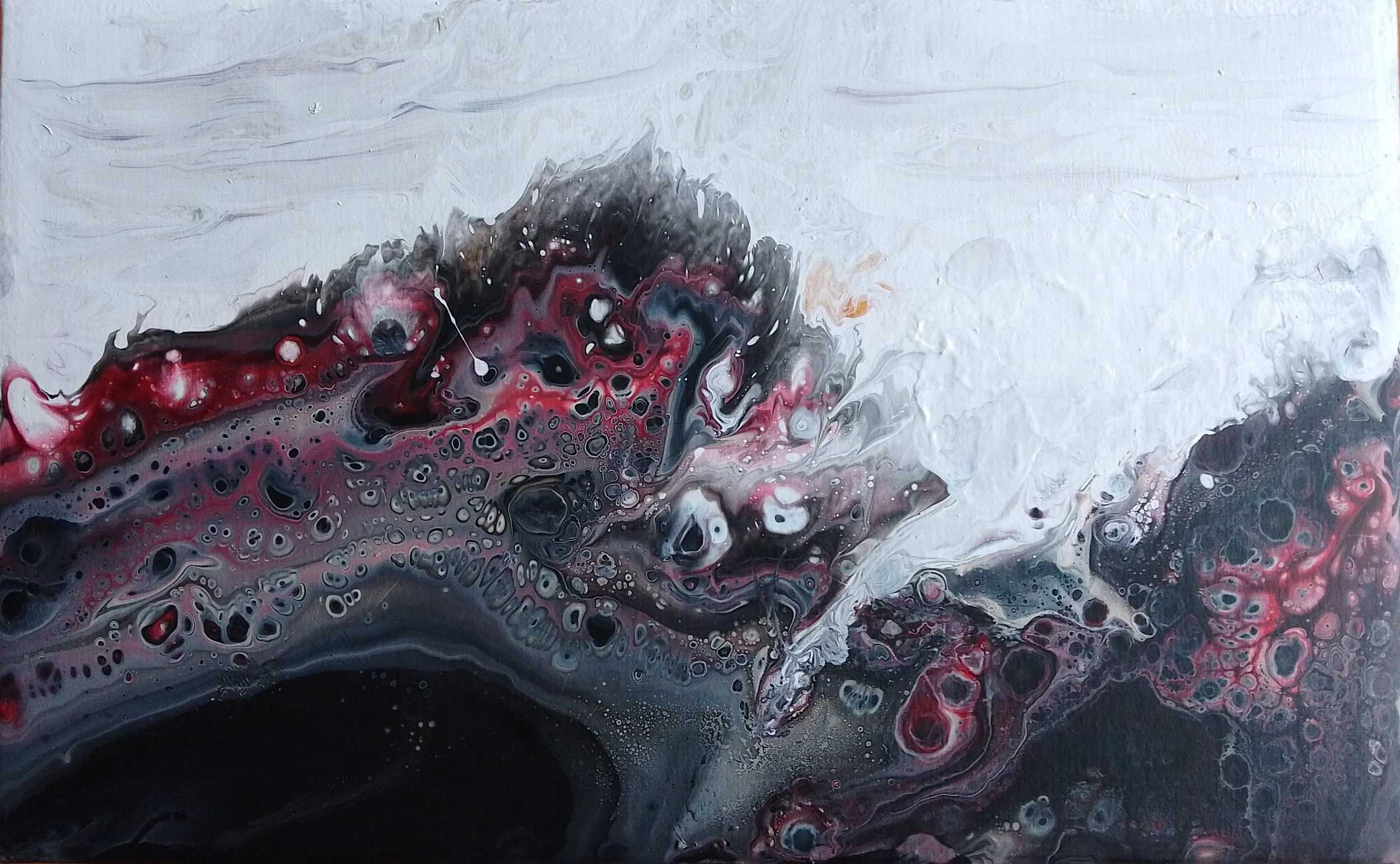
Liberation suggests another style. It started by pouring. But if you look closely, they are not really pouring paintings. They are more liquid art, but not quite. I start by enjoying the freedom of the liquid flow of colours and then a quiet conversation between me and the artwork starts and we dance together until the work is finished. It’s not only pouring, other processes get involved as the work progresses and it is different for each piece.
No matter which style I create, the common practice is to start freely, without expectations, without particular inspiration or ideas. The work tells me afterwards what it is about: some internal emotions, thoughts or worries, some social or environmental events, a memory, a person, a message, etc. And sometimes nothing! And that’s also fine!
Doing research in mathematics for so long, working on abstract problems that sometimes take a few years to be solved, in my paintings I intend to create pieces in a shorter time to see the
concrete result faster (yet, on some pieces I work for quite a while). My work inherits fast-slow, and concrete-abstract dualities.
Creative Process
Do you have any rituals or routines that help you get into a creative mindset when starting a new project?
IMore than anything, it’s dreaming, dreaming, and dreaming about painting, thirst for creation and curiosity to see where the project takes me and what will show up. I would also say that my doodles in my small sketch books (or any other support within my reach!) helps me stay on track.
Artistic Influences
How do you balance historical or artistic influences with your personal style, and how do these influences manifest in your work today?
Honestly, I don’t put any effort into that. I come from a very rich historical and artistic culture. The kind of art I am grown up with is full of details, it demands lots of patience and precision, it’s very fine and delicate. These qualities are in my nature! But I don’t necessarily keep them in mind when I paint. And I don’t try to be that delicate and perfect when I paint. In some projects I even rebel against that patience. However they sometimes show up. A small little Khatai flower in a corner, a geometric pattern that resembles the tilings in Ispahan’s architecture, etc.
Of course I look at the artworks of the great artists from all over the world, study their work and admire their skills and techniques. Then I let it soak inside without any effort to integrate or avoid that into my work. It may manifest - as for cubism that I mentioned earlier, or Van Gogh, Monet or Miro style as some visitors told me - or not, and both are welcome!
Emotion & Expression
How do you use your art to evoke emotions, and what role does emotion play in your creative process?
Emotion plays a central role in my creative process. Painting is one of the ways I explore and reconnect with emotional layers that are often difficult to express in words.
I experienced an early loss in childhood, before I had the language or emotional tools to process it. Like many children in that situation, my system adapted by creating distance from overwhelming feelings. That adaptation helped me move forward in life, but it also created a certain emotional disconnection that I am only now learning to understand and soften.
Today, painting is a space where I can safely approach those inner landscapes. I often notice a dialogue between what appears visually on the canvas and what exists internally — emotions,
memories, or tensions that may not yet have clear vocabulary. I don’t always fully understand them intellectually, but I can recognize their presence.
At this stage of my life, my work is less about illustrating emotions for others and more about creating a space where emotion can exist, move, and transform — first for myself, and then, if it resonates, for the viewer. I see this as an evolving process, and I imagine my answer to this question will continue to change as my relationship with emotion evolves.
Exhibiting Work
How do you feel about exhibiting your artwork with The Holy Art Gallery, and what does this opportunity mean to you?
I was very excited when my work was selected by the curatorial team. Being presented by a gallery is an important step forward in my art career.
After the recent uprising in Iran, my relationship to exhibiting changed. I now see it partly as a platform to speak for voices that cannot be heard freely.
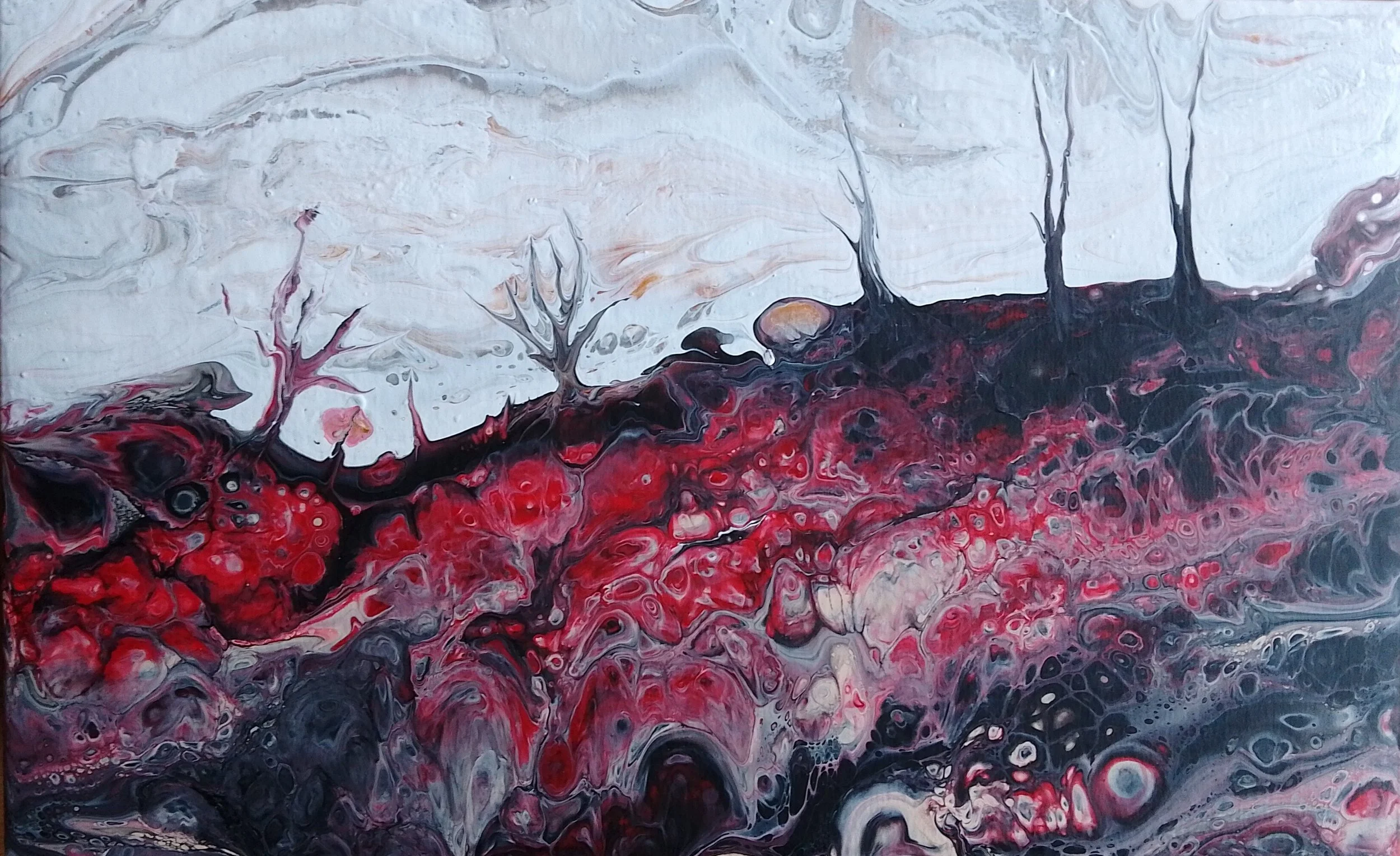
In her curatorial note on my exhibited work, Piment Rouge, Evelyne wrote: “It feels like a quiet scene right before something significant happens.” It is true. It’s the quiet (read shut downed) grief of Iranians these days. The painting represents a short fairy tail about the origin of the red pepper tree. I painted it while a friend of mine was practicing her story-telling session. That story metaphorically may explain the current situation in Iran. The brother who spies on her sister, reports the source of her success to his parents, the parents who imprisoned their daughter and that kill and eat the magic fish who brought them the clean water which was crucial for their survival. Yet the blood of the fish grows into red pepper. I leave it to the audience to revisit the story in the metaphoric sense.
So yes, excited to be a part of this exhibition and thankful of the Holy Art Gallery for the opportunity.
Future Goals
What are your long-term goals and aspirations as an artist, and how do you plan to achieve them?
My long-term goal is to become an internationally known artist, to let colours, texture and forms in my art be the voice of the unheard, and to help women avoid burnouts and if they are experiencing it, come out of it safe and sound, as art helped me get back to life after my burnout.
Audience Connection
What do you hope viewers take away from experiencing your art, and how do you aim to connect with them on an emotional or intellectual level?
I hope my work creates a moment of genuine connection with the viewer’s inner world. For me, the creative process is about allowing internal emotions, thoughts, and even unspoken worries to surface. In the spirit of that vulnerability, I hope viewers find a mirror for their own hidden stories. On an emotional level, I want the pieces to encourage a quiet, personal dialogue—to challenge any sense of emotional blockage or burnout, just as art has helped me in my own life.