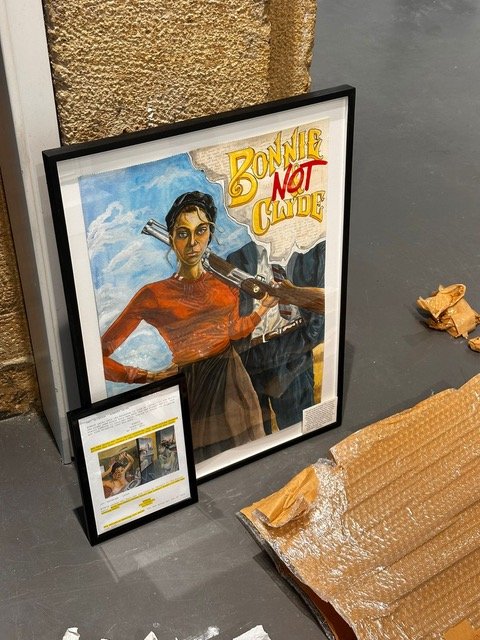
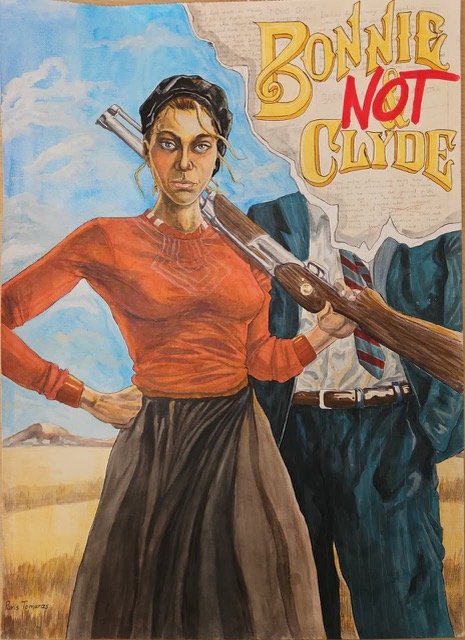
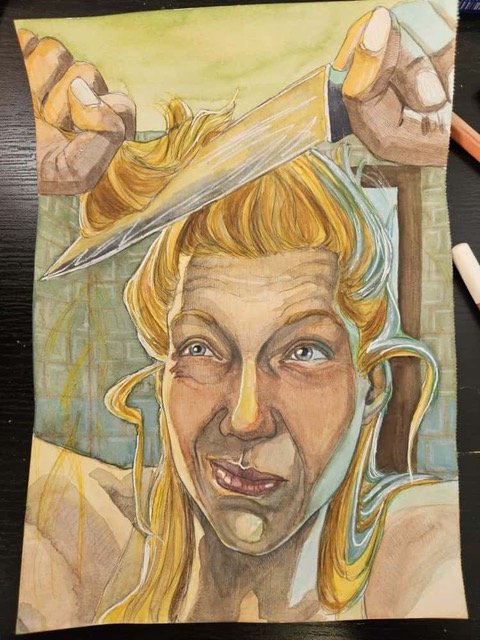
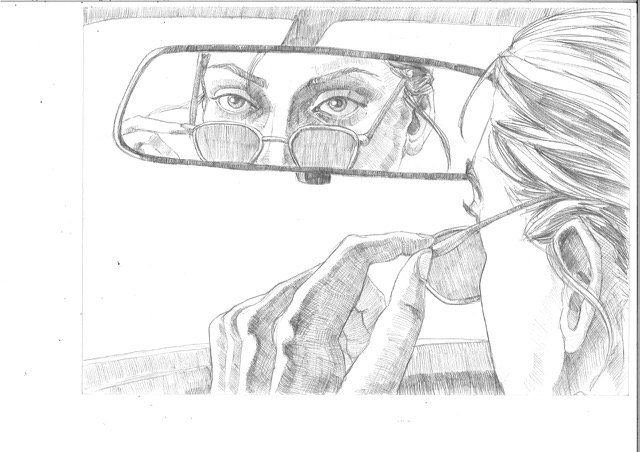
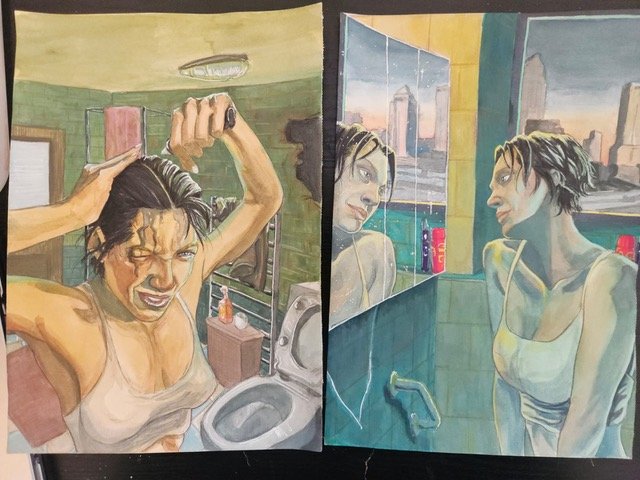
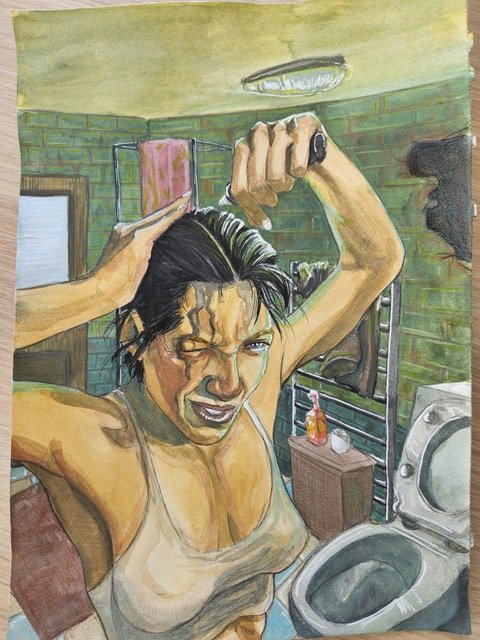
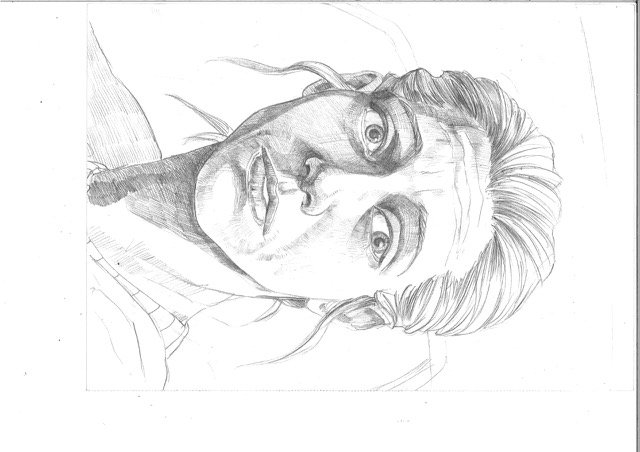
Maya Fink and Paris Tomaras collaborate at the intersection of cinema, painting, and narrative structure. Their project, Unmade Films, transforms unproduced short films and series pilots written by Fink into painted storyboards, exploring how cinema can exist as a tangible, collectible art form beyond the screen.
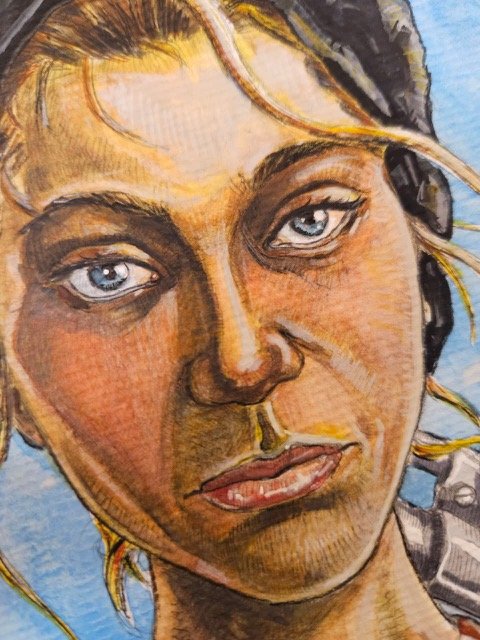
Each work begins with a script: a story conceived in writing but not yet realised through film production. Tomaras translates these narratives into sequences of paintings, elevating the storyboard—an essential stage of filmmaking—into an autonomous work of art. What is usually an intermediary step towards a finished film becomes an object of contemplation and ownership in its own right.
The project reflects the tension between creative expression and the commercial realities of the film industry, where countless stories remain unrealised amid the competition for production. Rather than treating these films as absences, Unmade Films celebrates their continued existence through alternative forms of artistic expression.
Fink’s practice approaches cinema as both a narrative and conceptual medium, while Tomaras brings a painterly sensibility to the translation of scripts into images, exploring atmosphere, rhythm, and emotional continuity.
Together, they propose a different way for stories to circulate: one in which a film can be experienced, collected, and shared before it ever reaches the screen. Unmade Films is an ode to creative persistence, and to the possibilities that emerge when art finds its own way into the world.
Social Networks :
Instagram handle: @bymayafink & @paristomarasart
Maya Fink & Paris Tomaras
1. Inspiration & Style
I have always been drawn to storytelling, philosophy, and the ways people make sense of the world. Writing was my first medium, but I became increasingly interested in how stories could exist beyond the page or screen. My artistic practice has grown out of this curiosity: finding unconventional ways to give ideas a tangible form. I think of my work as an extension of my identity as a rational idealist, exploring the relationship between imagination and reality, thought and emotion, and art and everyday life.
2. Creative Process
My process usually begins with an idea or a question that I cannot stop thinking about. I tend to approach projects conceptually, exploring the underlying premise before deciding on the medium through which it should be expressed. With Unmade Films, the starting point was a question: what if a film could exist as a tangible, collectible work of art before it was ever produced? From there, the collaboration with Paris Tomaras allowed us to translate that idea into a visual narrative.
3. Artistic Influences
My background in philosophy has shaped the way I approach art. I am interested in ideas, contradictions, and the assumptions we take for granted, but I am equally drawn to the intimate, often overlooked details of human experience. I take inspiration from artists and thinkers across disciplines, although I am less interested in following a particular style than in developing a coherent perspective of my own. For me, the medium can change; the underlying curiosity remains the same.
4. Emotion & Expression
Emotion is inseparable from the way I understand storytelling. I am drawn to the contradictions of human experience: the things we want but cannot have, the stories we tell ourselves, and the distance between our ideals and reality. I try to create work that invites people to recognise something of themselves while also questioning their own perspective. I am interested in the space where intellectual curiosity meets emotional recognition.
5. Standout Projects
Unmade Films, my collaboration with Greek painter Paris Tomaras, is particularly meaningful to me because it brings together my writing practice and my interest in conceptual art. The project transforms storyboards from unproduced short films and series pilots I have written into sequences of original paintings. Storyboards are usually an intermediate stage in filmmaking, but we treat them as artworks in their own right. The project grew from a desire to explore how stories can exist and circulate outside the traditional film industry, challenging the idea that a story must reach the screen to have artistic or cultural value.
6. Feedback & Growth
I value dialogue because art becomes more interesting when it encounters perspectives beyond my own. At the same time, I believe it is important to maintain a clear sense of intention. I try to distinguish between feedback that challenges me to think differently and feedback that simply asks me to conform to expectations. I want my work to remain open to interpretation without losing the ideas that motivated it in the first place.
7. Motivation & Inspiration
I return to curiosity. When I feel stuck, I find it helpful to step outside the immediate project and explore something unrelated: a book, an exhibition, a conversation, or an idea from another discipline. I also try to remember that creative work does not always follow a linear path. Sometimes an obstacle is an invitation to question the original approach and discover a more interesting way forward.
8. Exhibiting Work
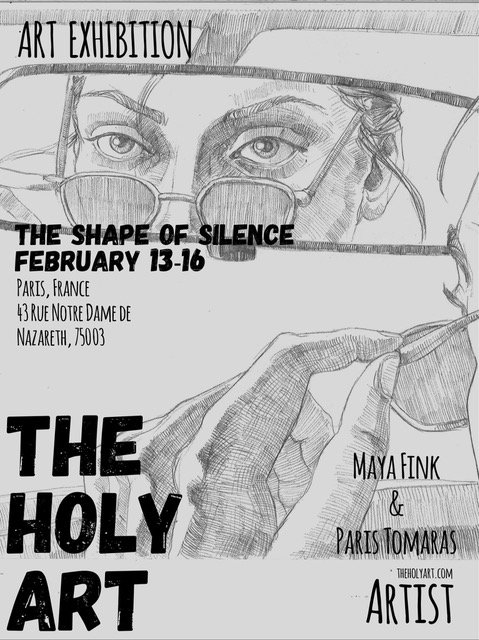
Exhibiting with The Holy Art is an opportunity to bring Unmade Films into a new context and invite audiences to engage with the project beyond the page and the screen. I am excited to share a collaboration that challenges conventional boundaries between writing, painting, and cinema. For me, exhibiting the work is also part of the experiment itself: allowing these stories to find an audience and take on a life of their own, even before they become films.
9. Future Goals
I want to continue developing a multidisciplinary practice across writing, film, visual art, and education. Rather than committing to a single medium, I am interested in building a body of work connected by a consistent way of thinking about the world. With Unmade Films, I hope to develop a model that can grow beyond one exhibition, allowing stories to exist as paintings, printed objects, and eventually films. Ultimately, I want to create work that is intellectually curious, emotionally resonant, and independent enough to evolve on its own terms.
So I’m actually a semi-professional artist. Selling something is nice, but it’s not a priority. And if anything from ‘The Art with Cancer Project’ is sold, the proceeds will go to the organisation that supported my niece and her family during her recovery process.
10. Audience Connection
I hope viewers leave with a different understanding of what a film can be and when a story can be considered to exist. Unmade Films invites people to encounter cinema through paintings, without needing a finished production or a screen. Beyond that, I hope the work encourages people to reconsider the relationship between creativity and commercial success. A work does not lose its value simply because it has not found its conventional route into the world. Sometimes, an alternative form is not a substitute for the original idea, but an entirely new way for it to live.