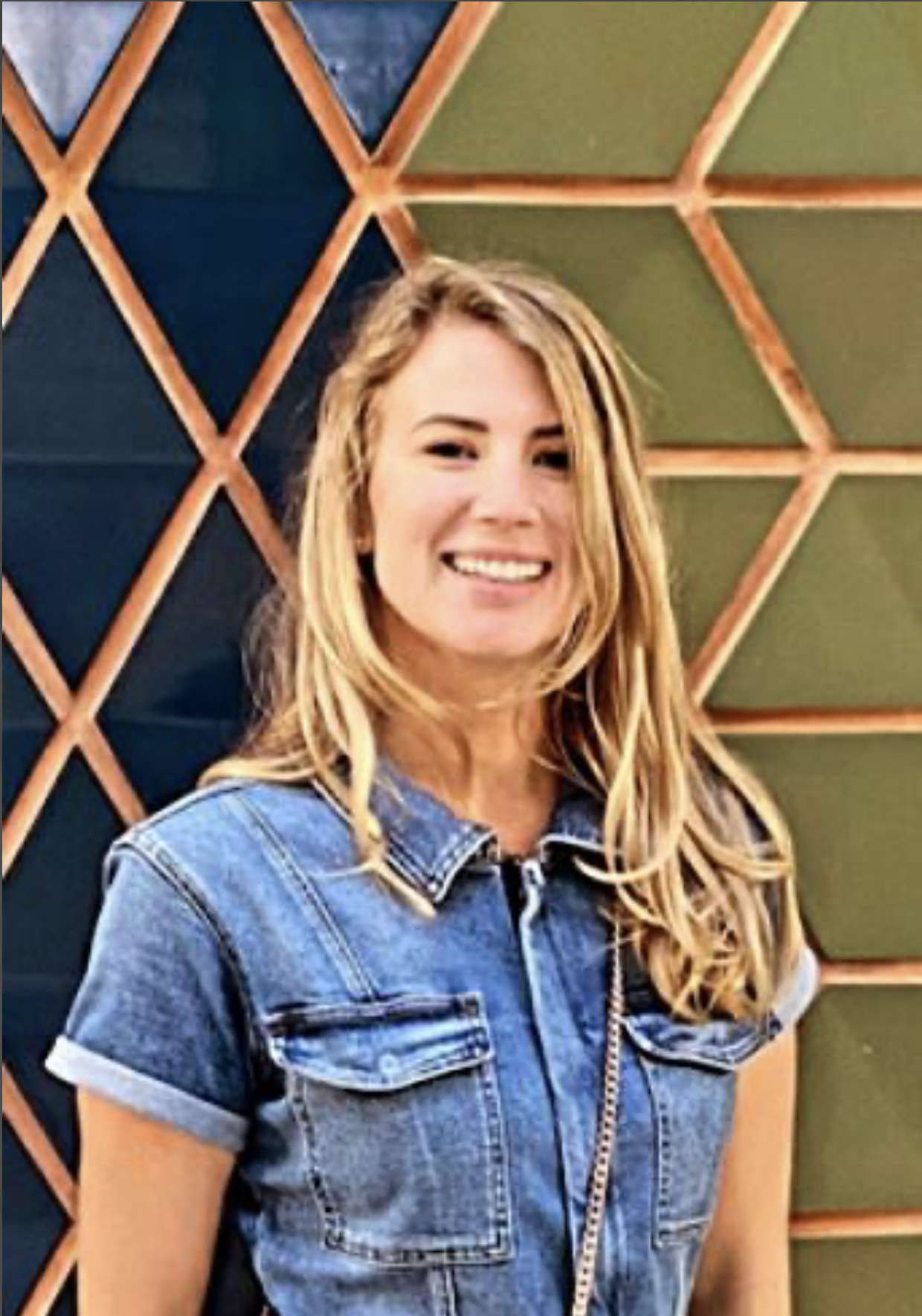
Alex A. Harlan
1. Inspiration & Style
What initially inspired you to become an artist, and how did you develop your unique artistic style?
From a young age being an artist is something that interested me.
There is a scene from the film The Aristocats where one of the kittens dances around with paint on his paws, accidentally creating a painting as he goes. That may be my earliest memory of thinking, ooh, I want to do THAT. There was something about the freedom and playfulness in making art that stayed with me.
My artistic style developed in a semi intentional way. I once created a watercolour painting that, by my own judgement, was terrible, (and would also be terrible by anyone else's judgment) but there was something about the image that I couldn't let go of. Eventually, I realised it was the composition and the relationship between the different values that kept me coming back. Rather than abandoning the painting, I decided to recreate it again and again. I then began exploring the same composition and value structure with different materials and mediums.
Through this process of repetition and experimentation, I gradually began to find my artistic perspective. What started as an attempt to understand what I liked about a single image became a way of exploring how the same idea could transform through different approaches and materials. Looking back, I think this process reflects an important part of my practice today: allowing curiosity to lead the way, embracing experimentation, honoring your ideas and giving yourself the freedom to discover something through making.
2. Creative Process
Do you have any rituals or routines that help you get into a creative mindset when starting a new project?
Photography is a major help for me to get into a creative mindset. All of my pieces start with photography. And then again just marrying myself to an idea and committing to creating it again and again and each time it will grow and expand like the breath!
3. Artistic Influences
How do you balance artistic influences with your personal style, and how do these influences manifest in your work today?
I believe artistic influences play an important role in shaping my creativity, but I always aim to interpret them in my own way. I draw inspiration from artists such as Ruby Neri, Austyn Wiener, Iryna Maksymova, Ant Hamlyn and Anya Paintsil, among many others. What draws me to their work is the playful quality of their practice and the almost childlike sensibility that comes through in their work. I find it particularly inspiring how they translate this sense of play into something that feels mature and considered, which is something I continually strive towards!
I am also inspired by the techniques and approaches I observe in other artists' work. When observing I’m also trying to analyze what it is I like about the work, is it the colors, the composition, the texture, the use of pattern, the unassuming nature of it. I’m always searching for a magic formula. Ultimately, I aim to create work that appreciates the influences while remaining authentic to my own artistic identity.
4. Emotion & Expression
How do you use your art to evoke emotions, and what role does emotion play in your creative process?
I would say that emotion plays a relatively subtle role in the creation of my work. My process tends to be driven more by the practical and visual aspects of making, such as composition, tonal values and colour. I am often more focused on how these elements work together than on trying to communicate a specific emotion from the outset. However, I find that an emotional thread eventually emerges in each piece, sometimes in ways I only fully recognise afterwards.
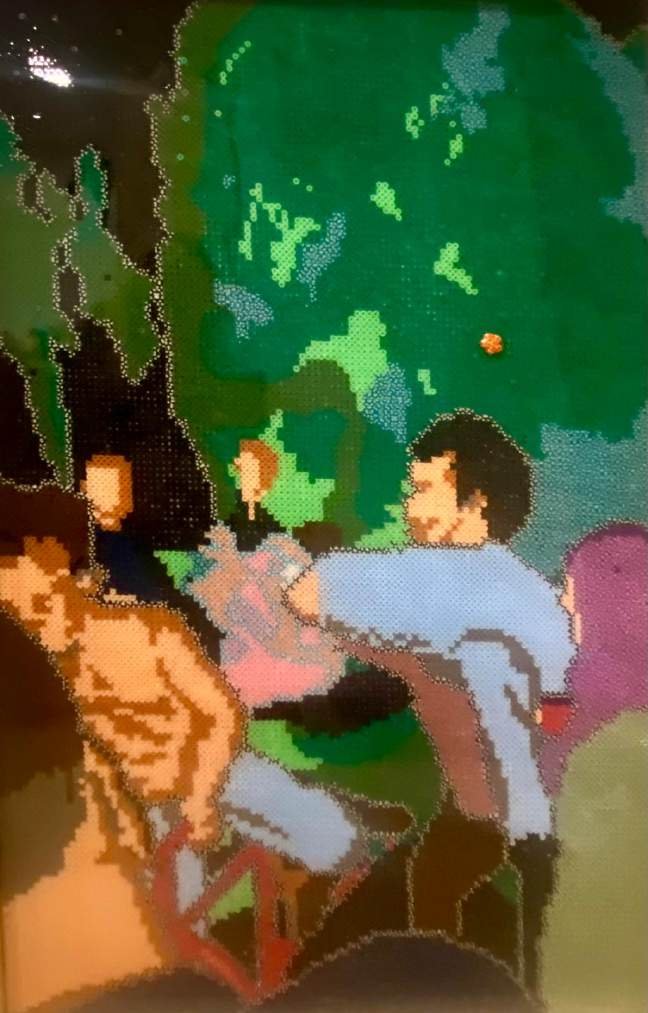
One recurring theme in my work, which comes from my own experiences, is this tension between the observer and the observed, between belonging and being separate, is something that continually finds its way into my work. I am interested in the emotions and experiences that exist on both sides of that relationship, and in how something that might traditionally be perceived as a lonely experience or a guarded experience can also hold a certain beauty and contentment. I think my work reflects this duality: the ability to find joy in observation, and to recognise that there can be value in experiencing the world from the outside, rather than always being at its center.
5. Standout Projects
Can you share a project that stands out to you and describe the creative process behind it?
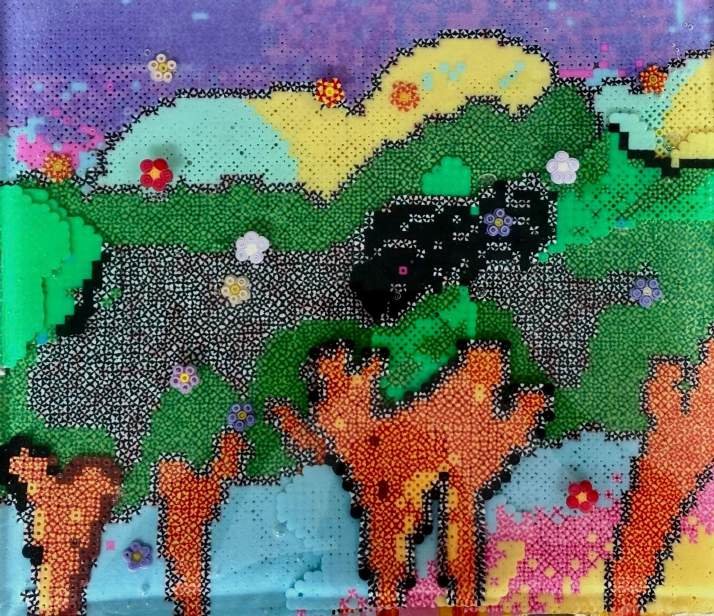
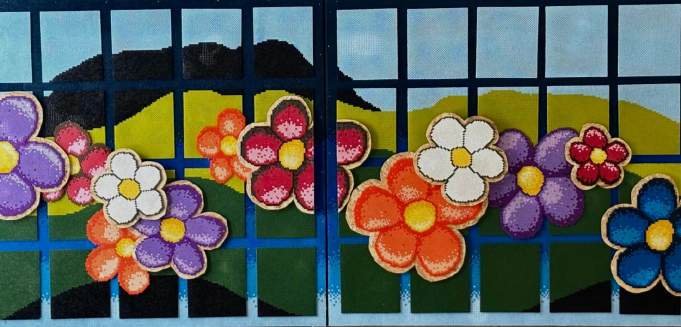
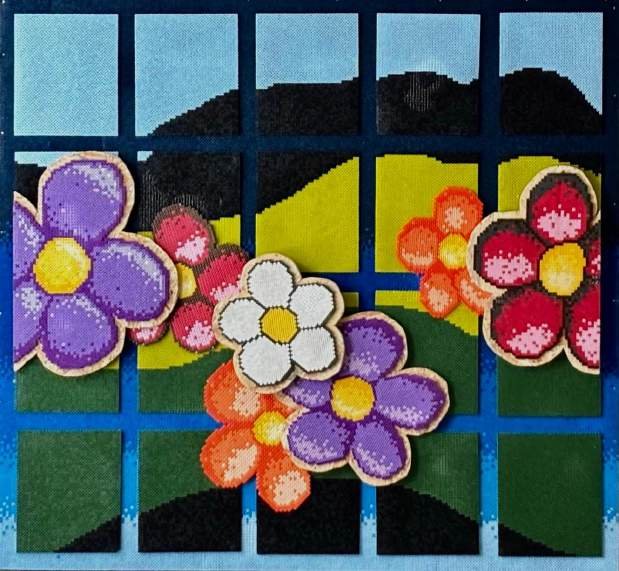
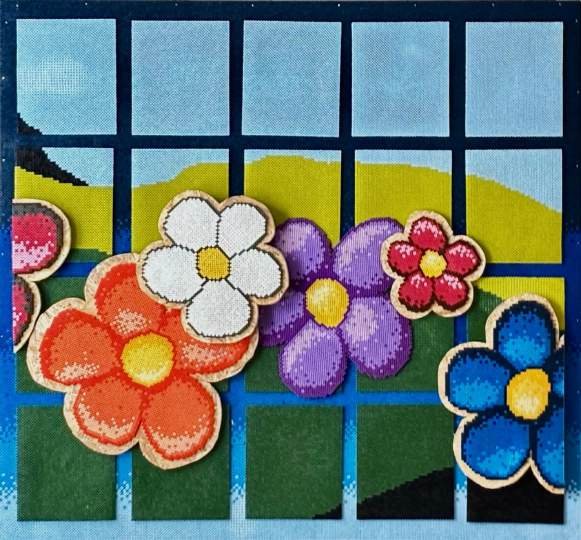
A project that stands out to me is All Together Somewhere Else. The creative process behind this piece began at the very start of my journey towards finding my artistic voice, with the original watercolour painting that I initially felt was unsuccessful but couldn't quite let go of. Since then, I have returned to the same composition repeatedly, exploring it through different materials and techniques. All Together Somewhere Else is perhaps the tenth piece to emerge from this original image, making it part of an ongoing process of repetition, experimentation and discovery.
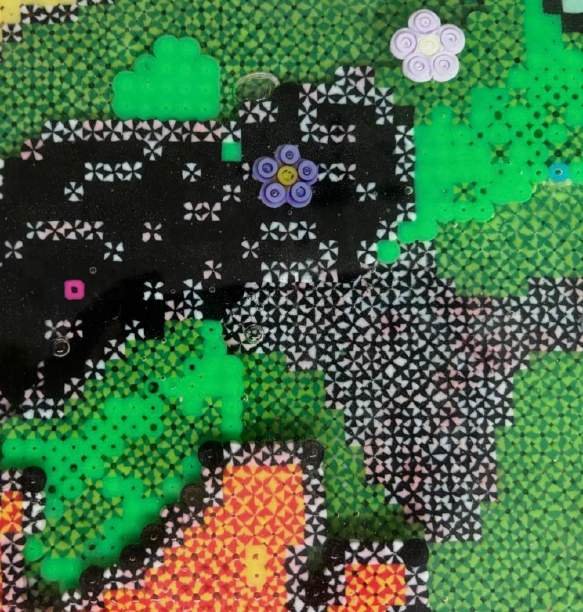
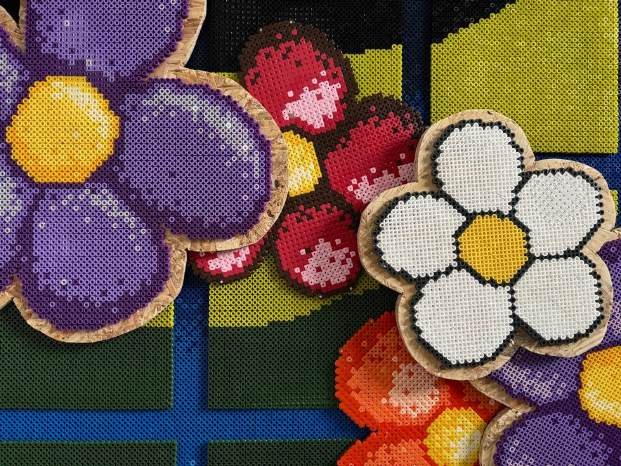
One of the things I found particularly interesting while creating this piece was how a simple combination of elements could come together to form a more interesting image. The middle ground, which reflects the upper portion of a tree, built from individual beads. One section might consist of just 1,500 blue beads, while another might combine 850 blue beads with 650 green ones. Each component is relatively simple, but when brought together, these small elements create something more unified. I find something compelling in how individual parts can contribute to a larger whole.
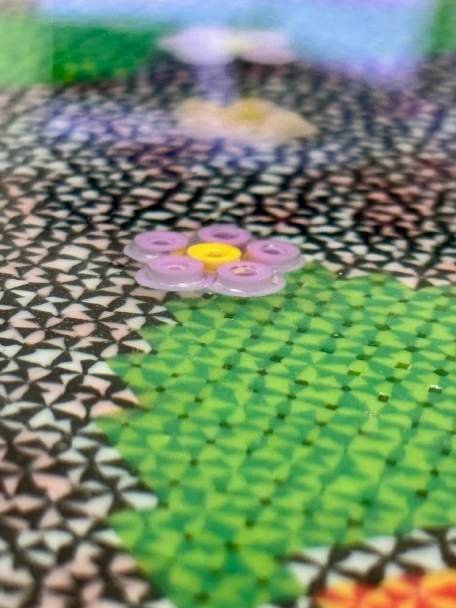
There is also a more personal meaning embedded in the composition. The flowers represent joy and separation, while the middle ground portion reflecting a tree creates a sense of looking through a window. This idea of viewing something from a distance connects to the experience of observing the world around me, rather than always feeling fully immersed in it. The title, All Together Somewhere Else, reflects this sense of connection existing just beyond one's immediate reach. For me, the piece brings together the technical exploration that has helped me develop my artistic voice and the more personal emotions and experiences that continue to shape my work.
6. Feedback & Growth
How do you incorporate feedback from critics or audiences into your work, and how do you balance this with your own artistic intuition?
For the most part, I approach feedback and critique by listening to it, taking the time to consider whether there is truth in it for me specifically. It is a balance between being receptive to other perspectives and trusting my own instincts.
One of the things I value most about making art is having the freedom to make the final decision. I appreciate hearing different perspectives because they can challenge me to think about my work in ways I might not have considered otherwise. However, I don't believe every piece of feedback needs to be acted upon. If I feel strongly about a particular direction, I trust my own judgement and intuition. For me, it is about remaining open to learning and evolving without losing sight of who I am as an artist or compromising the integrity of my own expression.
7. Motivation & Inspiration
How do you stay motivated and inspired, even when facing creative blocks or challenges?
I am motivated and inspired by the woman I want to become and also by the girl I once was. Building my artistic practice is one of the biggest elements of building the life I dream of. I want
to create work that I am proud of, work that my younger self would be proud to see me making. Keeping that connection helps me stay motivated.
When I experience a creative block, or find myself in a period where I struggle to find the time or space to create, I usually turn to something else, perhaps something smaller and completely unrelated to my aspirations as an artist. I love making hemp necklaces and bag charms, photography and sewing. I find that shifting my focus while still allowing myself to create helps clear my mind and often brings me out of a creative block. It allows me to keep making without the pressure of having to produce something directly connected to my artistic dreams.
Another way I can find inspiration during a difficult period is by taking a short class or learning a new skill, whether it be photography, resin pouring, drawing, painting or bead making. I find that even a small expansion of my knowledge can open up new ways of thinking and introduce me to techniques or materials I might not have considered before. Expanding education leads to countless new ideas that will reignite the spark and excitement to create.
Ultimately, I think staying motivated is about working towards a goal, while staying inspired is about allowing myself the freedom to explore, experiment and learn along the way.
8. Exhibiting Work
How do you feel about exhibiting your artwork with The Holy Art Gallery, and what does this opportunity mean to you?
I am genuinely so excited to be exhibiting my work with The Holy Art Gallery. This opportunity means so much to me, as it represents possibility, promise and the feeling that the future I have been working towards is beginning to take shape. Building my artistic practice and creating a life around my work is something I care deeply about, so having the opportunity to share my work in this way feels incredibly exciting.
For me, this exhibition is not only an opportunity to show my work to a wider audience, but also a reminder of what is possible when I continue to invest in myself and my practice. It feels like a step towards the future I have always imagined for myself as an artist, and I am incredibly grateful and excited to be part of it.
9. Future Goals
What are your long-term goals and aspirations as an artist, and how do you plan to achieve them?
I have many dreams and aspirations for my future as an artist. Creatively, I want to develop a more playful hand within my work, I’d like to experiment with larger scales and find as much freedom as possible within the practice. I want to push the boundaries of what I make, allowing myself to explore new materials, techniques and ideas without feeling confined to a particular way of working and I’d also like to push myself to express myself in my art, to leave it all on the page. I work towards these goals simply by practicing and by working to build a nice hearty body of work!
10. Audience Connection
What do you hope viewers take away from experiencing your art, and how do you aim to connect with them on an emotional or intellectual level?
Ultimately, I want my work to provide a feeling of comfort and curiosity and I hope it evokes a sense of familiarity, I am interested in the contrast between the joy found in playful imagery and the more melancholic emotions that can exist beneath it. I don't necessarily want to dictate what someone should take away from a piece, but rather create work that leaves room for personal interpretation, allowing each viewer to find their own meaning and connection :)