Artist spotlight : Renata Oreggia
ARTIST STATEMENT:
I see creating as a way of engaging with the world. Returning to painting has become a way of reconnecting with intuition and embracing a slower, more open process.
I grew up closely connected to the countryside, a place of shared time and simple pleasures. Weekends and holidays were spent there, surrounded by animals, open landscapes, and music, especially folklore, introduced by my father from an early age. Storytelling was also part of those moments, shaping how I observe and relate to my surroundings.
Now based in Madrid, distance has reshaped my perspective and deepened my sense of belonging.
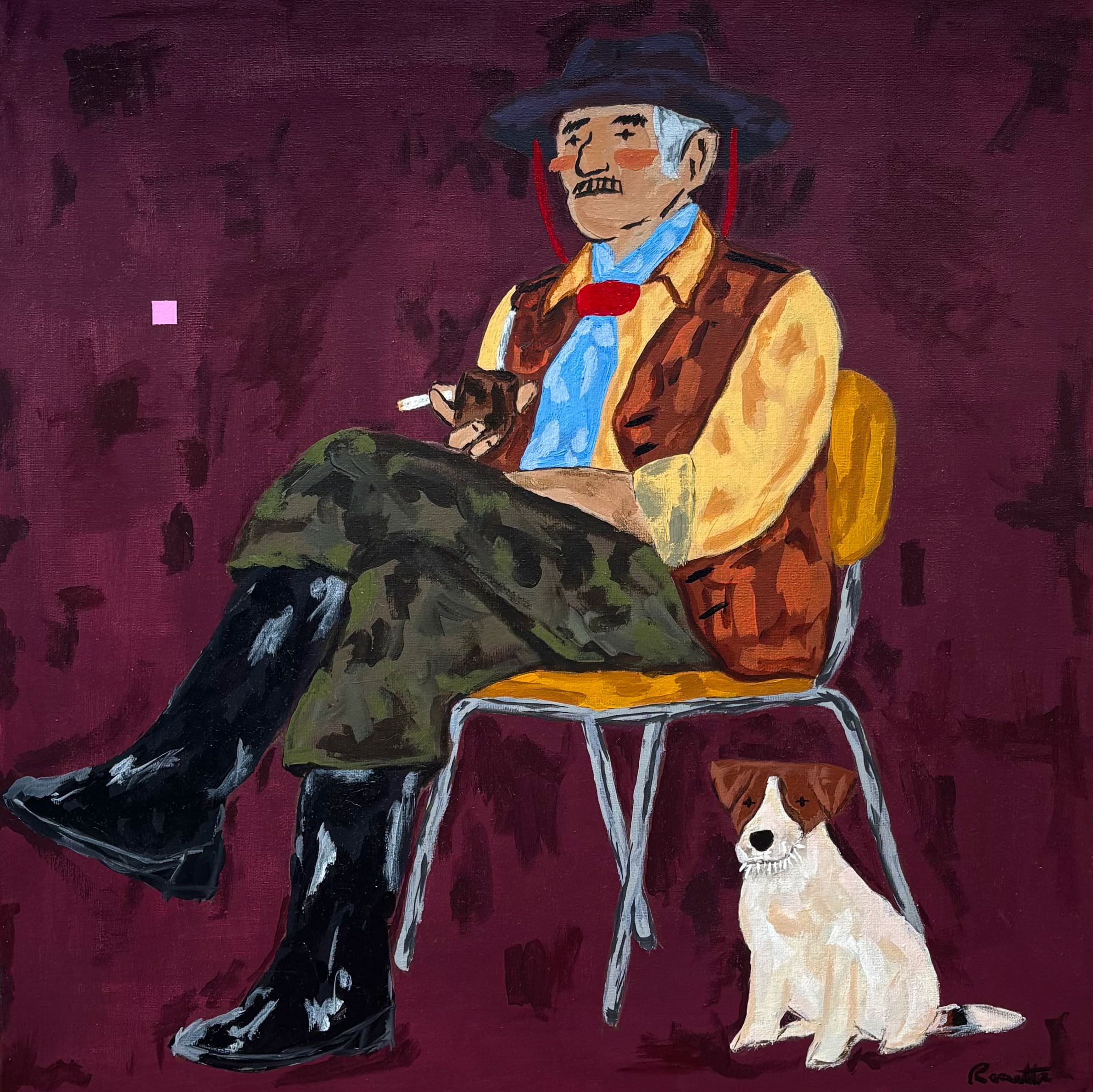
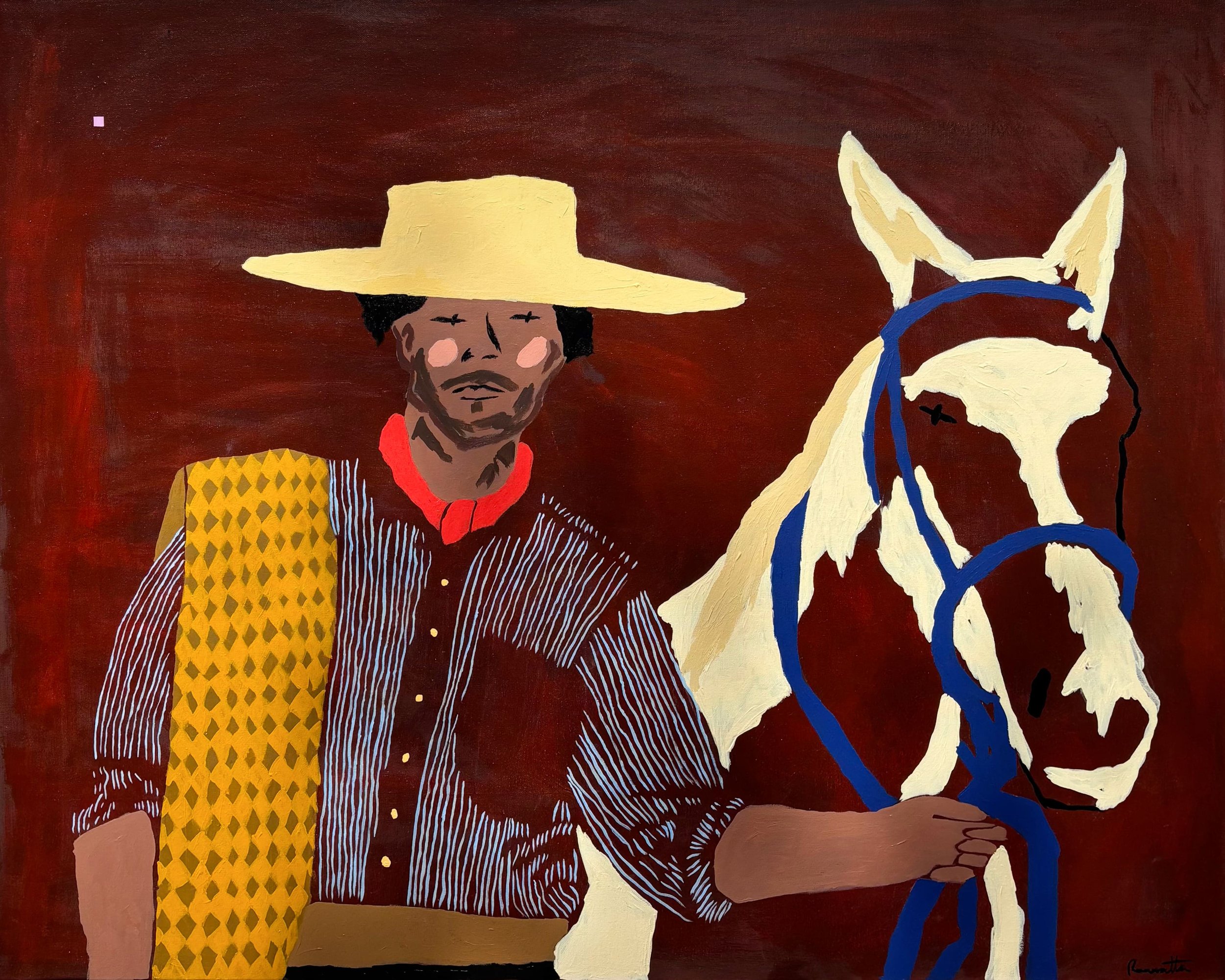
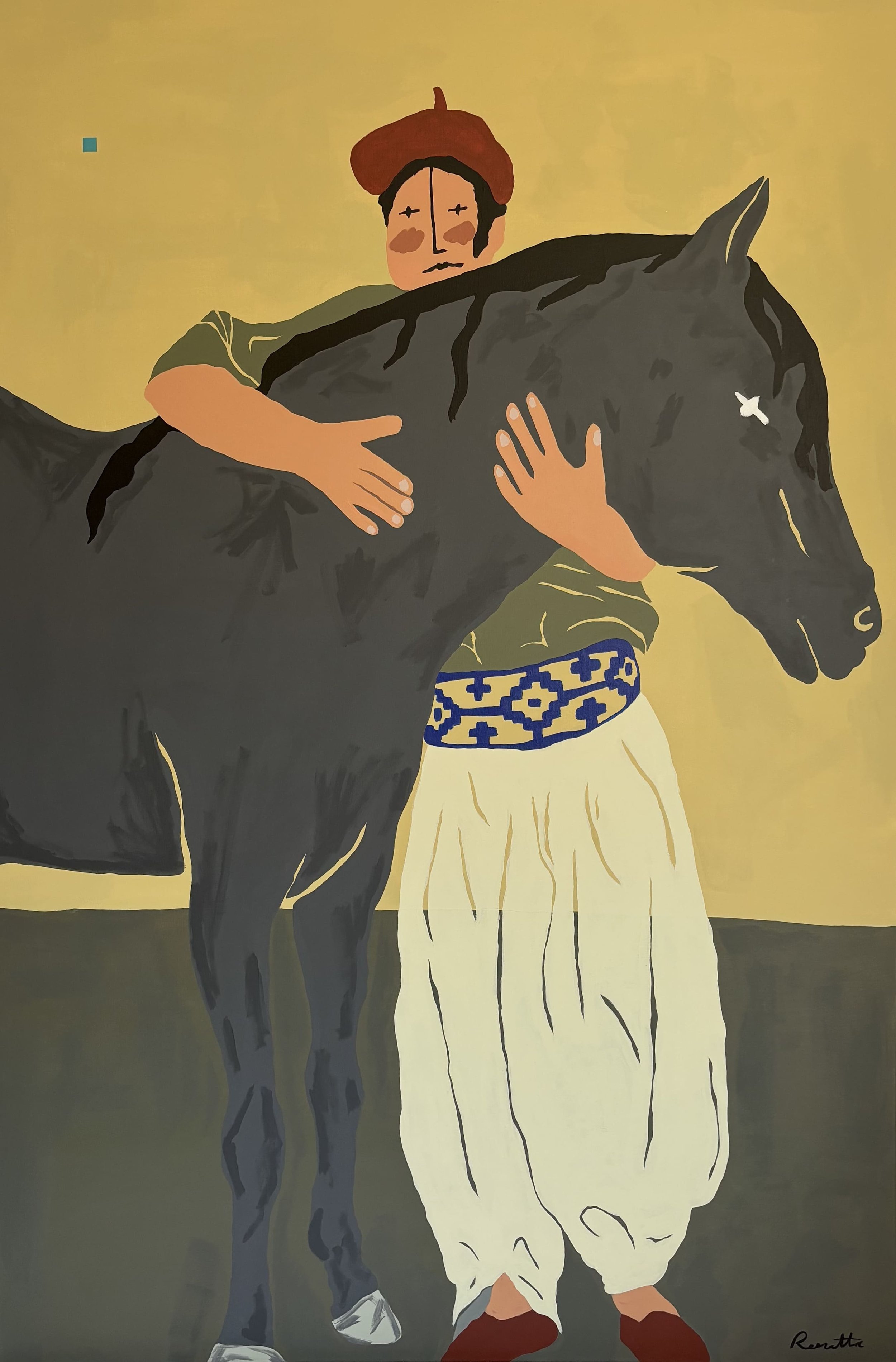
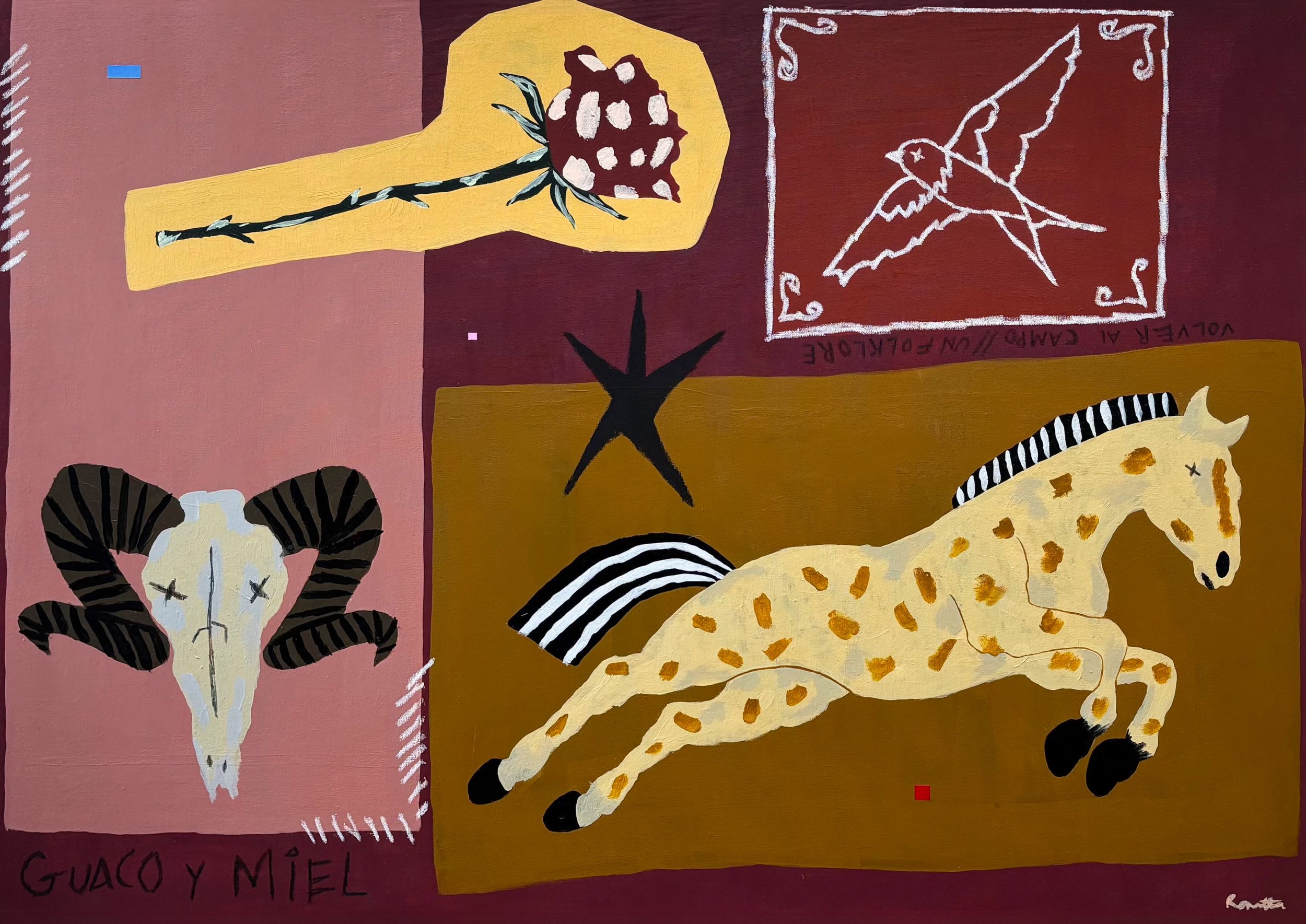
I’m currently exploring themes of nostalgia, culture, intimacy and everyday life. I work with a palette that combines earthy tones with more saturated colors. I’m interested in revisiting rural imagery, especially the figure of the gaucho (a skilled rural horseman), and taking it out of its usual context through color and pattern. I’m inspired by the Uruguayan painter Joaquín Torres García in the way he arranges and separates elements, and in his use of symbolism to convey memory and culture.
I introduce a subtle discomfort in the viewer, creating a tension between what is expected and what is seen. Through this, I aim to create images that stay present beyond the first glance.
After years of working in design with a focus on speed and problem-solving, I’m now drawn to a slower way of working, allowing time and process to guide the image.
In my family, art has always been a way to get by. I found myself turning to painting in the hardest moments. Now, I paint from desire.
Social Networks :
Instagram Handle: @renattaoreggia
Portfolio: https://getmostra.com/artist/renattaoreggia
Renata Oreggia
1. Inspiration & Style
Q: What initially inspired you to become an artist, and how did you develop your unique artistic style?
Answer: I come from a deeply artistic family. My grandmother, my mother, my father, and my siblings have all expressed creativity in different ways. Art has been a part of our everyday life.
I took oil painting classes as a child. Later, I studied graphic design because the creative field always felt like the right path for me. While I was studying, painting and drawing stayed quietly in the background.
After graduating, I finally had the time to paint again. It felt natural, as if that part of me had simply been waiting for the right moment. Moving to Madrid brought out a strong sense of nostalgia, which naturally became part of my work.
I grew up with a father who is passionate about horses and rural life. Many of my childhood holidays were spent on our family farm. He taught us to love the countryside, horses, and Uruguayan folklore. Those memories continue to inspire my paintings.
Living far from home has made me feel even more connected to my roots. I see the countryside as a place of rest, family, tradition, and transformation. I see the horse as a symbol of strength, loyalty, and freedom. I also find inspiration in the figure of the gaucho. His way of dressing, his quiet presence, and his relationship with the land reflect values that I deeply admire.
Through my paintings, I explore memory, identity, and folklore. I hope to preserve these traditions while giving them a contemporary voice.
2. Creative Process
Q: Do you have any rituals or routines that help you get into a creative mindset when starting a new project?
Answer: I like to start my painting sessions early in the morning. Morning light has always been my favorite. I usually make myself a coffee and take some time to prepare my workspace. Depending on the day, I might start by sketching, mixing colors, or painting straight away.
I currently work as a freelance graphic designer, which gives me the flexibility to dedicate time to my art. Before I begin, I almost always play Uruguayan folklore music. It immediately puts me in the right mindset. It connects me to home and brings back memories of the countryside, my family, and the traditions that inspire my work.
I also love painting at night. When I lived in Montevideo, it often happened without planning it. I would start painting and suddenly realize that hours had passed. There is something about the silence of the night that I really enjoy. It feels like the world has slowed down. Everyone has gone to sleep, everything has gone quiet, and there are no distractions. It becomes a moment of complete focus, where I can lose track of time and simply enjoy the process.
3. Artistic Influences
Q: How do you balance historical or artistic influences with your personal style, and how do these influences manifest in your work today?
Answer: I don't tend to follow many contemporary artists. I think that, even unconsciously, we absorb a lot from what we constantly see. I like to protect my own visual language and give it space to develop naturally.
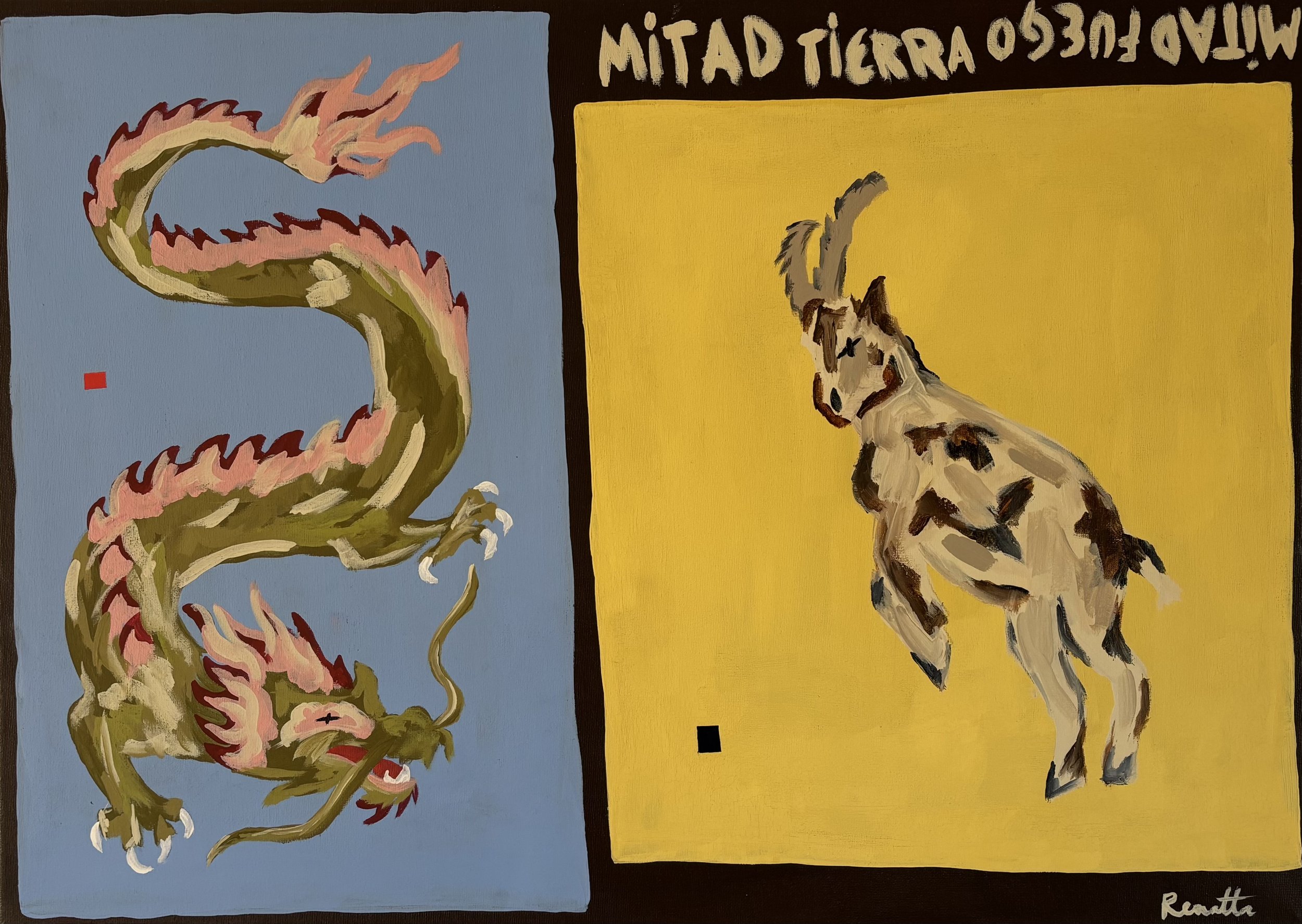
If I think of artists who have influenced me, Joaquín Torres García immediately comes to mind. He is one of Uruguay's most important painters, and his work has always resonated with me. Some of my paintings are visually inspired by his compositions. I like the way he divides the canvas into structured spaces and creates a sense of balance through geometry and symbolic forms. Beyond the visual influence, I also feel connected to his ideas. Like Torres García, I find inspiration in the traditions, symbols, and everyday life that shaped my identity. My work grows from those memories and experiences, while exploring them through my own contemporary perspective.
Travel has also become an important part of my creative process. I enjoy visiting new places and discovering how they affect the way I see and think. I like paying attention to the emotions, memories, and ideas that each place brings. A recent trip to Byron Bay, Australia, was especially meaningful. It was there that I felt a strong connection with what I wanted to do as an artist. That trip became a turning point in my return to painting. It reminded me to trust my instincts, slow down, and create from a more honest place.
4. Emotion & Expression
Q: How do you use your art to evoke emotions, and what role does emotion play in your creative process?
Answer: I feel my work is deeply rooted in emotion, at least from a personal perspective. Those familiar with Uruguayan culture may recognize themselves in its imagery and the feelings it evokes. My hope, however, is that the work resonates beyond that; that people from anywhere in the world can connect with it, gain a glimpse into this culture, or simply feel curious to learn more.
Through my paintings, I explore emotions such as nostalgia, melancholy, intimacy, respect, and freedom.
5. Standout Projects
Q: Can you share a project that stands out to you and describe the creative process behind it?
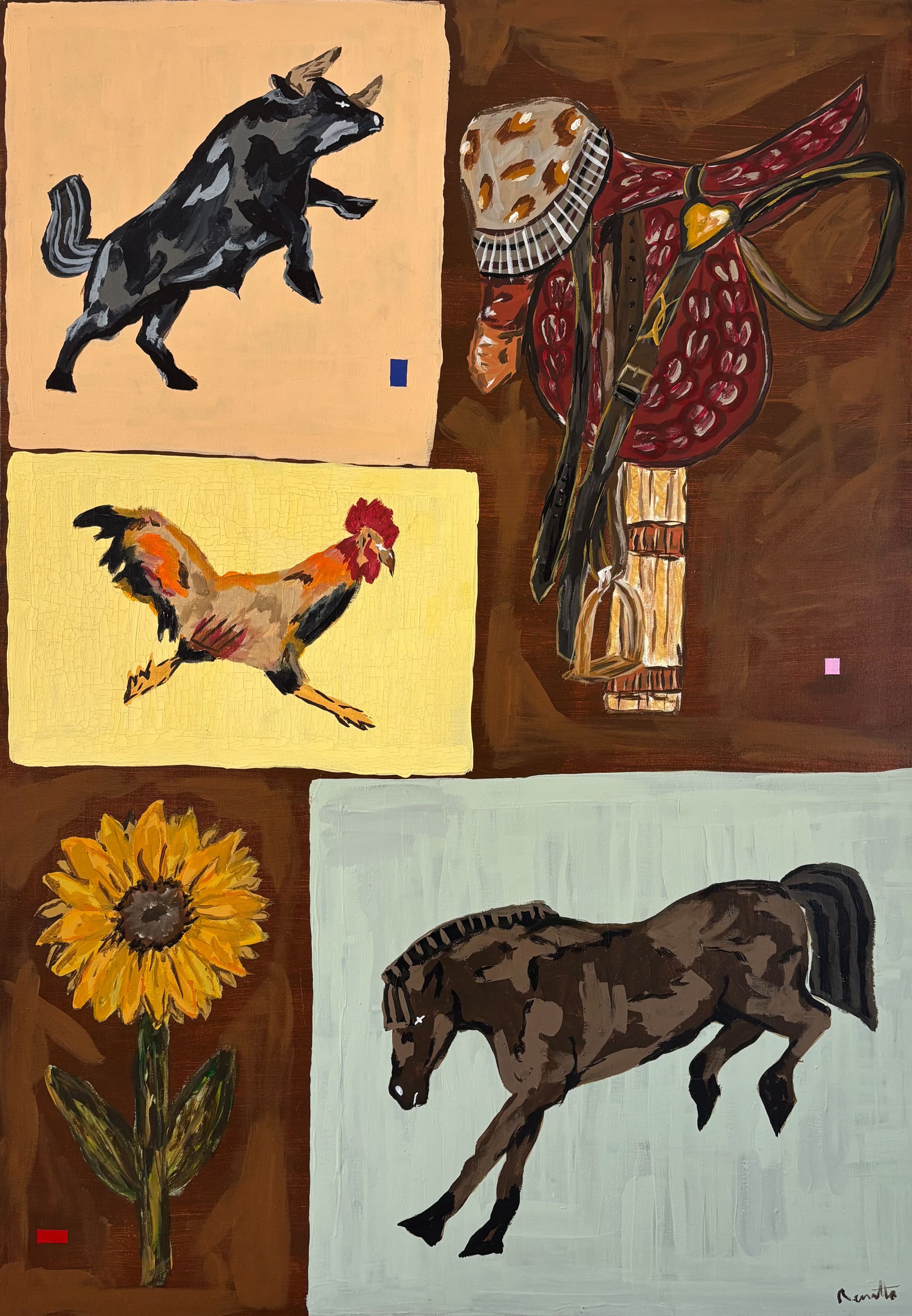
Answer: I believe the project that stands out the most is the first painting I made after returning to acrylics earlier this year. It feels especially meaningful because it marked the moment I reconnected with painting. After a long break, I picked up a brush, faced a blank canvas, and everything flowed naturally. The process was entirely intuitive.
Only after finishing the piece did I begin to reflect on what I had painted, and what I discovered surprised me. The work is titled El Campo de Julia. Looking back, I feel that, without realizing it, I had already painted the beginning of the creative path I would continue to explore.
The horse embodies freedom, the bull represents strength, and the rooster announces a new beginning. The sunflower reaches toward the light, while the saddle quietly waits for the journey ahead.
I had simply chosen a few animals I was excited to paint, yet together they formed a powerful and symbolic composition. It was then that I began to understand where this deep attraction to rural imagery came from, and how naturally it had become part of my visual language.
6. Feedback & Growth
Q: How do you incorporate feedback from critics or audiences into your work, and how do you balance this with your own artistic intuition?
Answer: Coming from a graphic design background, I spent years creating work that had to meet someone else's expectations. Design taught me to seek approval, to justify creative decisions, and to constantly question whether my work would satisfy a client.
When I began painting, I made a conscious decision to leave that mindset behind. I wanted to free myself from those external pressures and simply paint what I genuinely felt the need to express.
That said, I truly enjoy hearing people's responses to my work. I'm interested in what a painting makes them feel, how they interpret it, and what they notice in the colors, composition, or imagery. Lately, my family and I have made a habit of talking about my paintings, and those conversations often lead to unexpected (but completely valid) interpretations that I would have never considered.
So far, I haven't received much criticism, although I'm sure it will come eventually. When it does, I hope to take it as another perspective rather than a judgment. I like to reflect on feedback, but I try not to let it shape my creative process too much. If I did, the work would no longer feel entirely honest or authentic to me.
7. Motivation & Inspiration
Q: How do you stay motivated and inspired, even when facing creative blocks or challenges?
Answer: To stay motivated and inspired, I try to vary the ways I create. Sometimes that means painting, but other times it's graphic design, sketching with pencil, digital illustration, or simply exploring color palettes and collecting visual references. I try not to focus all my energy on painting alone because I think that can lead to burnout and creative blocks.
When I don't feel like painting, I don't force it. Instead, I sketch ideas, experiment with compositions, or prepare future paintings. Staying creative doesn't always mean producing finished pieces.
A big source of inspiration is continuing to learn about my own culture. There is always something new to discover. I often turn to my dad, who has a deep knowledge of Uruguayan history and horses. Every question I ask somehow leads to a story about his horseback journeys across Uruguay with friends, or another memory from life in the countryside. Those conversations have become an important part of my creative process.
Music also plays a big role. Uruguayan folklore has an almost meditative quality for me. It instantly transports me back home and puts me in the right mindset to create.
At the same time, I'm fascinated by other horse-riding and ranching traditions around the world, such as: the North American Cowboy, the Chilean Huaso, the Mexican Charro, the Spanish Vaquero, the Brazilian Gaúcho or the Australian Stockman. Although each culture has its own identity, I believe they all share the same spirit and connection to the land. Discovering both their similarities and differences continues to enrich my work.
8. Exhibiting Work
Q: How do you feel about exhibiting your artwork with The Holy Art Gallery, and what does this opportunity mean to you?
Answer: This is an incredible opportunity for me. It's the first exhibition I have ever applied to, and receiving such a positive response has been incredibly rewarding. It truly felt like a reassuring reminder that I am on the right path.
I feel very grateful for this opportunity and want to make the most of it while enjoying every moment. I'm excited to meet other artists, share my work with a wider audience, and continue introducing people to Uruguayan traditions through my paintings.
I will always be grateful to The Holy Art Gallery for believing in me and my work, and for giving me the opportunity to share it with others.
9. Future Goals
Q: What are your long-term goals and aspirations as an artist, and how do you plan to achieve them?
Answer: Right now, my main focus is simply to keep creating as much work as I can. I want to continue applying for exhibitions and art prizes while building a strong and cohesive portfolio.
As difficult as it can sometimes be, I want to create without a commercial goal in mind. I believe that is how the most honest and authentic work emerges, and ultimately, authenticity is what people truly connect with.
My goal is to stay true to myself, to what I feel, what I want to express, and the way I choose to create. I trust that what is meant for me and my creative journey will find its way.
I know I still have so much to share, and I'm excited to see where this path leads. I hope people will continue to be curious not only about the finished paintings, but also about the stories and processes behind each piece.
10. Audience Connection
Q: What do you hope viewers take away from experiencing your art, and how do you aim to connect with them on an emotional or intellectual level?
Answer: I simply want to stay true to who I am and to the way I like to connect with people. I've always loved sharing experiences and learning from different people and cultures. I enjoy meeting others on equal ground, without barriers or expectations, just allowing conversations to unfold naturally.
I feel that we live in a time where conversations can sometimes become more about proving something than genuinely listening to one another. I hope to do the opposite. I would love to listen to the people who visit the exhibition, hear what brought them there, what the paintings make them feel, and what is on their mind that particular day.
I hope my work sparks enough curiosity that someone goes home and looks up Uruguay on a map. More than anything, I hope people connect with the feelings I try to convey through my paintings: intimacy, simplicity, and tradition.
I also hope my work encourages people to become curious about their own roots, as well as the traditions and cultures of others. I think there is something incredibly meaningful about taking the time to learn where we come from and feeling proud of those stories, whatever they may be.