TOVA
ARTIST STATEMENT
TOVA is a London- and Dubai-based multidisciplinary artist, poet, singer and performer with a PhD in Finance from Bayes Business School, University of London. Her practice is founded on the principle of non-separation: logic and emotion, scientific knowledge and sensory experience coexist within a single artistic structure. Starting from systems that are not immediately visible—financial models, data flows, the acceleration of contemporary life—she translates research into abstract paintings, sculptural objects and immersive environments. Her work unfolds through two concepts: TOVA NUTS, sculptural artworks in which a shell protects an inner core holding knowledge in aesthetic form, and TOVA WORLDS, environments where painting, text, sound and video form one artistic universe.
"Through TOVA NUTS and TOVA WORLDS, I bring logic and emotion into dialogue, inviting people to embrace themselves as whole." TOVA
Social Networks :
Website: https://www.tova-gallery.com/
Instagram: https://www.instagram.com/_tova_art
YouTube: https://www.youtube.com/@Tova.lyrics
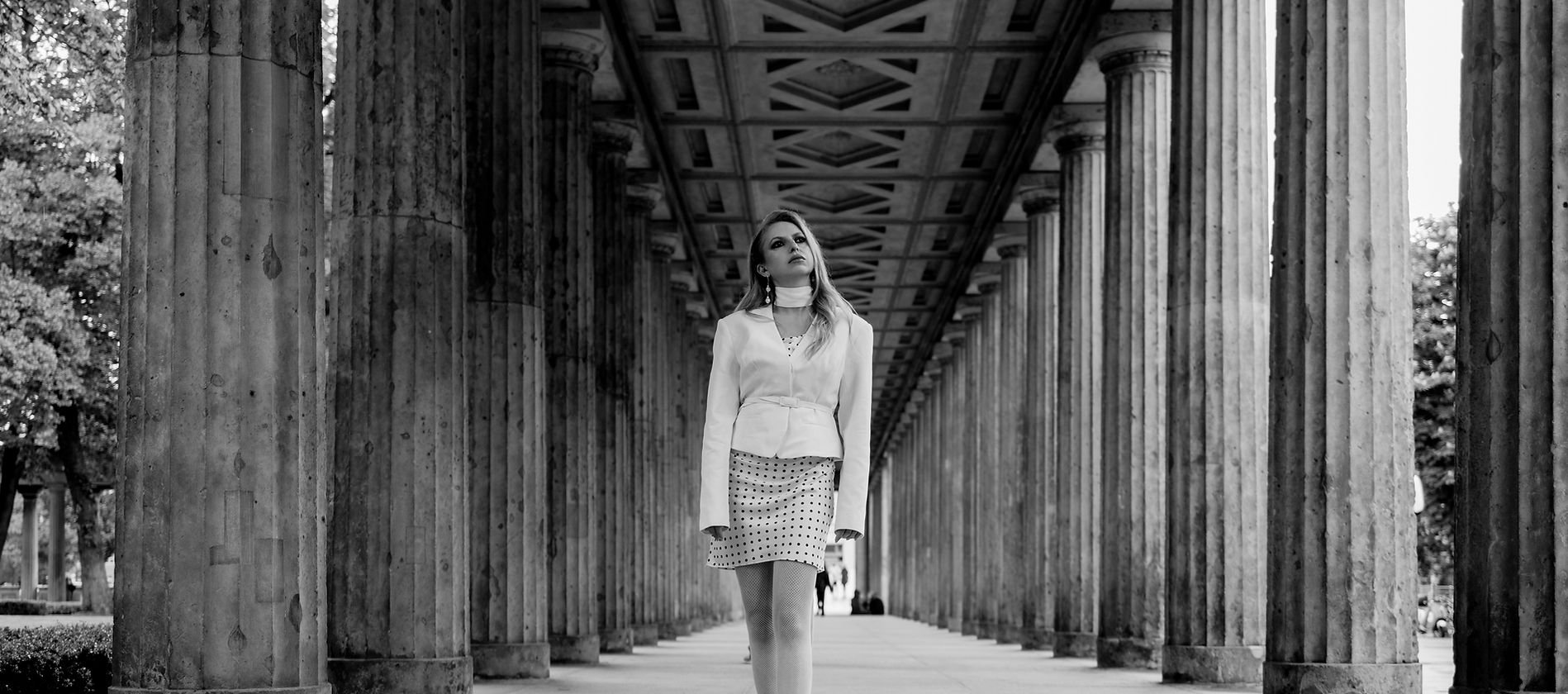
TOVA
1. Inspiration & Style
What initially inspired you to become an artist, and how did you develop your unique artistic style?
My path into art was not a conventional one. I was born in Almaty, Kazakhstan, and my first education was in music. Later I trained as an economist, hold a PhD in Finance from Bayes Business School in London, and spent more than a decade in financial markets and analytical research. Alongside that work, I kept experimenting with visual art, poetry, song and performance, until I realised that art could become another form of research, one that lets knowledge be felt, not only understood.
My style grew from a principle I call non-separation: I do not separate logic from emotion, or scientific knowledge from sensory experience. It took shape in two concepts. TOVA NUTS are sculptural works in which a shell holds an inner core, often a painting born from transformed research or data. TOVA WORLDS extend the same idea into immersive environments of painting, text, sound and video.
2. Creative Process
Do you have any rituals or routines that help you get into a creative mindset when starting a new project?
My main ritual is moving between analysis and intuition. I usually begin the day with research, reading or writing, the part I call “work”. As the day goes on, the pace softens: I paint, feel the material and translate thoughts into form.
I often work at night, when everything is quiet and I can hear myself more clearly. I work every day, with slower periods and intense stretches of three or four days of continuous creation. Over time I have learned to recognise my energy and follow my inner voice.
3. Artistic Influences
How do you balance historical or artistic influences with your personal style, and how do these influences manifest in your work today?
Wassily Kandinsky has been a key influence. He showed that abstraction has its own grammar: point, line and colour can form a language that carries emotion without depicting anything recognisable. Pablo Picasso matters to me for his restless experimentation across painting, sculpture and poetry.
I take from them a belief rather than a style: that abstraction can reveal hidden connections, and that an artist need not stay within one medium. My own language comes from a different place, from research and financial systems, so the influences appear as an attitude, not as quotation. More broadly, I am drawn to conceptual and object-based practices in which an artwork is not just an image but a structure for thought.
4. Emotion & Expression
How do you use your art to evoke emotions, and what role does emotion play in your creative process?
Emotion is not the opposite of analysis in my work; it is part of the same structure. I often start from systems that cannot be seen directly, such as financial models, data flows or the pressure of accelerated contemporary life, and these systems are deeply emotional. In markets, fear and expectation can change the direction of everything.
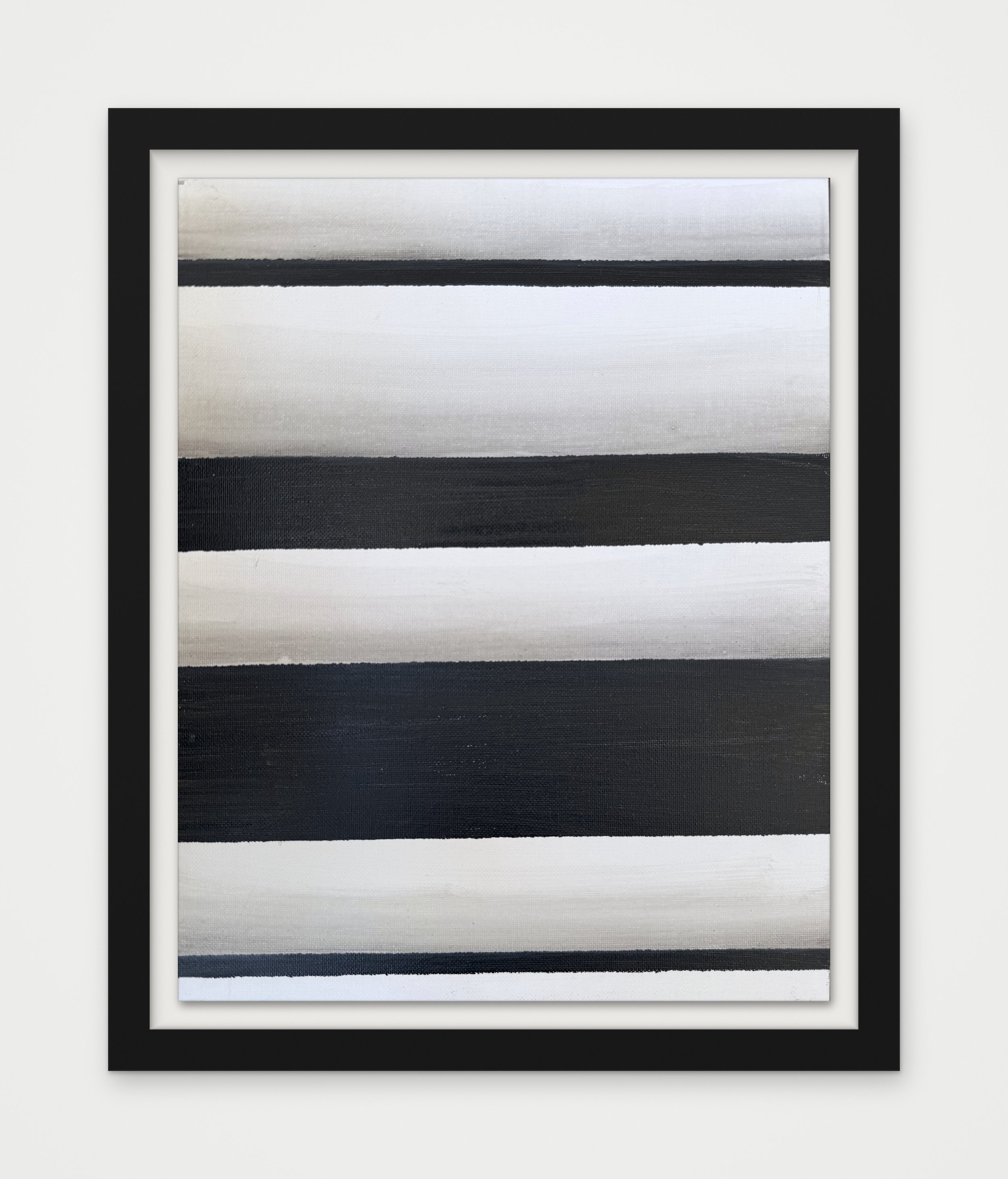
I do not illustrate data literally. I let it change its state: numbers and theory become proportion, tension and rhythm. A work is finished when the research is still present in the form, yet the viewer can feel it without any specialist knowledge.
5. Standout Projects
Can you share a project that stands out to you and describe the creative process behind it?
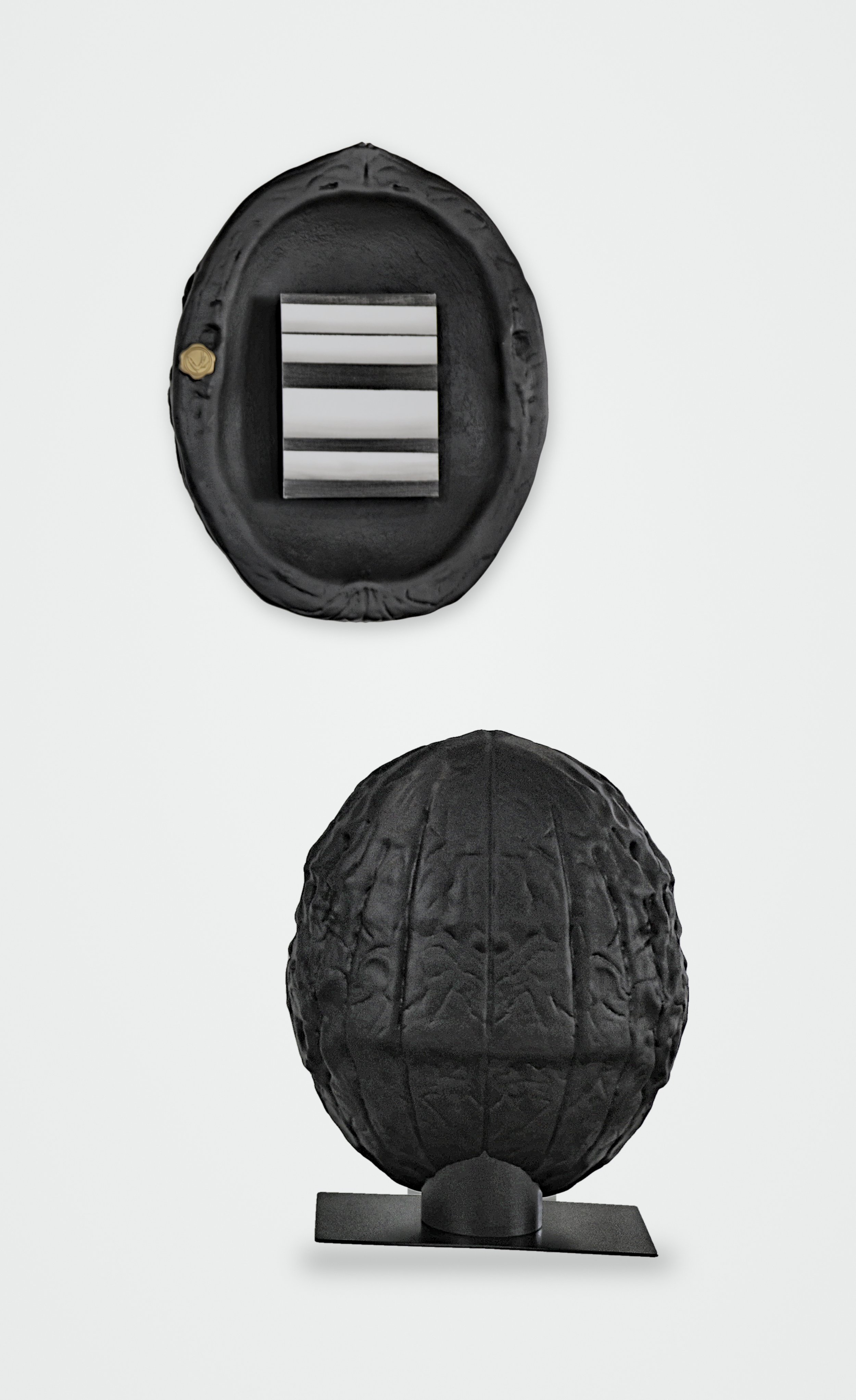
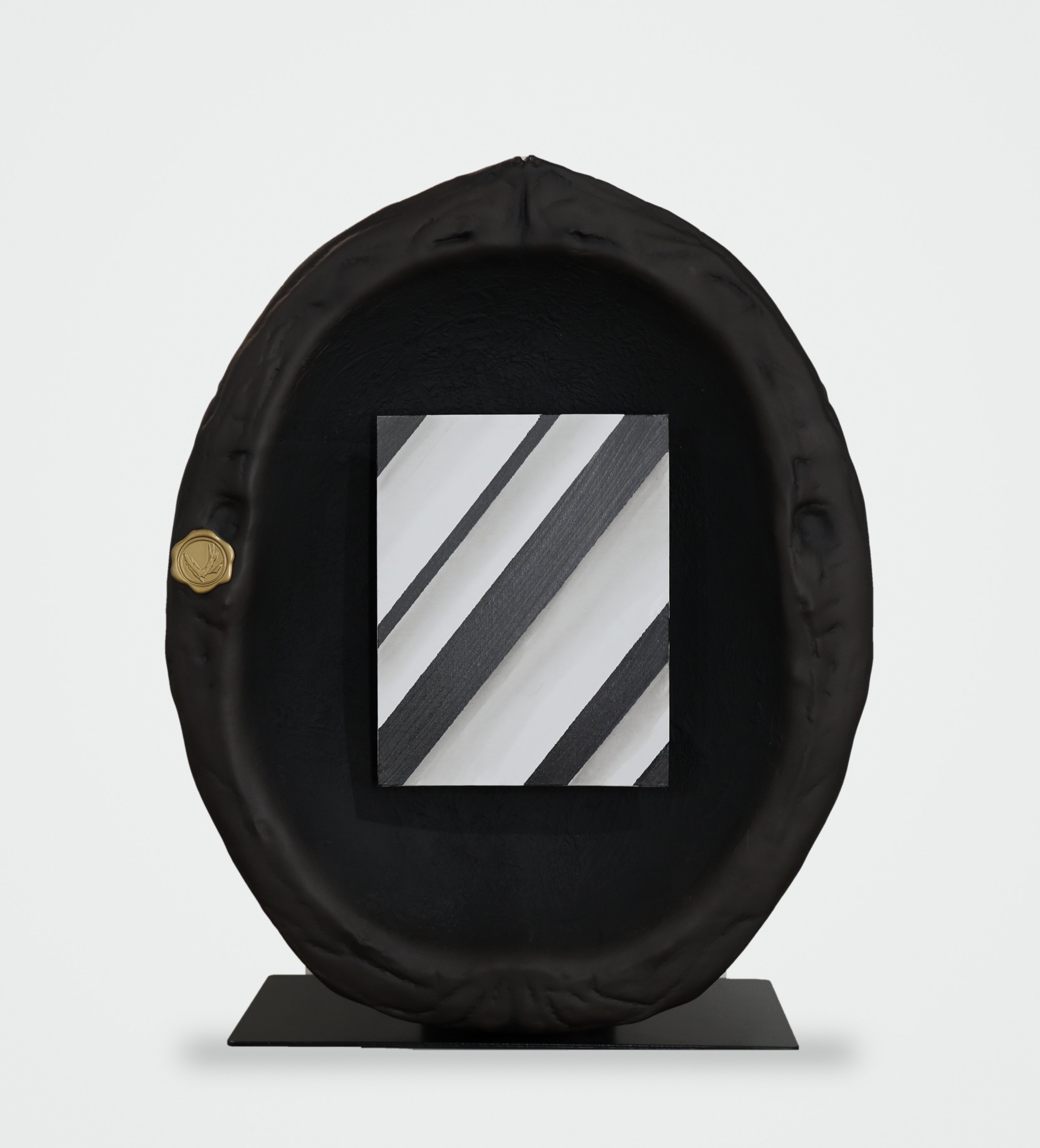
The project closest to my heart is TOVA NUTS, which I premiered in Berlin in 2026 with the exhibition Body Landscapes at Zimmer48. A TOVA NUT is a walnut-shaped sculptural artwork with a painting held inside the shell. The nut is both a recognisable object and a conceptual structure: an outer shell protecting a kernel, a hidden essence that invites exploration. The kernel stands for knowledge preserved in a concentrated aesthetic form, guided by a simple principle: Rich in Knowledge = Rich in Life.
Each TOVA NUT begins like a research project: with a question, a hypothesis and an analytical investigation, sometimes the construction of a model. Gradually the research is distilled into a visual system and becomes the painting at the core. Then comes the shell, which gives that knowledge a physical body. The viewer first meets the exterior and only gradually discovers the inner layer. Holding a TOVA NUT means holding knowledge in visual form.
6. Feedback & Growth
How do you incorporate feedback from critics or audiences into your work, and how do you balance this with your own artistic intuition?
Research taught me to treat responses as information: I listen carefully to how people read a work, and especially to how differently they read it. Having lived in Kazakhstan, Russia, the UAE, Israel and the UK, I know that the same image can mean very different things depending on cultural memory. That variety of readings is valuable to me.
But the final decision belongs to the inner voice. A work has to carry the energy of the research and feel autonomous to me; once it does, I trust it.
7. Motivation & Inspiration
How do you stay motivated and inspired, even when facing creative blocks or challenges?
Every work begins with a question or an unresolved contradiction, and the world never stops supplying them: the acceleration of time, information overload, the search for value in unstable systems. When I feel blocked, I return to research and let the question mature until a structure begins to emerge.
Working across media also helps. If an idea stops moving in painting, it may continue in a text, a sound or a sculptural form. And I always move between analysis and intuition, so one keeps feeding the other.
8. Exhibiting Work
How do you feel about exhibiting your artwork with The Holy Art Gallery, and what does this opportunity mean to you?
I am very glad to share my practice with The Holy Art’s international audience. As an artist who has lived in five countries, between East and West, I see cultural diversity as a generative space where new forms of understanding appear, and The Holy Art brings together exactly that kind of plurality of voices.
For me, this feature is a chance to present my work as a whole: not a single piece, but a connected system of paintings, sculptural objects, music and poetry. I rarely think of works as isolated; each belongs to a wider series or world, and I am grateful for the opportunity to show that larger picture to collectors, curators and fellow artists.
9. Future Goals
What are your long-term goals and aspirations as an artist, and how do you plan to achieve them?
I plan to keep developing TOVA NUTS as a system of sculptural works, where each series starts from its own subject and research while the nut form gives continuity. A current cycle, Derivatives, explores how this financial concept extends into everyday life: into relationships, expectations and the value we project onto the future.
I am also expanding TOVA WORLDS, connecting painting with music, poetry and video so that an idea can unfold across space and time. In the longer term I imagine a larger studio with more functions, and continuing to show the work internationally through exhibitions and art fairs.
10. Audience Connection
What do you hope viewers take away from experiencing your art, and how do you aim to connect with them on an emotional or intellectual level?
I want to offer a new way of understanding contemporary reality, one that stays meaningful beyond scientific texts or professional contexts. Through my work I bring logic and emotion into dialogue and invite people to accept themselves as whole.
The viewer first meets the shell and only gradually discovers the inner layer. I hope people leave with the feeling that their fragmented experiences, of work and emotion, of data and intuition, are interconnected parts of a greater whole.